In Ottawa: Russian with Love (Fuji X-Pro1 and X-E1 and Russian lenses)


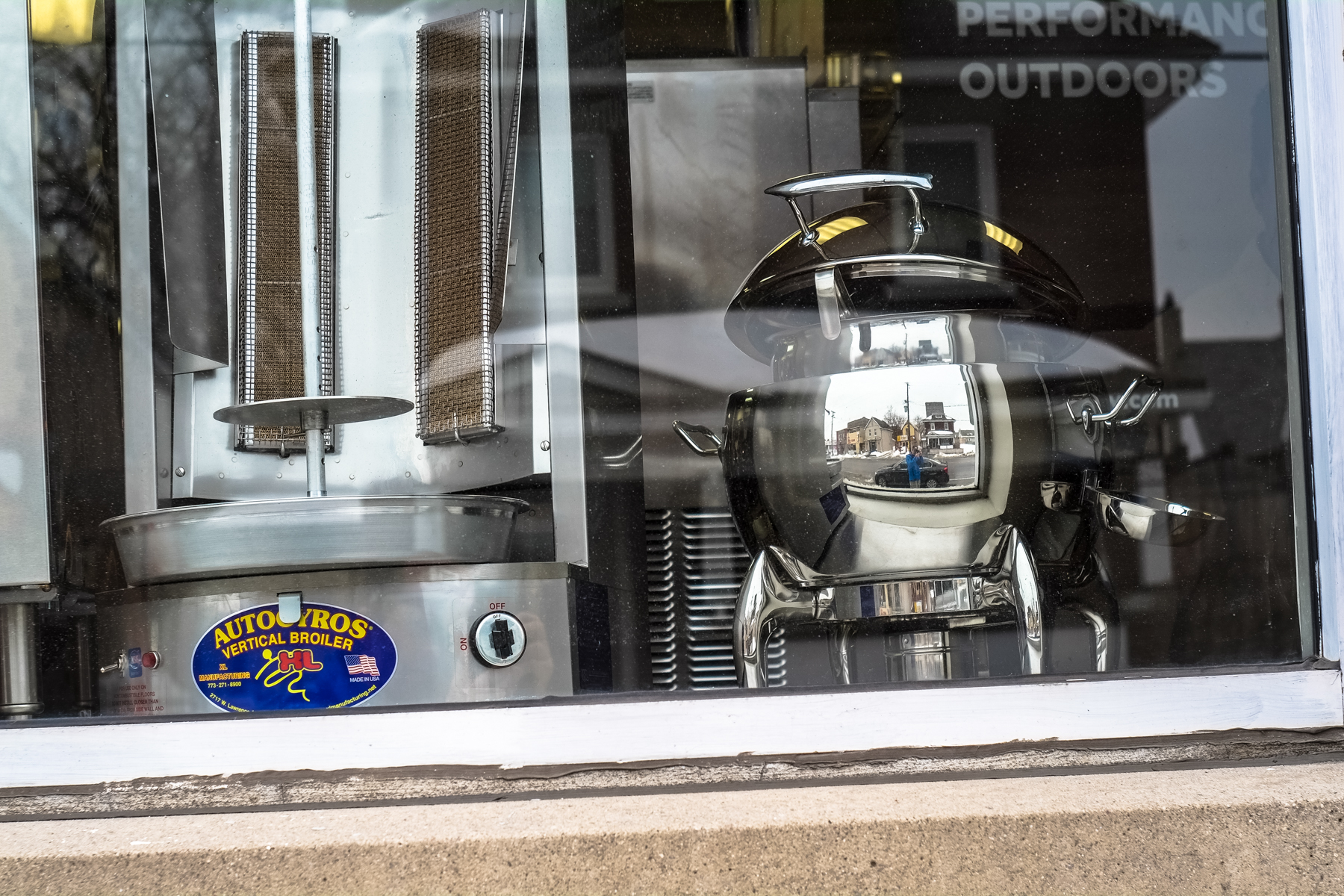
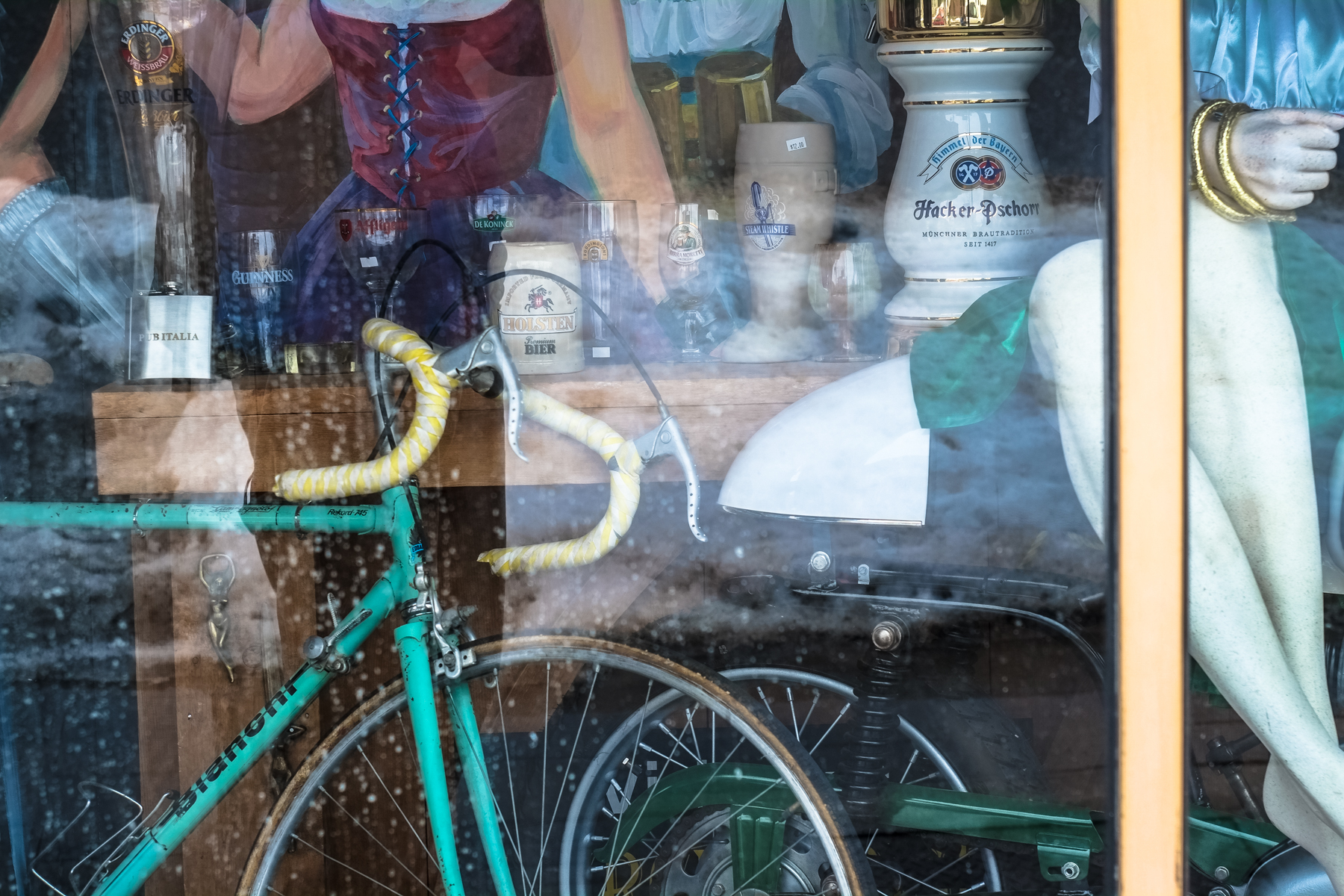
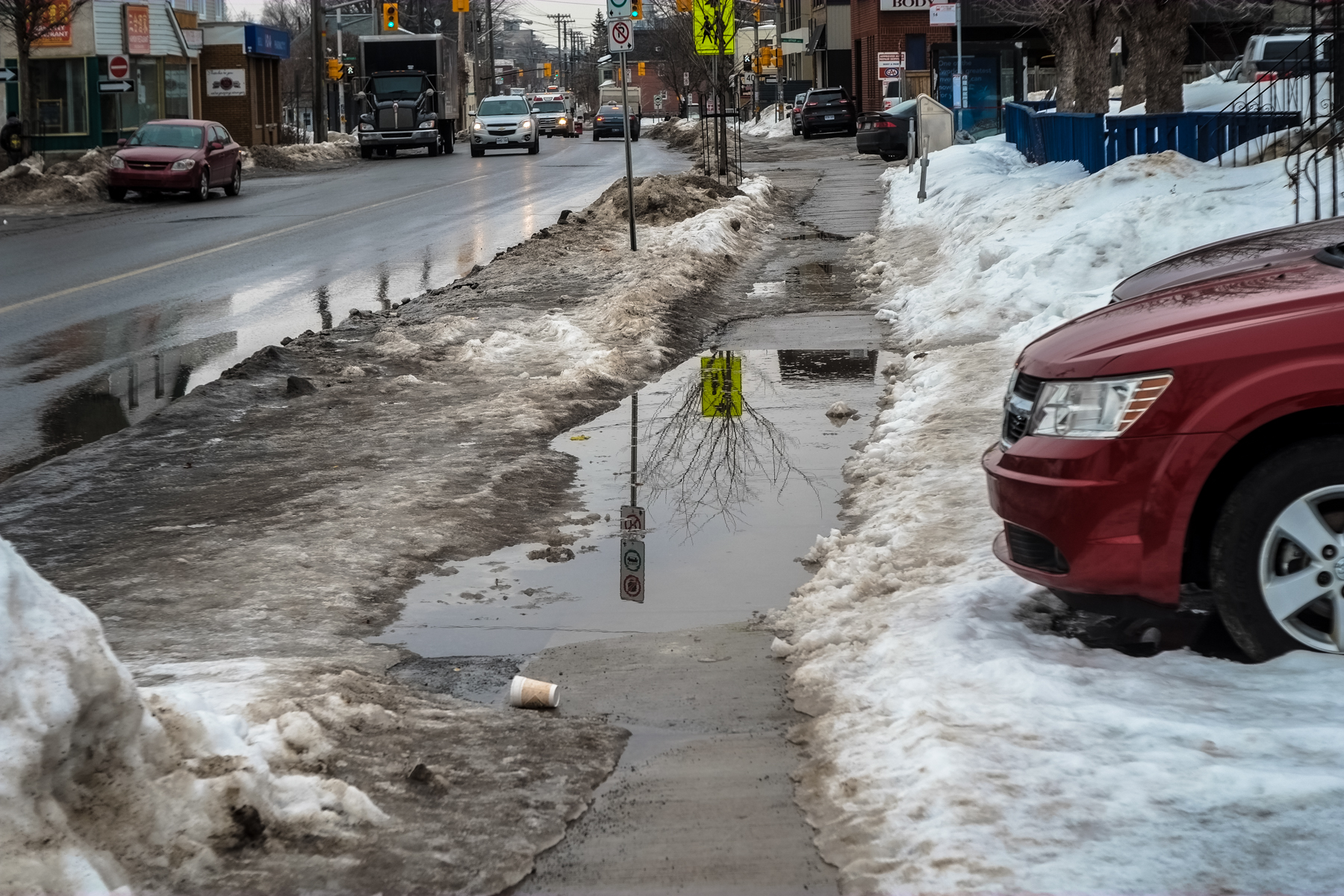
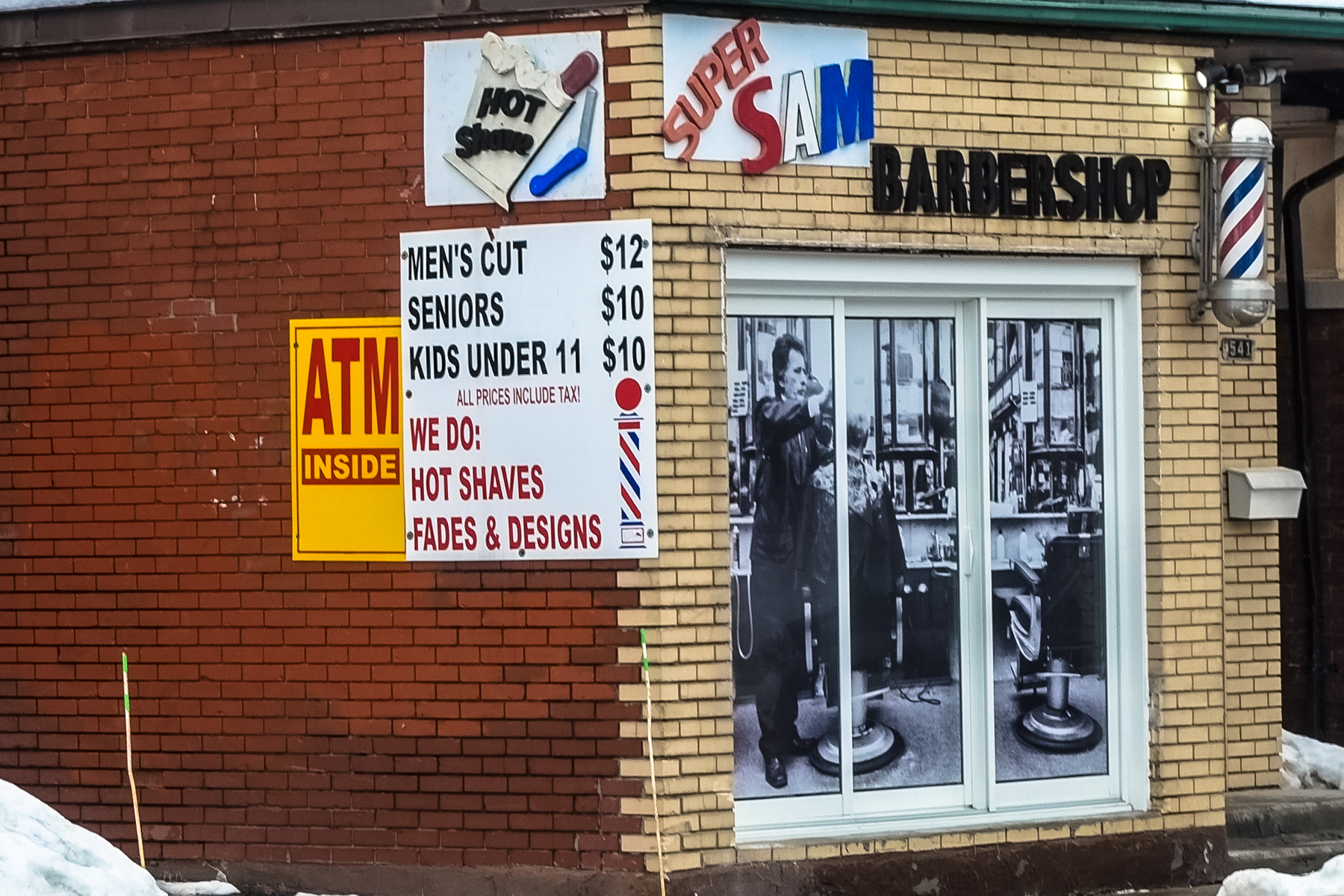
I am visiting Ottawa for a couple of days. I feel bit like a spy – Wait don’t call the RCMP just yet !. What ever you do – Don’t call me Igor Gouzenko. It is actually just my camera gear I am using – a couple of Russian camera lenses on my Fujifilm X-Pro1 and X-E1.

Yes, Fuji does make some really awesome lenses for their X-Series cameras including the ones that I own; Fujinon XF 14mm f/2.8 R, Fujinon XF 18-55mm f/2.8-4 OIS, Fujifilm Fujinon XF 35mm f/1.4 R Super EBC, and the XF 55–200 mm f/3.5–4.8.

For this trip, I am going nostalgic. I grew up in Ottawa, and lived there for many years. This short visit is also somewhat nostalgic, in that I am vising many of my old favorite places. Back when I lived here, I used manual focus lenses (autofucus was still in its infancy), so going manual focus for this trip isn’t out of line.

So – on my Fuji X-Pro, and Fuji X-E1 I have a L39-FX adapter for the Industar 55mm f/2.8 N-61 lens, and a M42-FX adapter for the Industar 50-2 f/3.5 50mm, and Helios-44-2 58 f/2.0 lens. Oh – I know what you are thinking – Why not stick with the Awesome Fuji lenses ! – They are small, light and Autofocus !.

The old Russian lenses are fun to play with, they are cheap, and they are not optically perfect. There are imperfections in the glass that give the lenses a unique look. It is also so much fun to just play ;>

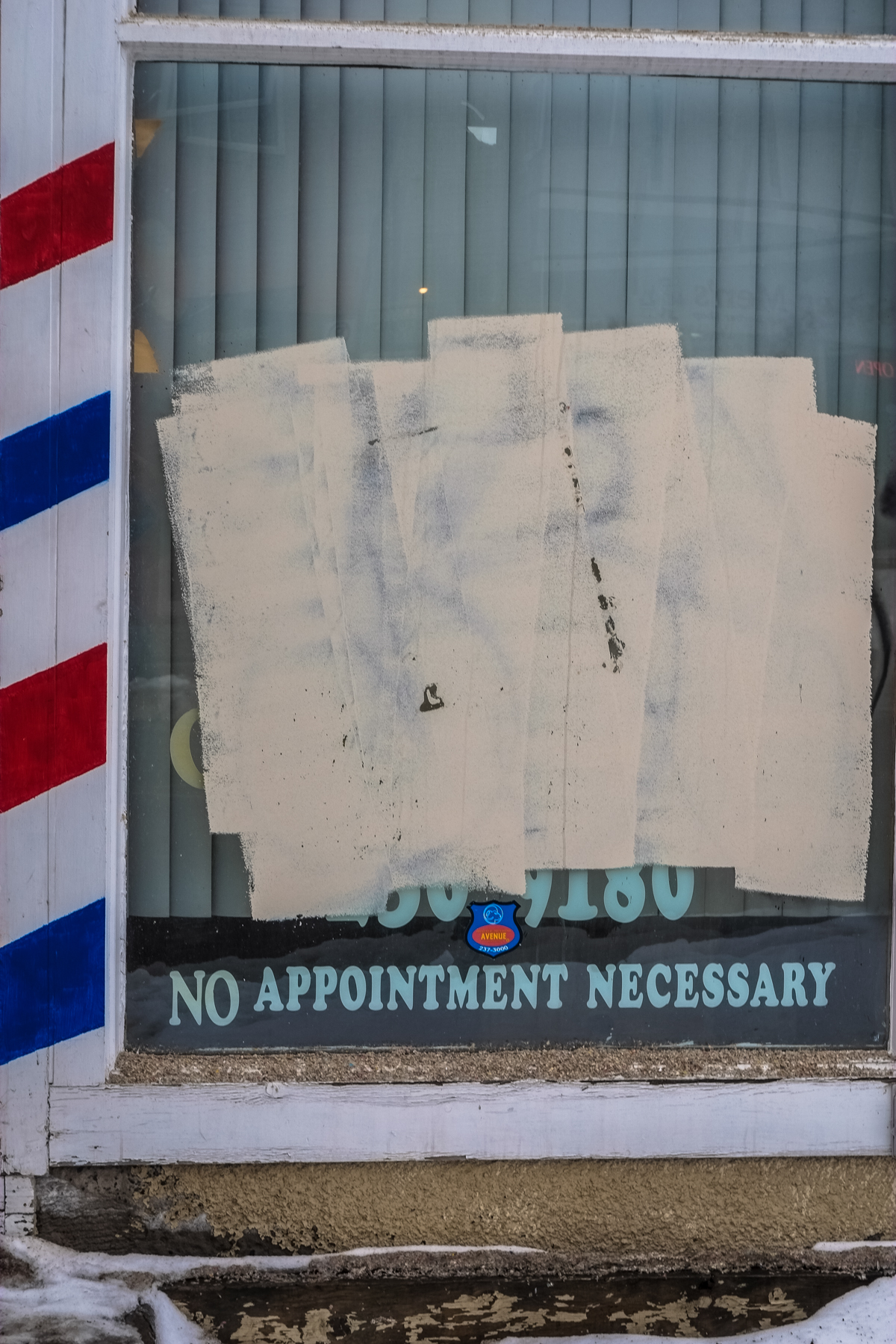
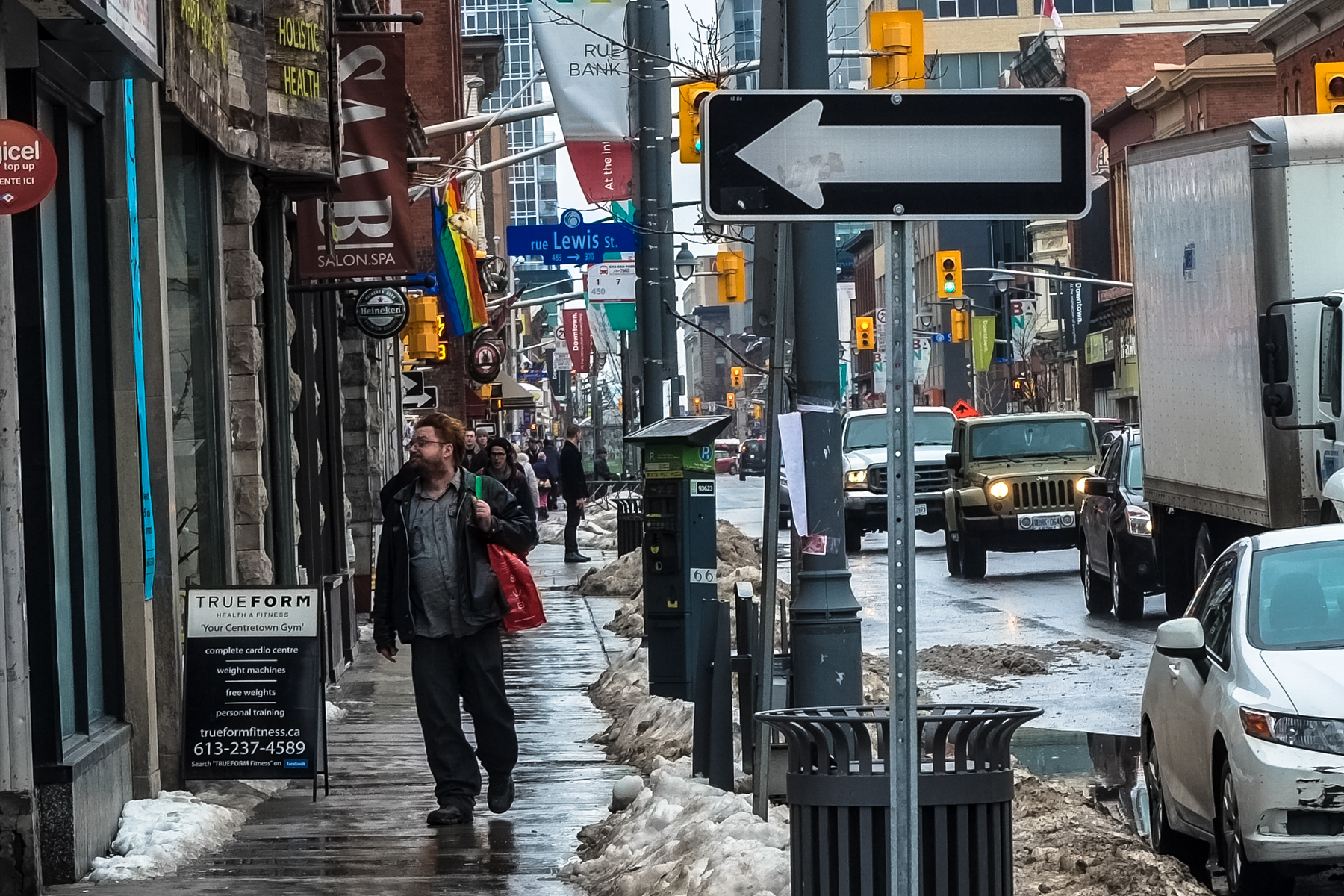
DSCF5375Industar 50-2 f/3.5 on Fujifilm X-E1

SHSA5440Industar 55mm f/2.8 on Fujifilm X-Pro1

SHSA5444Industar 55mm f/2.8 on Fujifilm X-Pro1

DSCF5378Industar 50-2 f/3.5, on Fujifilm X-E1

DSCF5382Industar 50-2 f/3.5 on Fujifilm X-E1

DSCF5384Industar 50-2 f/3.5 on Fujifilm X-E1

DSCF5390Industar 50-2 f/3.5 on Fujifilm X-E1

SHSA5454Industar 55mm f/2.8 on Fujifilm X-Pro1

Yellowknife snowking

2016 Snowking Winter Festival XXI

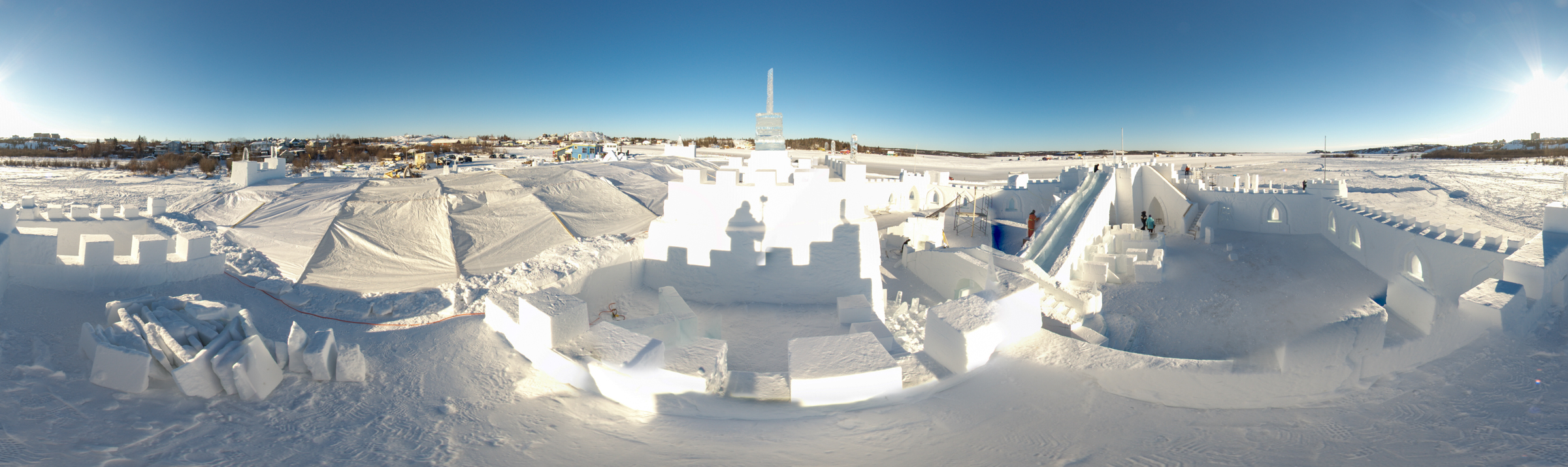
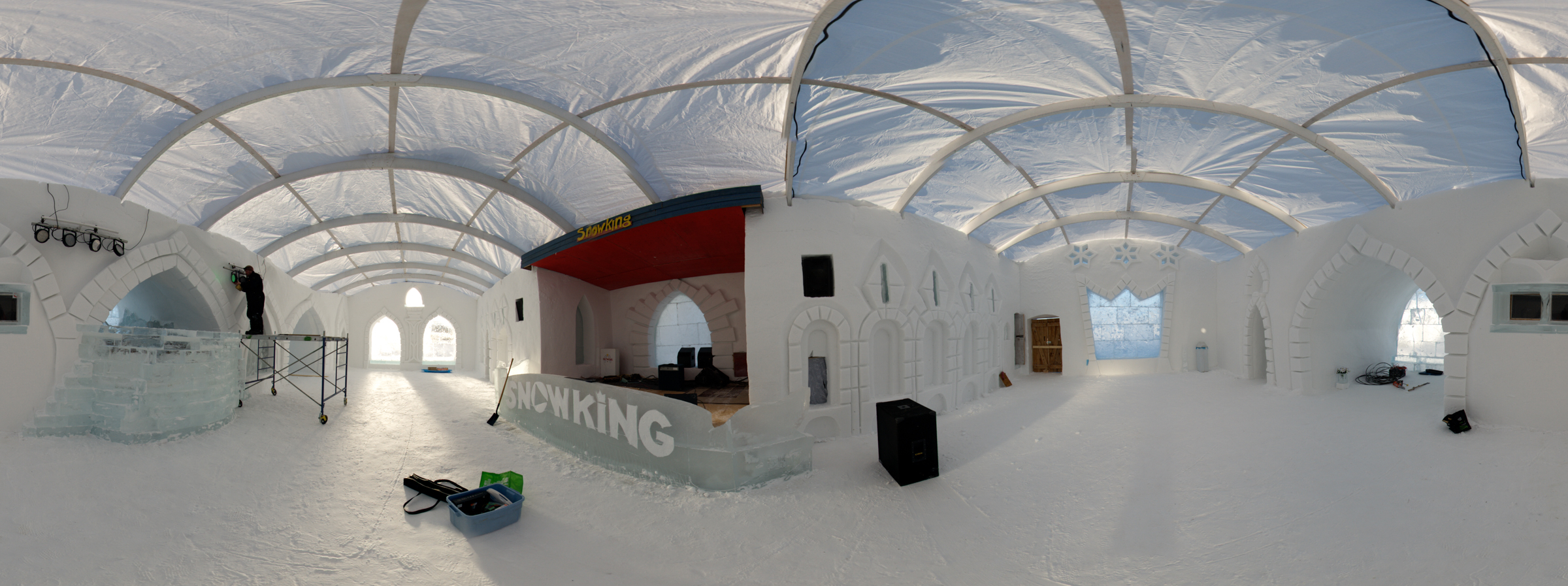
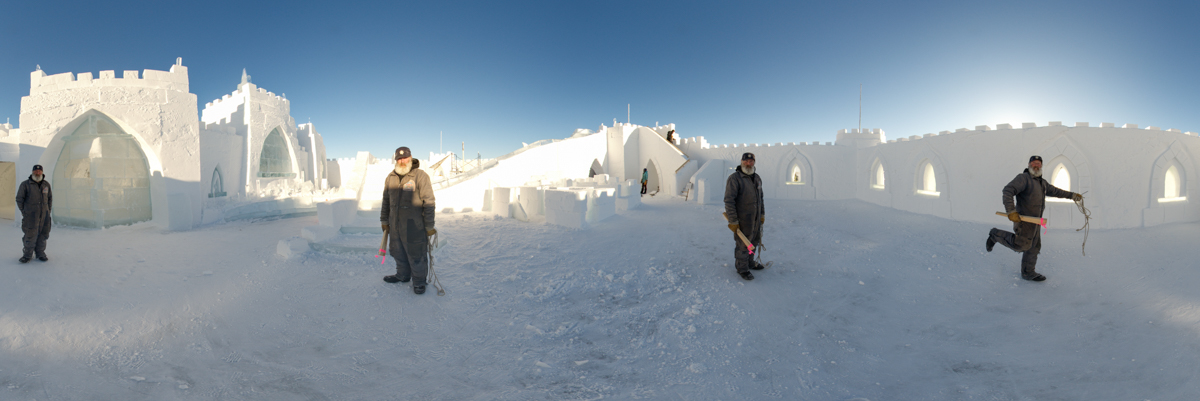
March 1, 2016 – The Grand opening of the 2016 Snowking Winter Festival XXI. Check out the official Snowking Winter Festival webpage ….http://snowking.ca/

These are a couple of sneak peak images and panoramas from inside the castle and from the roof.

Yellowknife snowking

To view the 360 degree animation. Click Here. Use your mouse or swipe the screen to look around. This requires the QuickTime Player. Click the icon on the upper right corner of the animation to get a full view. Depending on network speed, the image may take a moment to load.


Yellowknife snowking

To view the 360 degree animation. Click Here. Use your mouse or swipe the screen to look around. This requires the QuickTime Player. Click the icon on the upper right corner of the animation to get a full view. Depending on network speed, the image may take a moment to load.


Yellowknife snowking

Yellowknife snowking

To view the 360 degree animation. Click Here. Use your mouse or swipe the screen to look around. This requires the QuickTime Player. Click the icon on the upper right corner of the animation to get a full view. Depending on network speed, the image may take a moment to load.


Yellowknife snowking

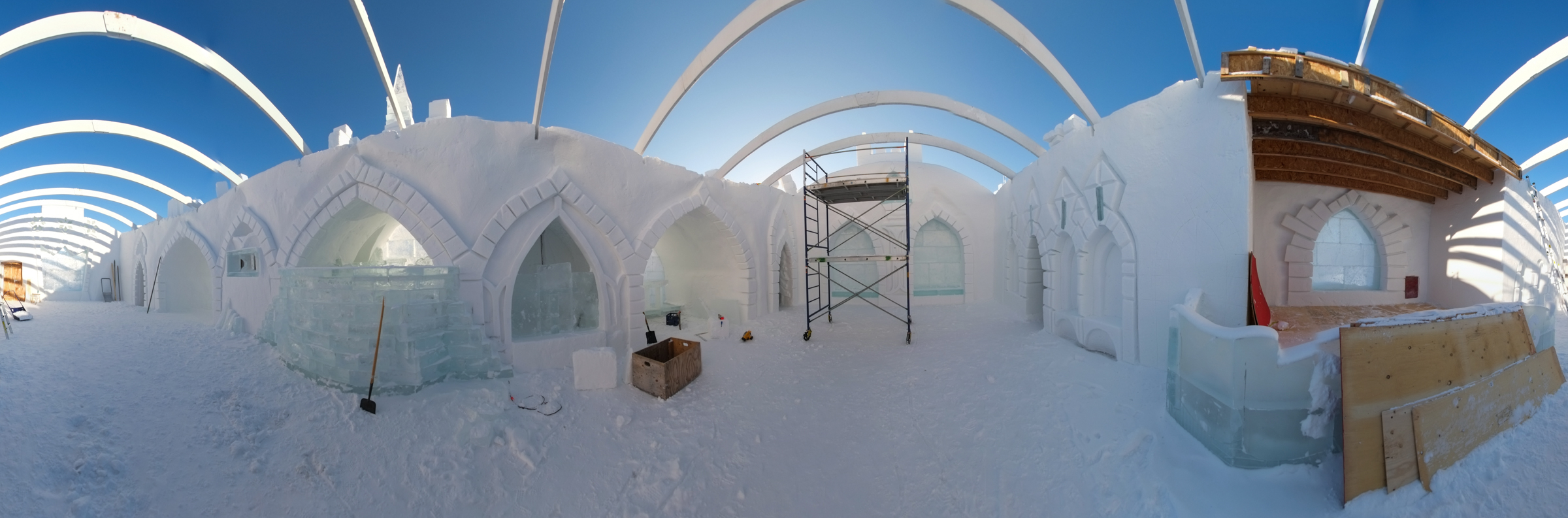
2016 Snowking Castle – Nearing Completion

Have a look around inside the 2016 Snowking Castle – it is almost Done !

DSCF5255 Panorama-2

Click Here for a Larger Image

To view the 360 degree animation. Click Here. Use your mouse or swipe the screen to look around. This requires the QuickTime Player. Click the icon on the upper right corner of the animation to get a full view. Depending on network speed, the image may take a moment to load.


Yellowknife snowking

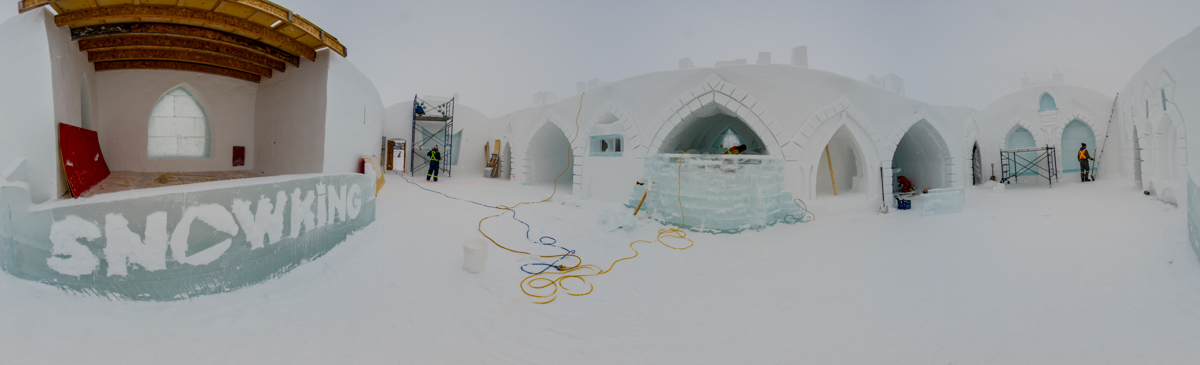
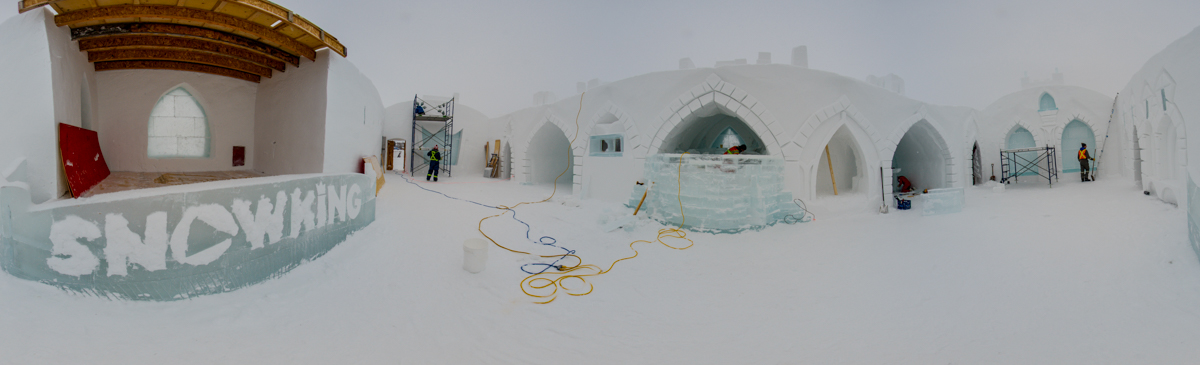
2016 Snowking XXI Castle – in Progress

This is a quick n’dirty post – just to see if I can still remember how to photograph, generate and post 360 virtual reality panoramas.

Seems fitting in a way – as I haven’t done this in two years, and this image is of the yet to be completed snow castle for the 2016 Snowking Winter Festival in Yellowknife.

SHS_6458 Panorama-2

Click Here for a Larger Image

To view the 360 degree animation. Click Here. Use your mouse or swipe the screen to look around. This requires the QuickTime Player. Click the icon on the upper right corner of the animation to get a full view. Depending on network speed, the image may take a moment to load.


My piece of Remembrance

Seventy one years after that fateful day it is hard to imagine what happened here.

To my left, there is a large house-size concrete box, it is tipped almost on it’s side.
Behind it is a building with several Canadian flags, and the village of Courseulles-sur-Mer.
In the village, there is a small monument, and a World War 2 vintage Canadian Tank.

Years ago this beach was called called Juno Beach.

I walk across the beach towards the ocean.
The sand is soft, with patterns sculpted by the tides.
I walk quietly over the sand, the silence broken only by the
soft crunching of sea shells under by shoes.

Seventy one years ago, there were many, many more sounds on this beach.
Sounds of gunfire, sounds of explosions, sounds of pain and  the silent sound of death.

On that fateful day seventy one years ago,
Canadian Soldiers disembarked from small thinly armoured ships.

There was no shelter, no place to hide.
The Germans were well prepared and well defended, with large cannons inside the concrete boxes, machine guns, minefields and beach obstacles.

Many of these small ships were blown to pieces by the German guns
that were inside the large concrete boxes.
Other ships were blown to pieces after hitting explosives buried in the sand.
Some ships carried armoured tanks with canons to destroy the german guns.
Many of these tanks were destroyed by the German guns.

For the Canadian Soldiers that arrived on that beach on June 6th, 1944 –
It was Hell.

This is a piece of twisted and rusted metal that I found on the beach.
Was it a piece of one of those small thinly armoured ships that brought the Canadian Soldiers to the beach?, or was it a piece of a destroyed German cannon ?
Without specialized testing of its metallic properties – we will never know.

The jagged edges and bent shape of this small piece of metal are a silent witness of what happened on that fateful day seventy one years ago.

Hundreds of Canadian Soldiers died on this very beach, on fateful day, and hundreds more before the war was over.

SHSB5053

This small piece of rusty jagged metal is my piece of Remembrance of all those Canadian soldiers that came ashore on this very beach and also all the other soldiers, sailors and airmen from from Canada, United Kingdom, US, Australia, Belgium, Czechoslovakia, France, Greece, the Netherlands, New Zealand, Norway and Poland that participated in D-day and liberated Europe.

November 1st, 1989

This isn’t a post about photography. It is a post about life and the loss of Life. My father passed away at midnight on November 1st, 1989 after a year-long battle with cancer. I wrote this poem on the sleepless evening before is funeral.


Yesterday-during the wake I felt a need to look at the casket.

But what is the use- as now all that remains is an empty shell.

Like some creatures which shed their skin- my father still lives in my memory.

I can picture his face, his smile, his clothes, how he would sit and how he would sleep.

I can also remember the favorite expressions, foods, idiosynchricies and most importantly our happiness and times together.

So as long as I can remember these details- my father is not dead.

Through the passage of time some details will be forgotten, but my father doesn’t die until the last detail is forgotten.

1987-02-B4 1985-08-A17

Slow Down !!!

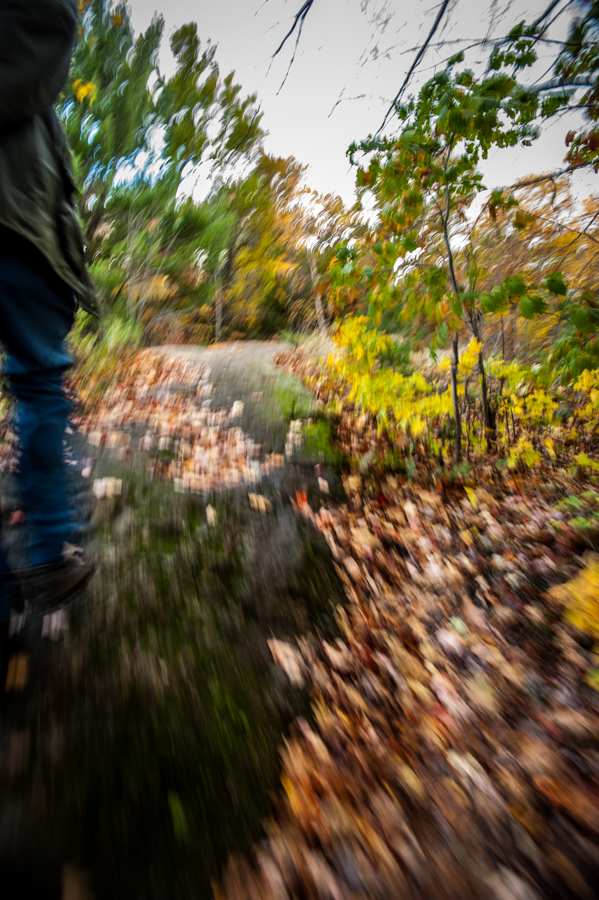
“It’s a blur”. It is unfortunate isn’t it that we always have something to do, somewhere to be, someone to meet, or something (else) to see. Life is a never ending list of …something. This photo taken on one of my favorite hikes in the Gatineau Park (Quebec) is a sad result of a mind filled with something else; the beauty of the park is simply a blur.
Slow down…appreciate the beauty before you. Even better – STOP and take it all in. Feel the wind on your face, rain in your hair, and the fresh air in your lungs…


_SHS7982-4

Where would you like to be…?

After traveling around the world for 10 months – I am still asked “Where would you rather be ?”

I am always struck by the question …where…where…Where would you rather be ?. It assumes that I want to be somewhere else !.

I have been back for nearly three weeks, and have returned to work for nearly three weeks.  The question “Where would you rather be ?” rings clearly in my mind.


Frankly – Yes, I would rather be somewhere else, but until today – I did not know where.  There has been a lot going in my person life, along with a return to work (sitting quietly in a cubicle for 6 hours a day). Yes, it is hard.

The question “Where would you rather be ?” rings clearly in my mind.

After a brief hiatus, I have again picked up my camera. I still post the odd photo on Facebook, Flickr or Twitter. For the most part, they are simply a picture of random subjects, or something that I know people will like. Most folks love photos of the northern lights, sunrise and sunsets.

Again, the question “Where would you rather be ?” rings clearly in my mind. Physically, I am here, but I am not.  It is obvious that my mind isn’t really here. To me, the photos that I have been posting as the easy ones – pictures that do not require an explanation.  I was recently at a photography exhibit – the concept was unique, and photos were all technically (focus, lighting, and composition etc) were perfect. I found myself staring at the photo – of naked young women with an animal skull in front of their faces.  I wasn’t intentionally staring at their naked bodies, more that I was thinking about the photos. In my mind, they were a picture that would attract attention – similar to a photo of northern lights, a sunrise or a sunset.  There was no explanation. Why did the photographer use a very skinny model, instead of a more rounded model, What was the photographer trying to represent with these naked images of the young women ?.   In a blank stare, I continue to look at the photos.

Again, the question “Where would you rather be ?” rings clearly in my mind.

I am here, looking at these naked images but obviously my mind is somewhere else.

Some of the photos that I have taken since arrive back in Yellowknife are the easy photos, and the more significant photos need an explanation. Without context or explanation – they would simply be a photo with no depth, no reason, and seemingly – no thought. I have yet to post these photos, or transcribe the scribbles from my notebook to a computer.

The next time, someone asks “Where would you rather be ?” – I now know, where I would rather be. Simply – would rather be in a place where I would not need to add those explanations – where it could be done verbally, siting with friends – over beers or around a campfire. It simply wold not be appropriate to add the explanations to a blog post.

Yes – “Where would you rather be ?” now has an answer.


Wartime Childhood Experiences – Sharing Stories: Father to son to granddaughter

My father passed away in 1989. Today (June 23, 2015) would have been his 80th birthday. He died of cancer when I was 21.

My father was born in the Netherlands and moved to Dutch East Indies (now known as Indonesia) in 1937 at age 2. In 1938 his brother (my uncle) was born. By late 1941 the threat of invasion loomed, and the family moved from Batavia (now known as Jakarta) to a remote region. In early 1942 there were dogfights between Japanese and Dutch airplanes overhead, and a few weeks later Japanese soldiers arrived at their house to take them away. My father, his younger brother and mother were sent to a prisoner of war camp, while his father, an eye doctor in the Dutch Army, was sent to a military hospital to treat Japanese soldiers.

As a child I always wanted to learn more about life in the prisoner of war camps. To my young mind, the stories my father told gave me the impression he was like a superhero in a comic book, with thrilling an exciting tales of sneaking out of the camp to steal food, being chased by Japanese guards, endlessly outwitting the guards, and more. In reality, it was not a fun time. There were many horrors in the camp. Captives were tortured, starved, beaten, or raped. Although, not always directed at my father and his family, they had to watch. Sickness (malaria, dysentery), due to malnutrition also took its toll on the captives. The stories my father told me, were few and far between, and would always end abruptly. Only years later, did I learn how much sugar coating he actually added to the stories. He (thankfully) did not want to expose his children to the real details.

My father, his brother and his mother returned to the Netherlands in 1946. En route, his brother contracted pneumonia and was close to death. Thankfully, he survived. It was challenging adjusting to a new life in the Netherlands in the years following the war. Even though the language was the same, there were different customs and different views of hardship during the war. The newcomers were not accepted by those that had lived in the Netherlands during the war – believing that they had suffered greatly during the Nazi occupation. Although, this was certainly a difficult time in the Netherlands, living in a Japanese controlled prisoner of war camp was worse. During adulthood, my father hid the emotional pain by pushing it to the back of his brain, whereas his younger brother had a bout with depression and sought medical help.

This month I am in the Netherlands. I want to know how his years in prisoner of war camps affected him, how it changed his life, and how his experience was passed on to his children. Without a doubt, my father’s war-time experience, either intentional or by behavior or habits has been passed on to me, and my brother and sister. I know that some of these prisoner of war camp related habits affect me in my day-to-day life, and I know that some of these habits are unintentionally being passed on to my own children. Most likely, when my children are grown up and have their own families, some of the very same habits and behaviors will be passed on their children.

For myself, now at almost the same age that my father was when he died and my children are now the same age as my father was during those years in the prisoner of war camps – I desperately want to learn more about him, his experiences, and how his life was shaped by those horrible years in the camps.

A week ago, I went to visit my uncle, at his invitation to talk – to talk about things I had previously been told not to ask about. It was not easy for either of us – for him to dig deep in to his memories of those years in prisoner of war camps and to re-live and tell those stories, some of which he had never told anyone before. It was also hard for me to listen to someone who had been there and had lived those experiences – the very same experiences that my father carried silently for all those years.

Today, June 23 would have been his 80th birthday. After that long conversation with his brother, a few more pieces of the puzzle are now in place, and, if my father were alive today, I would truly know my own superhero.

Dynamic Amsterdam

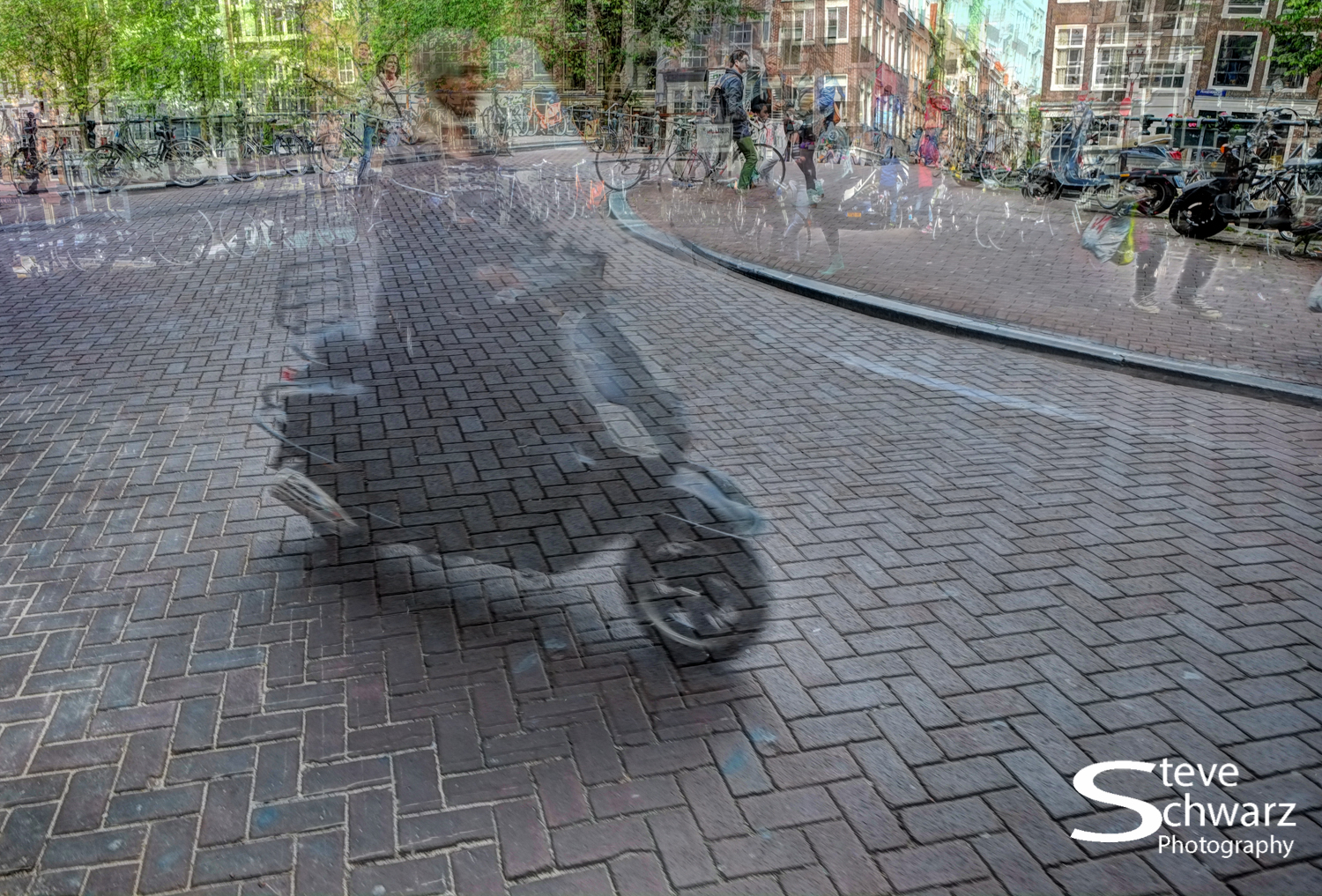
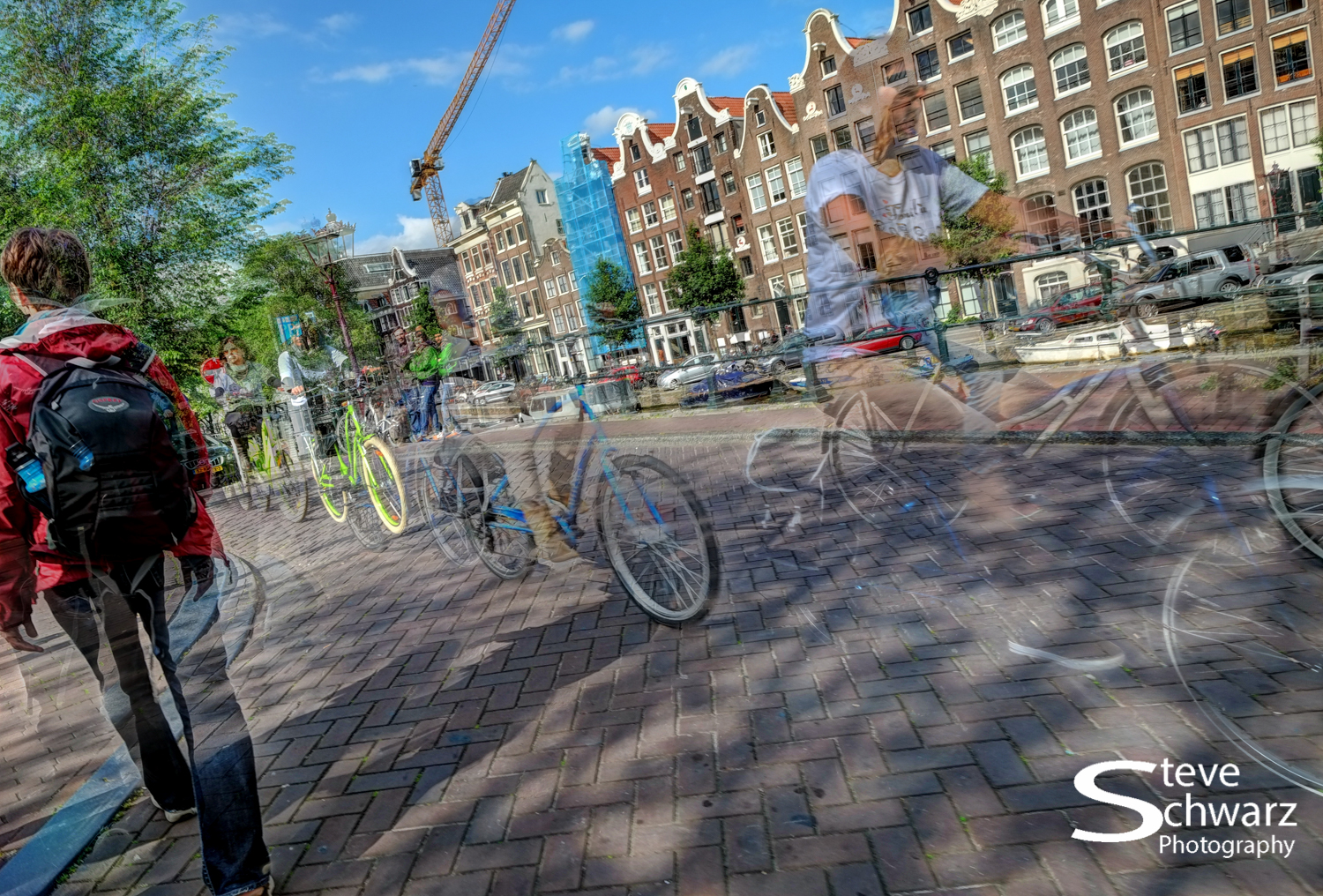
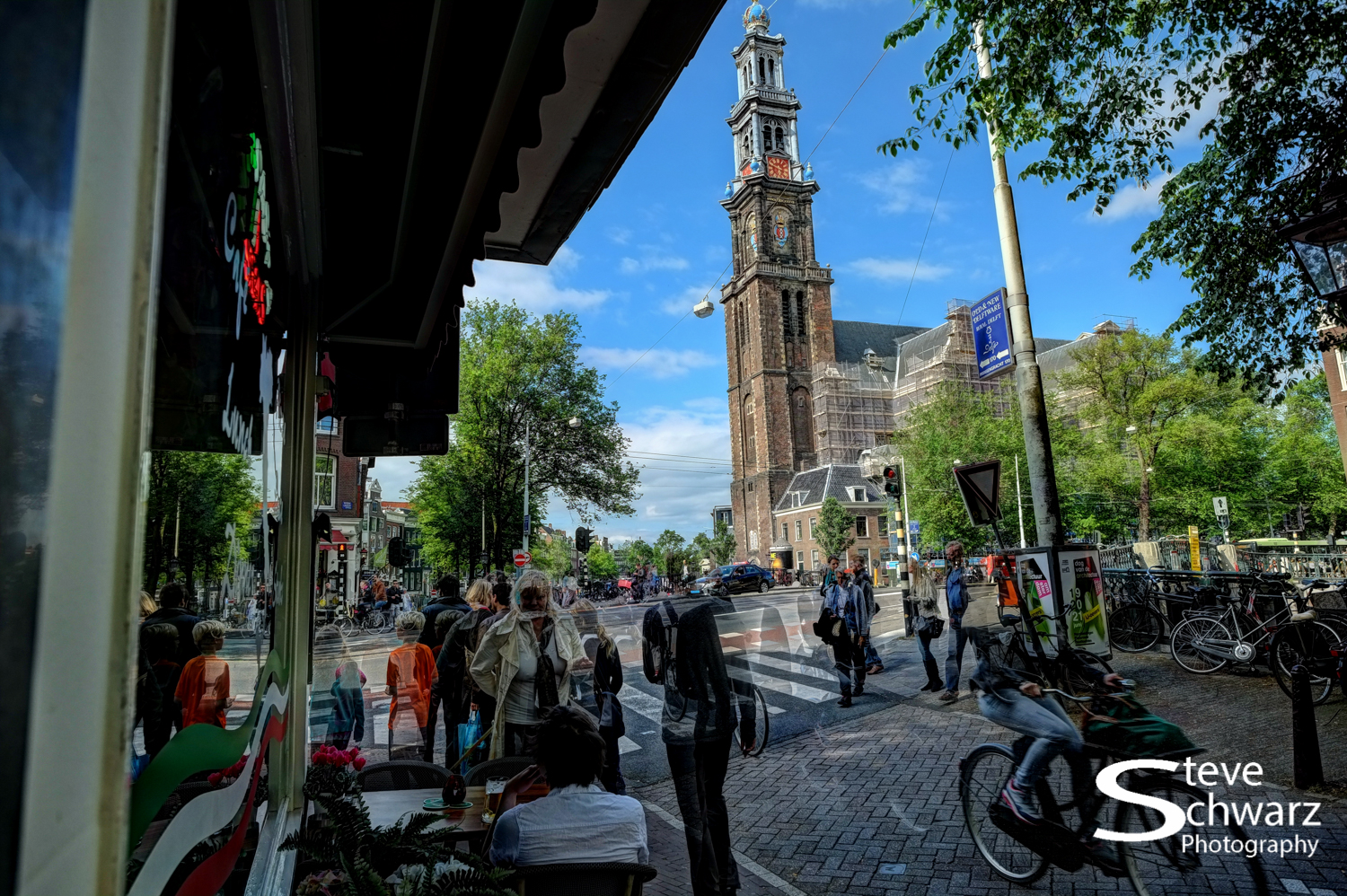
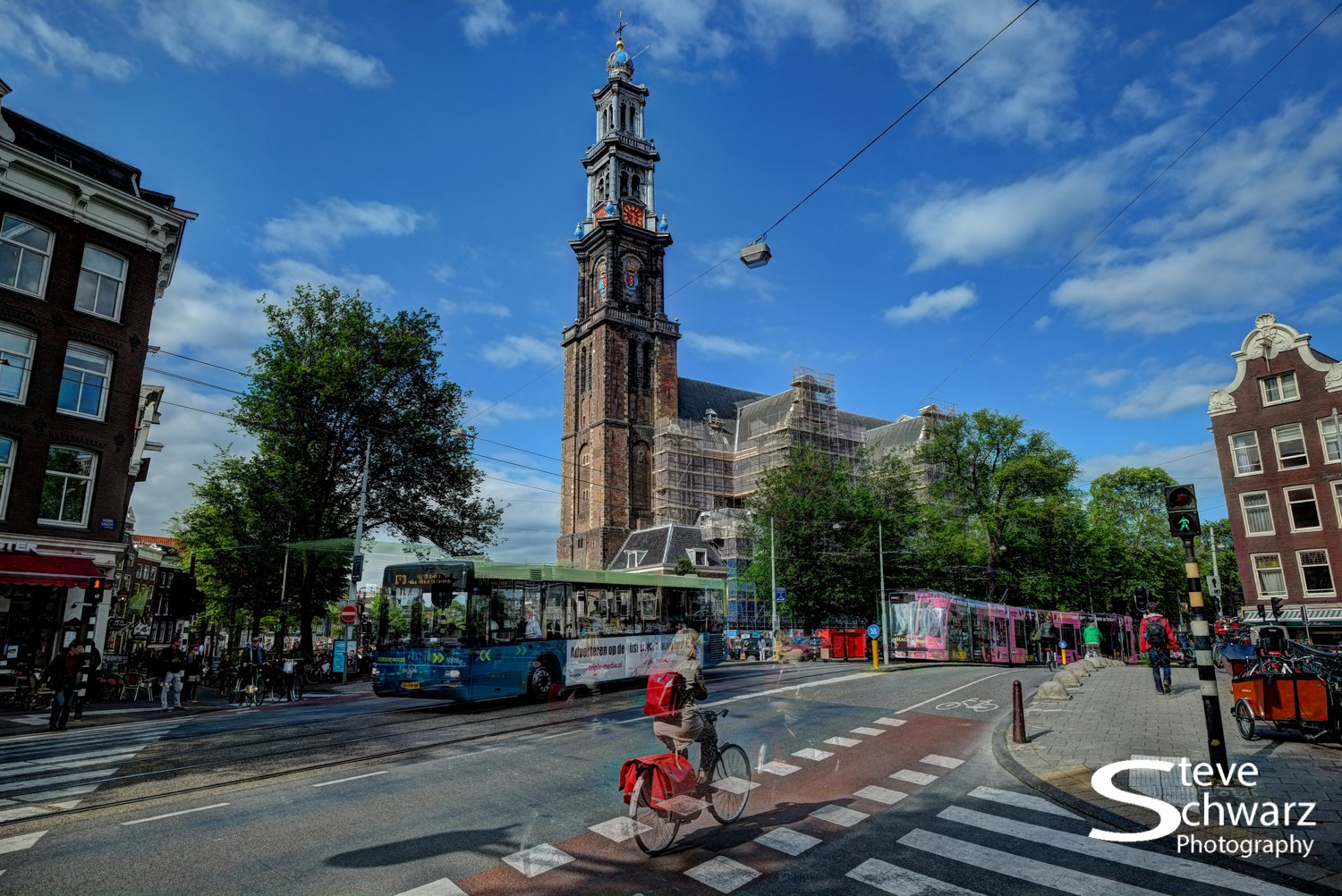
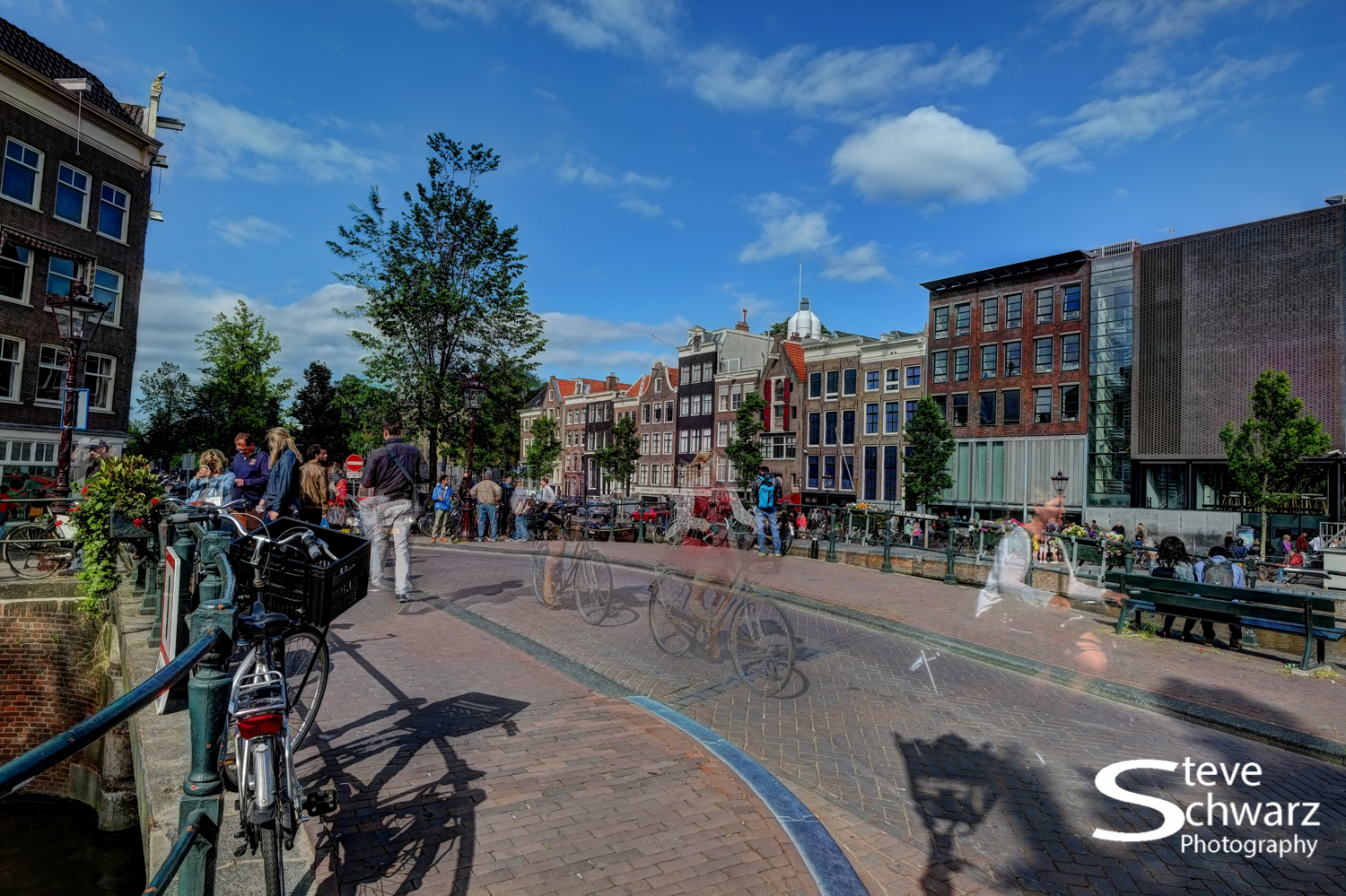
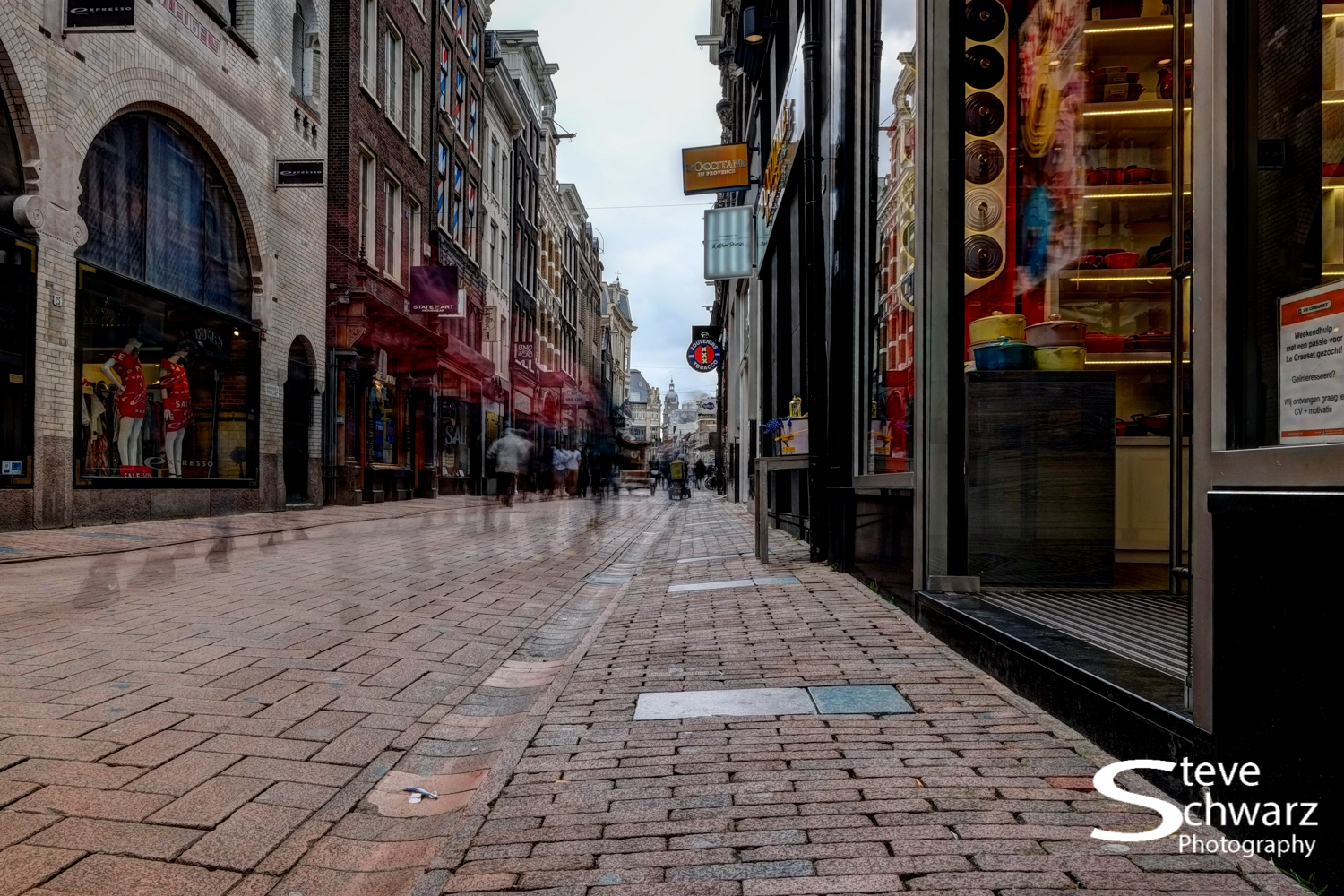
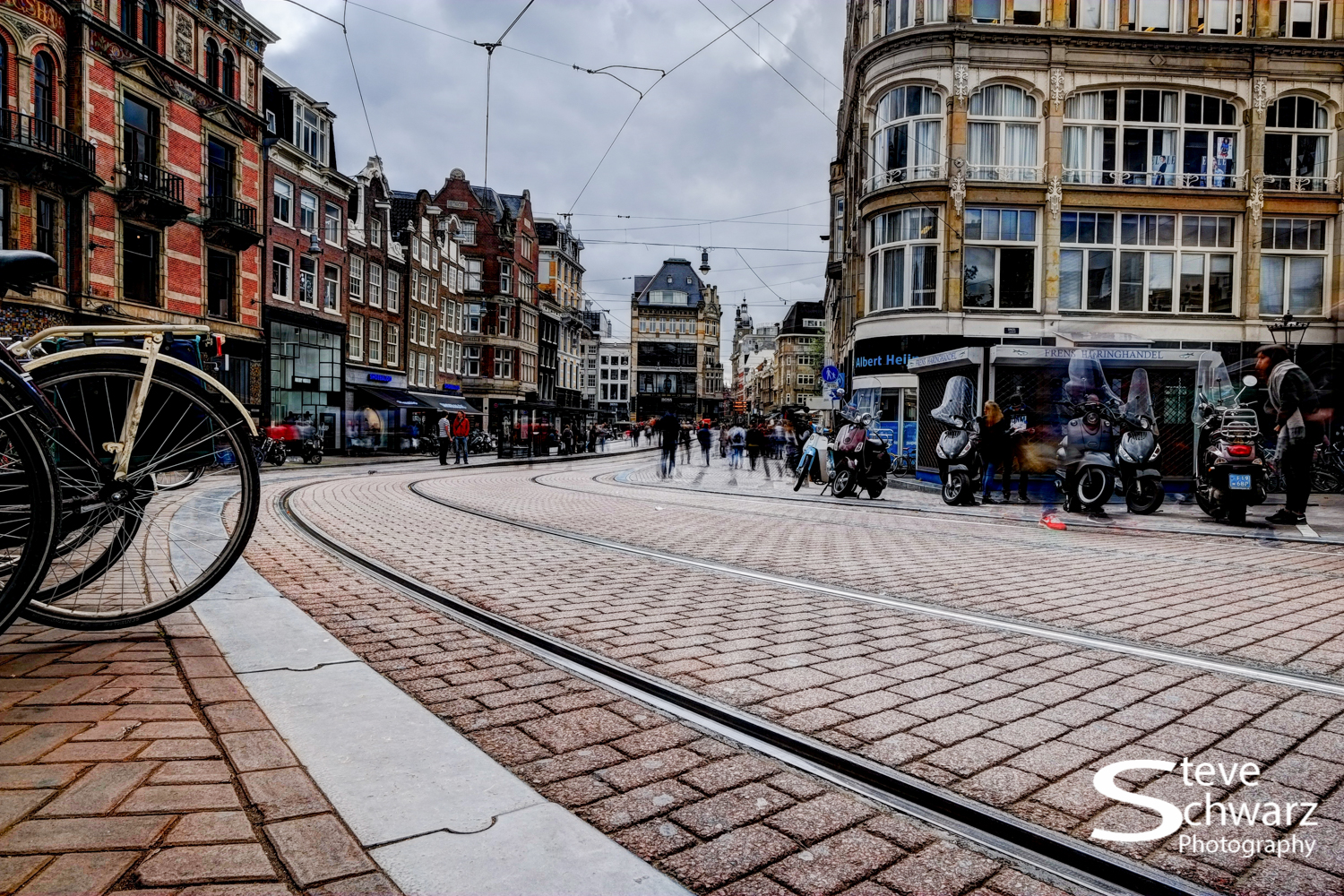
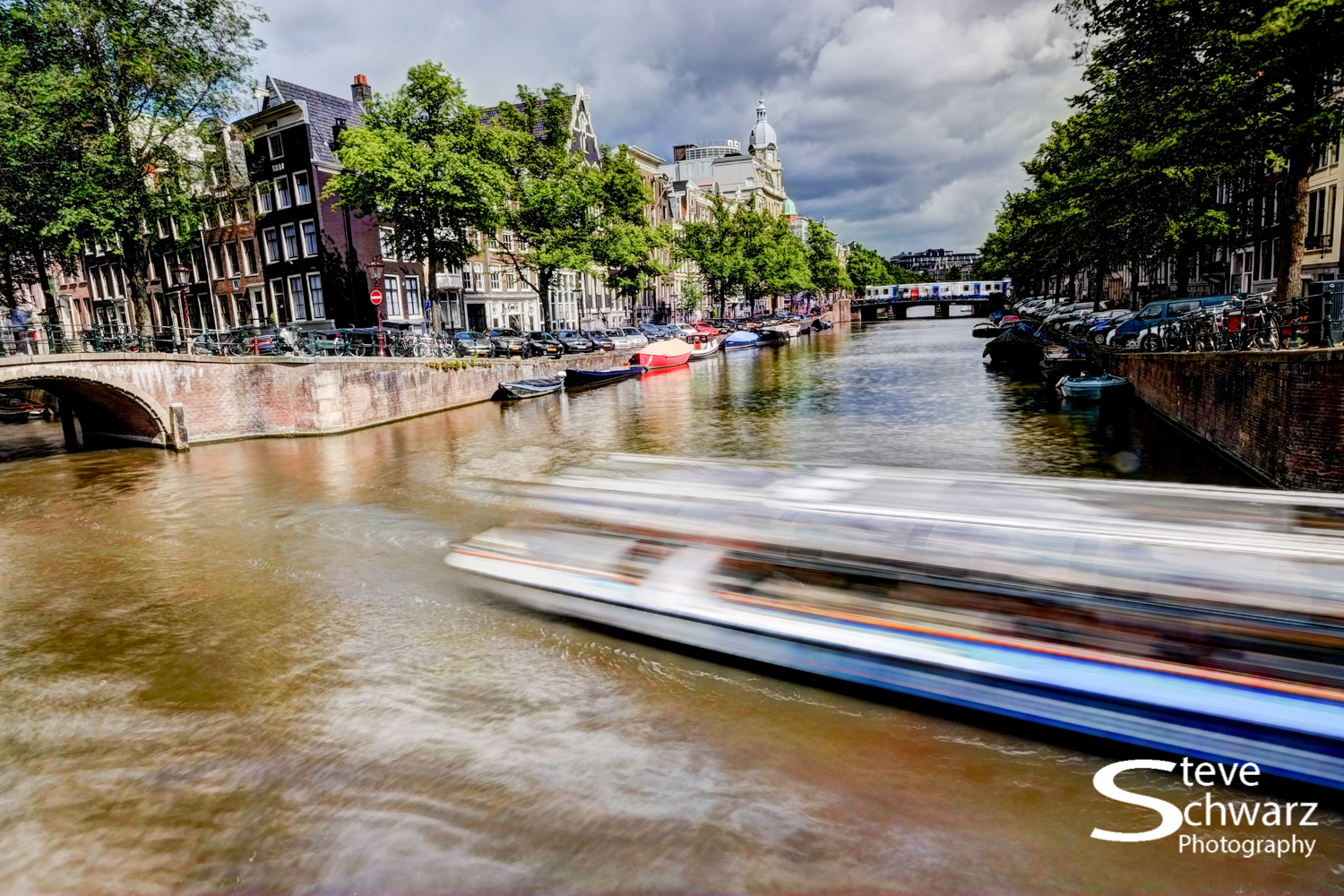
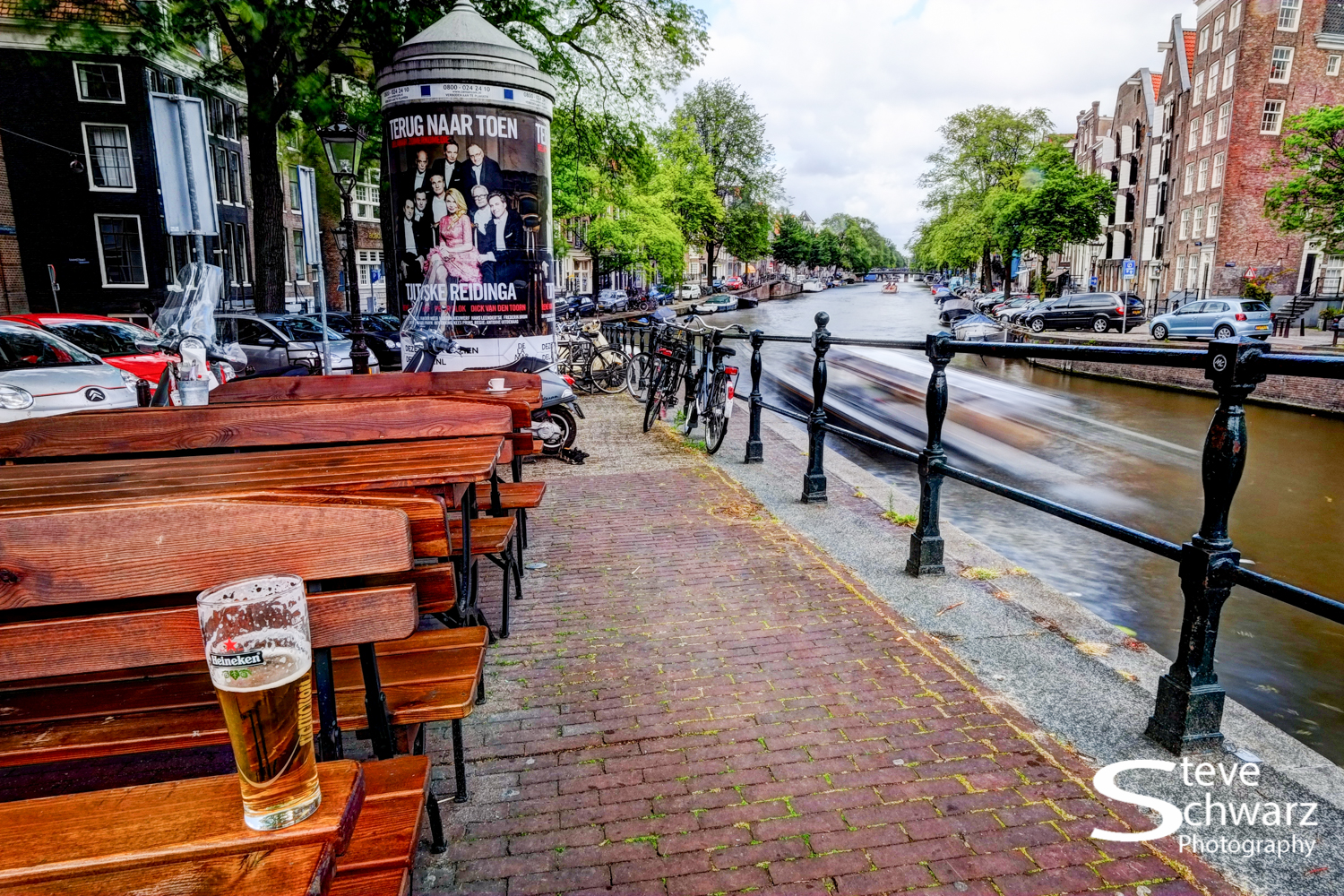
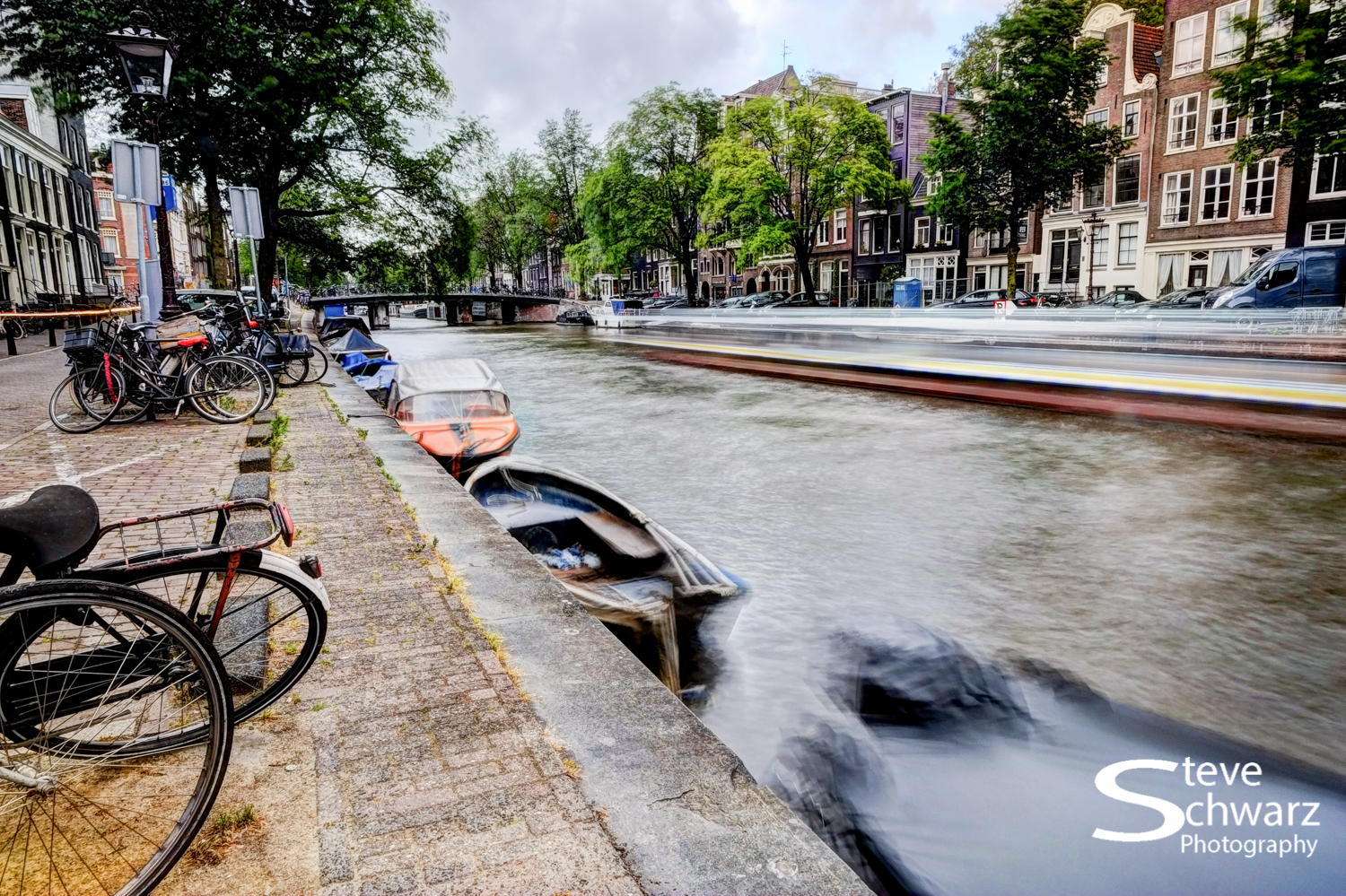
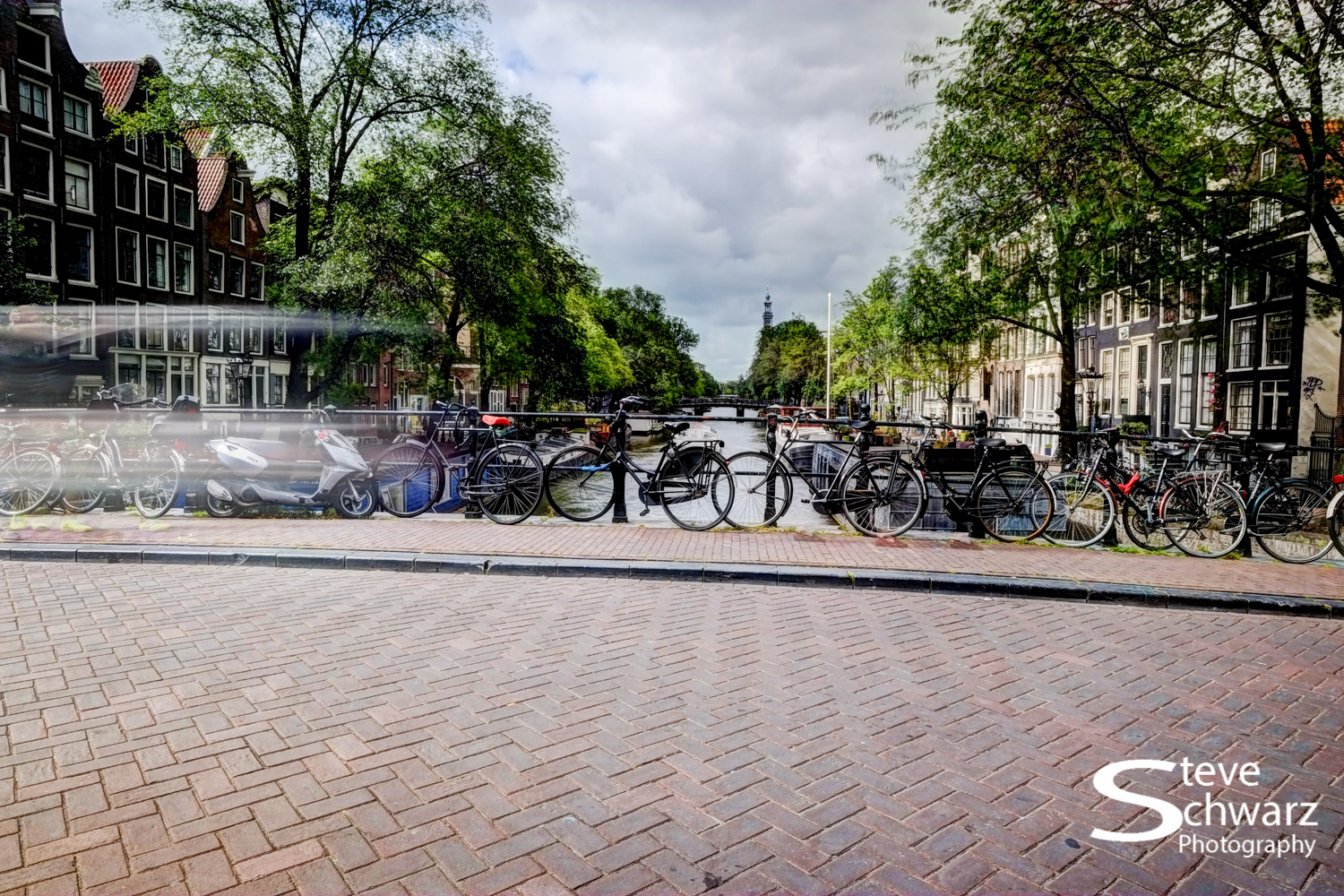
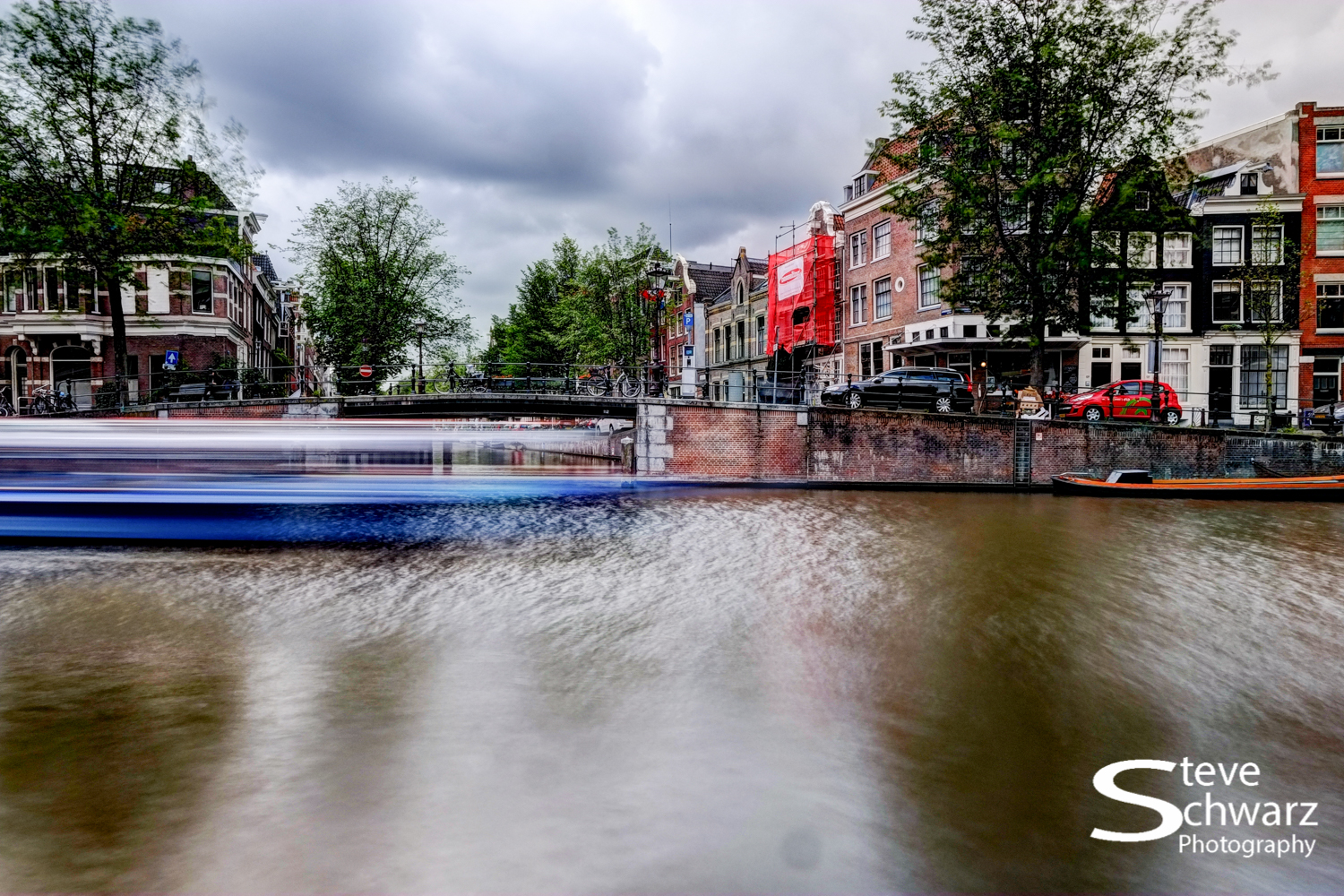
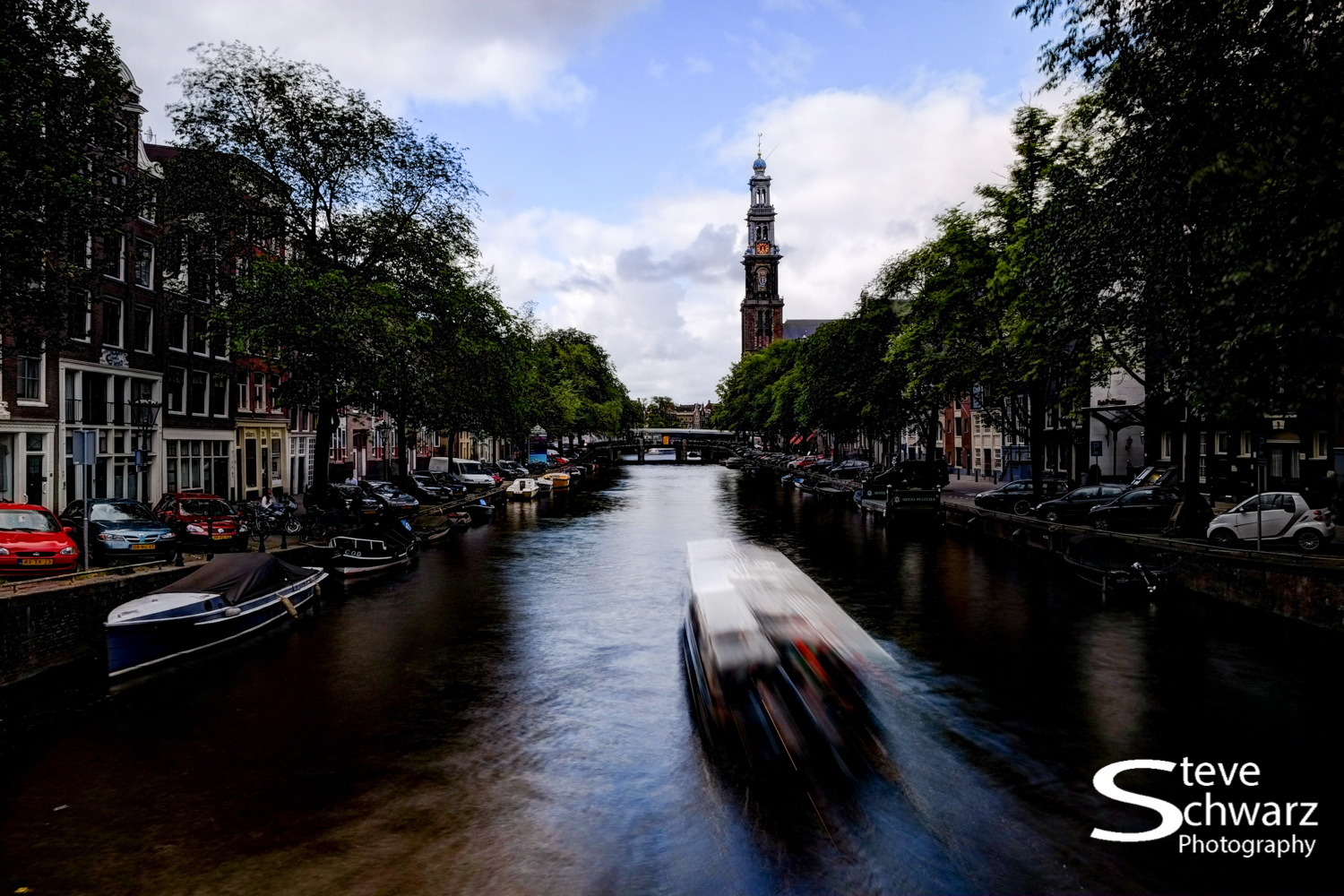
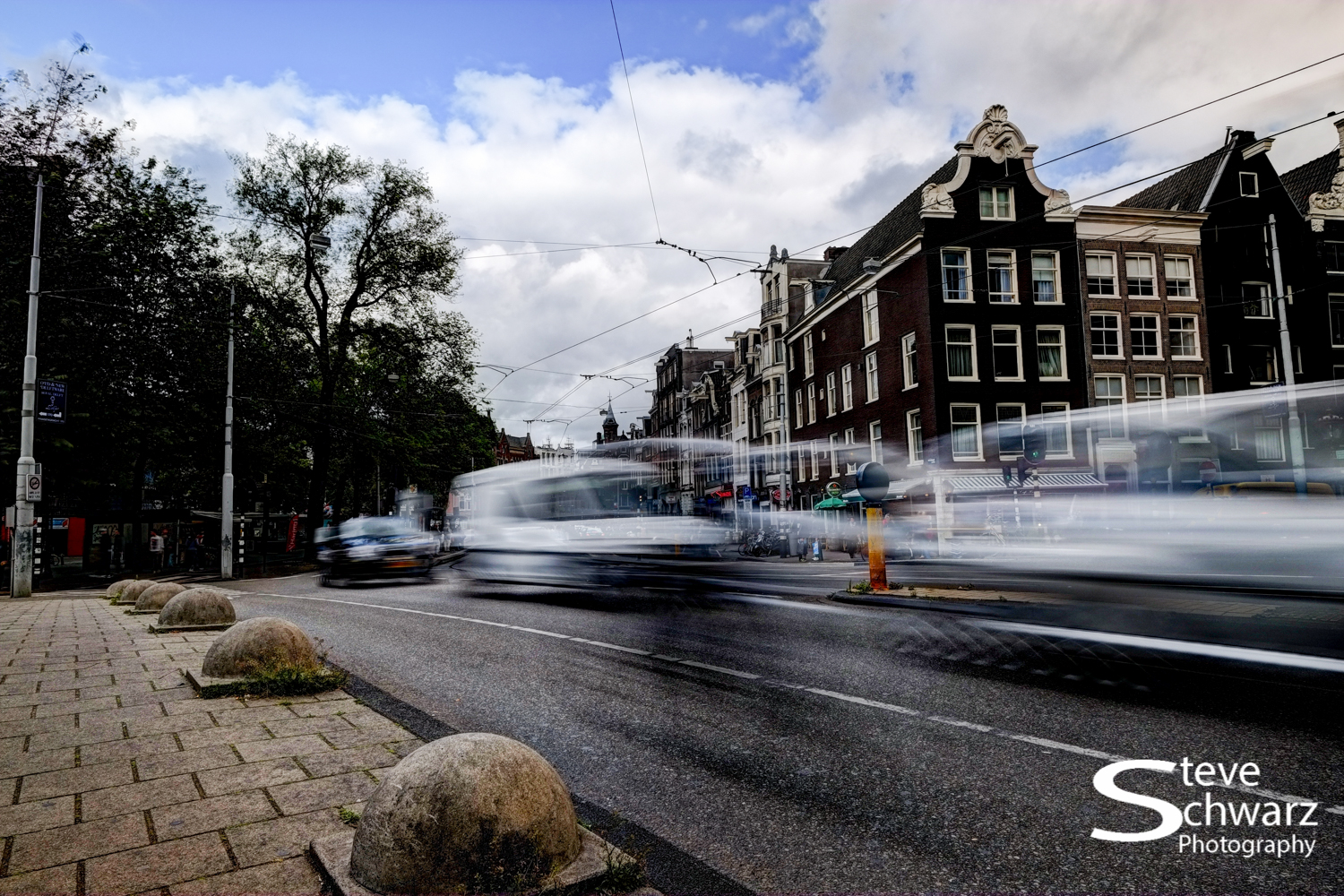
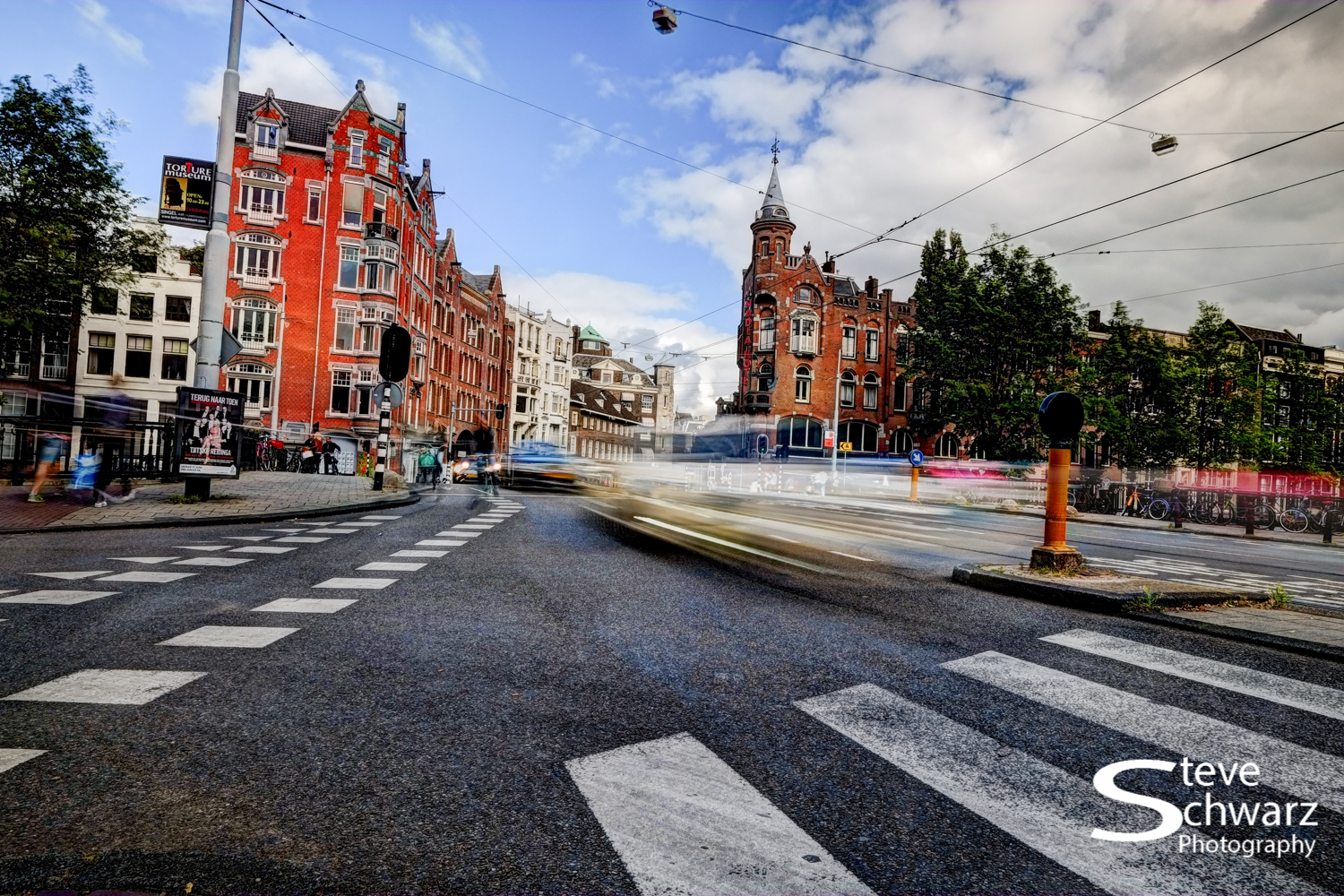
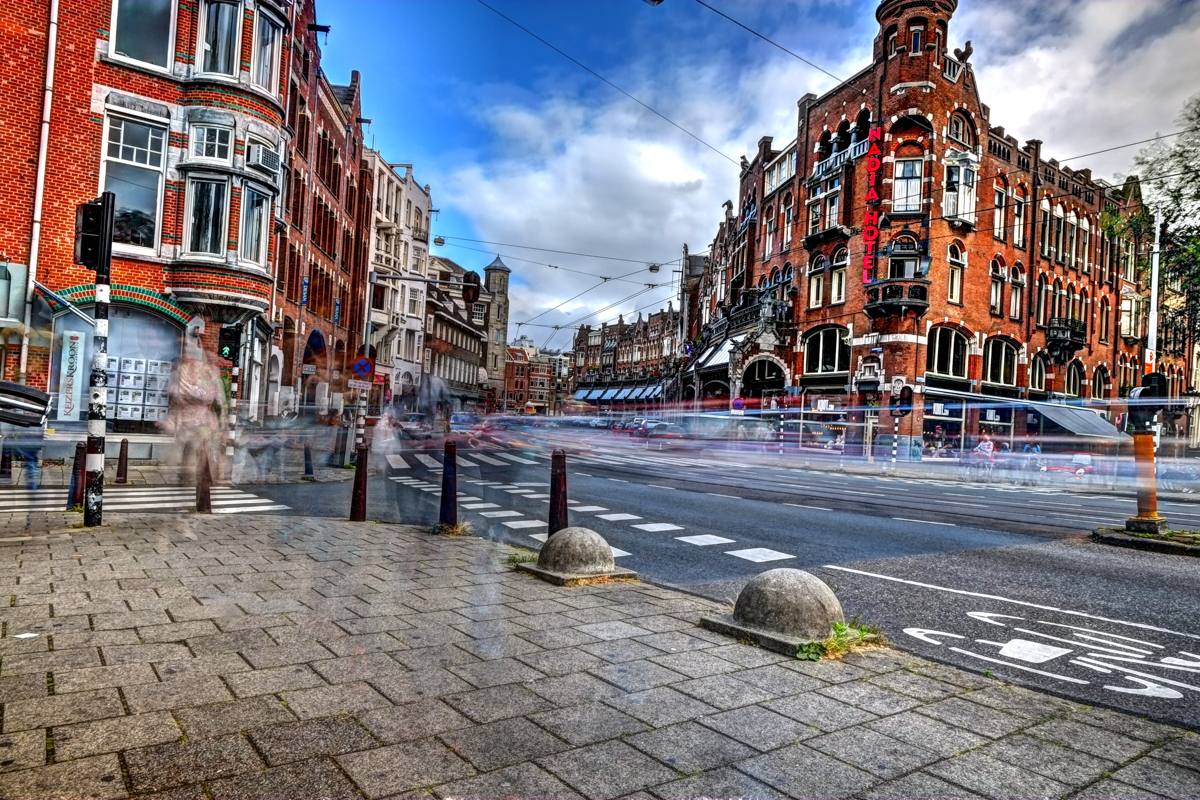
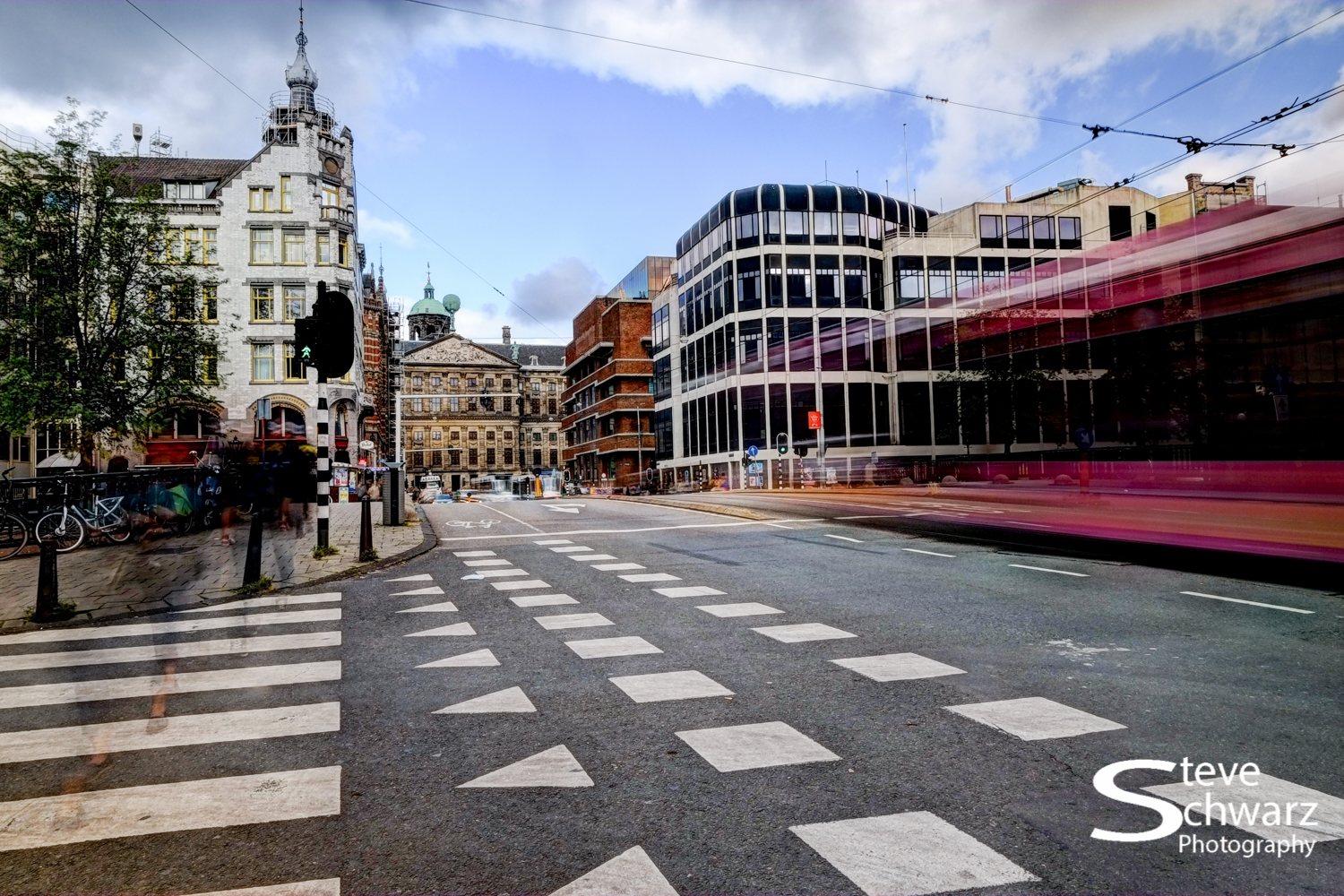
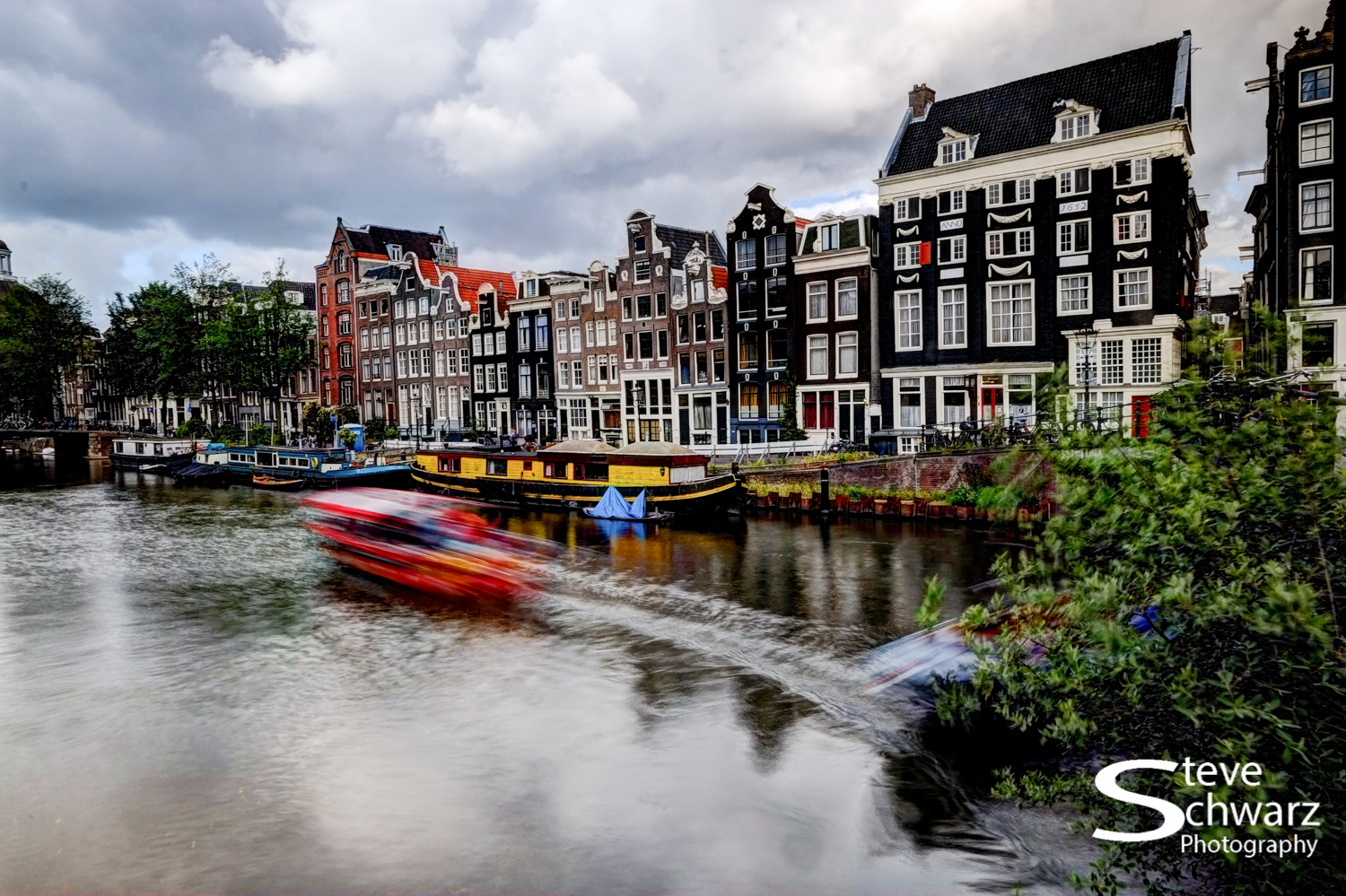
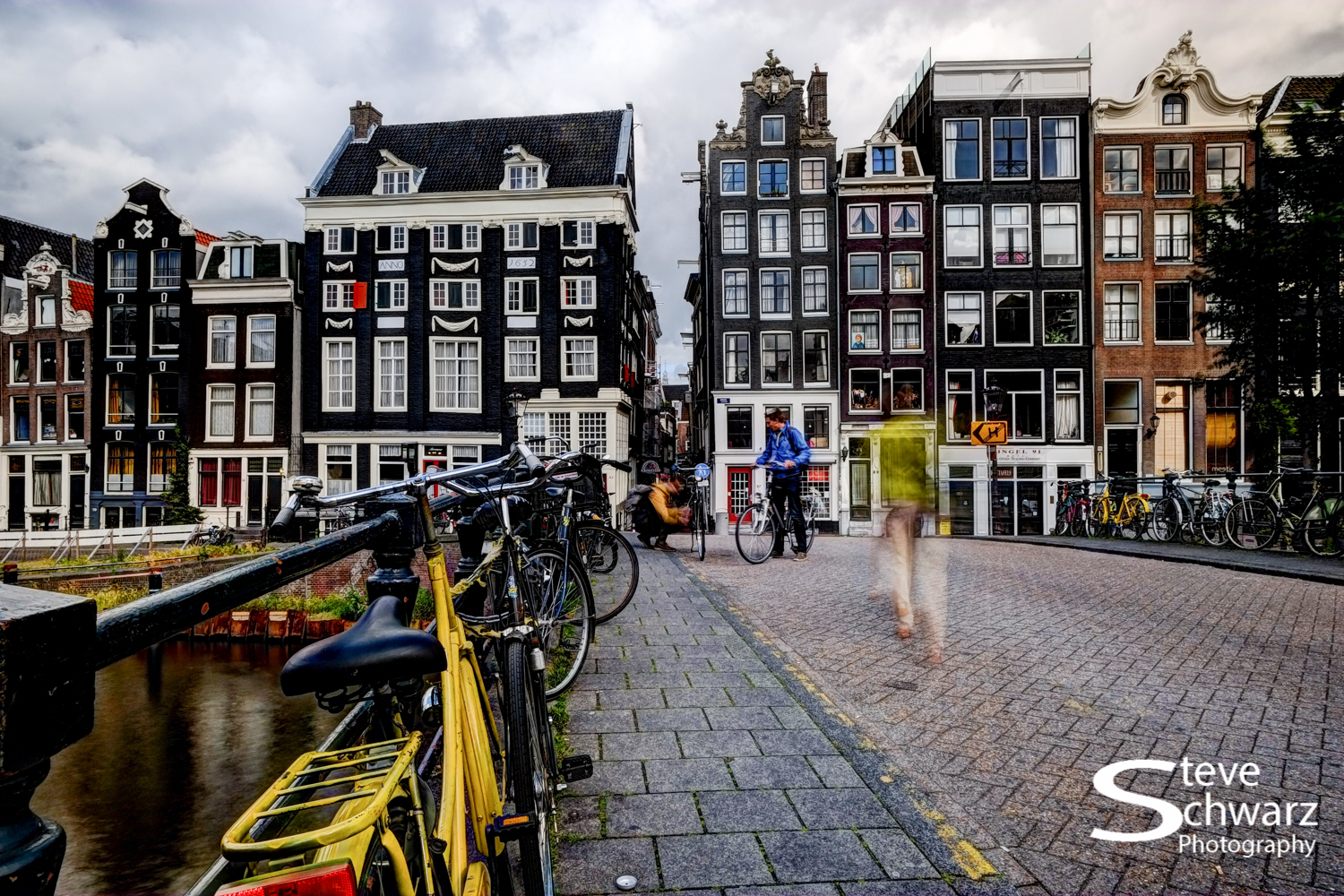
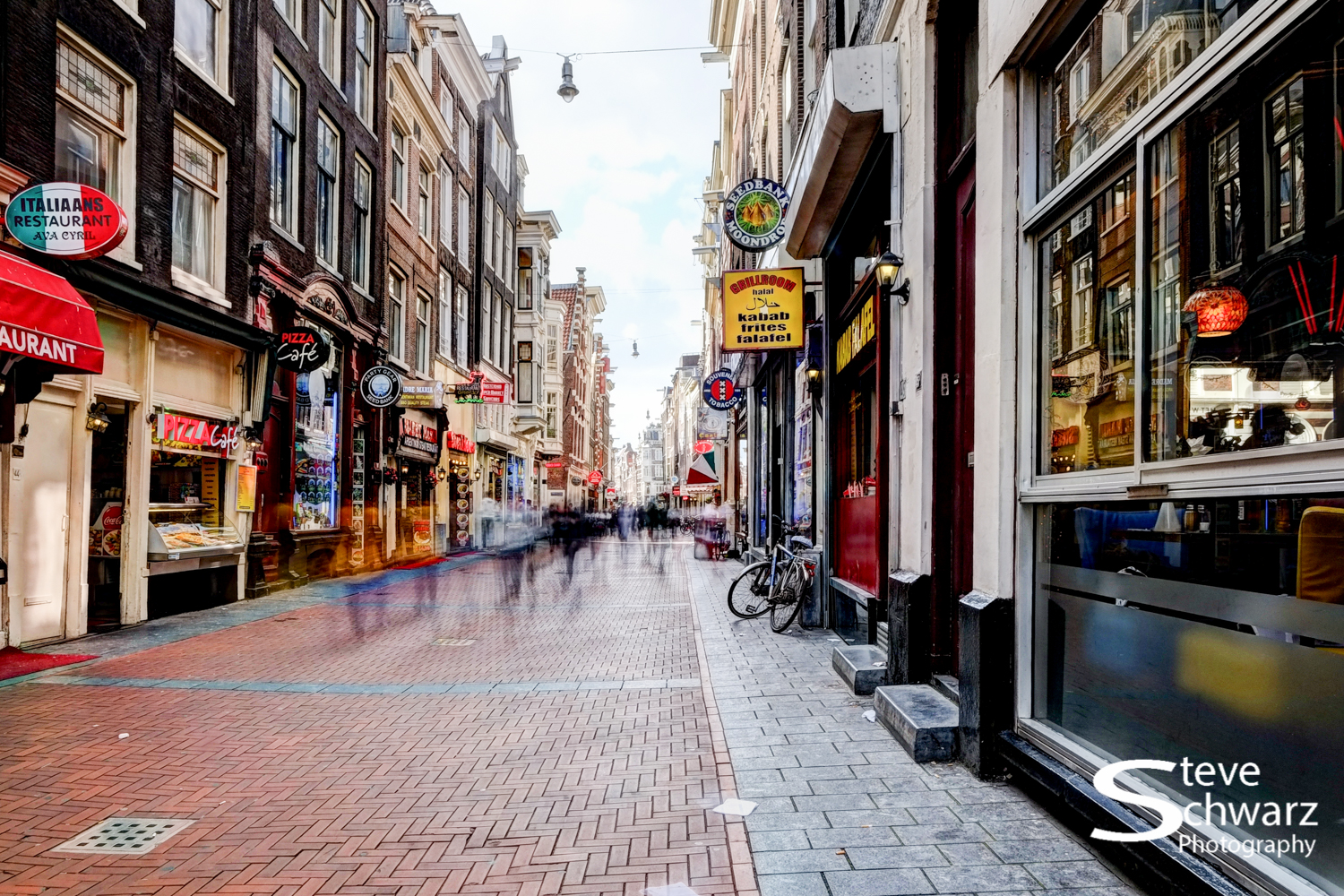
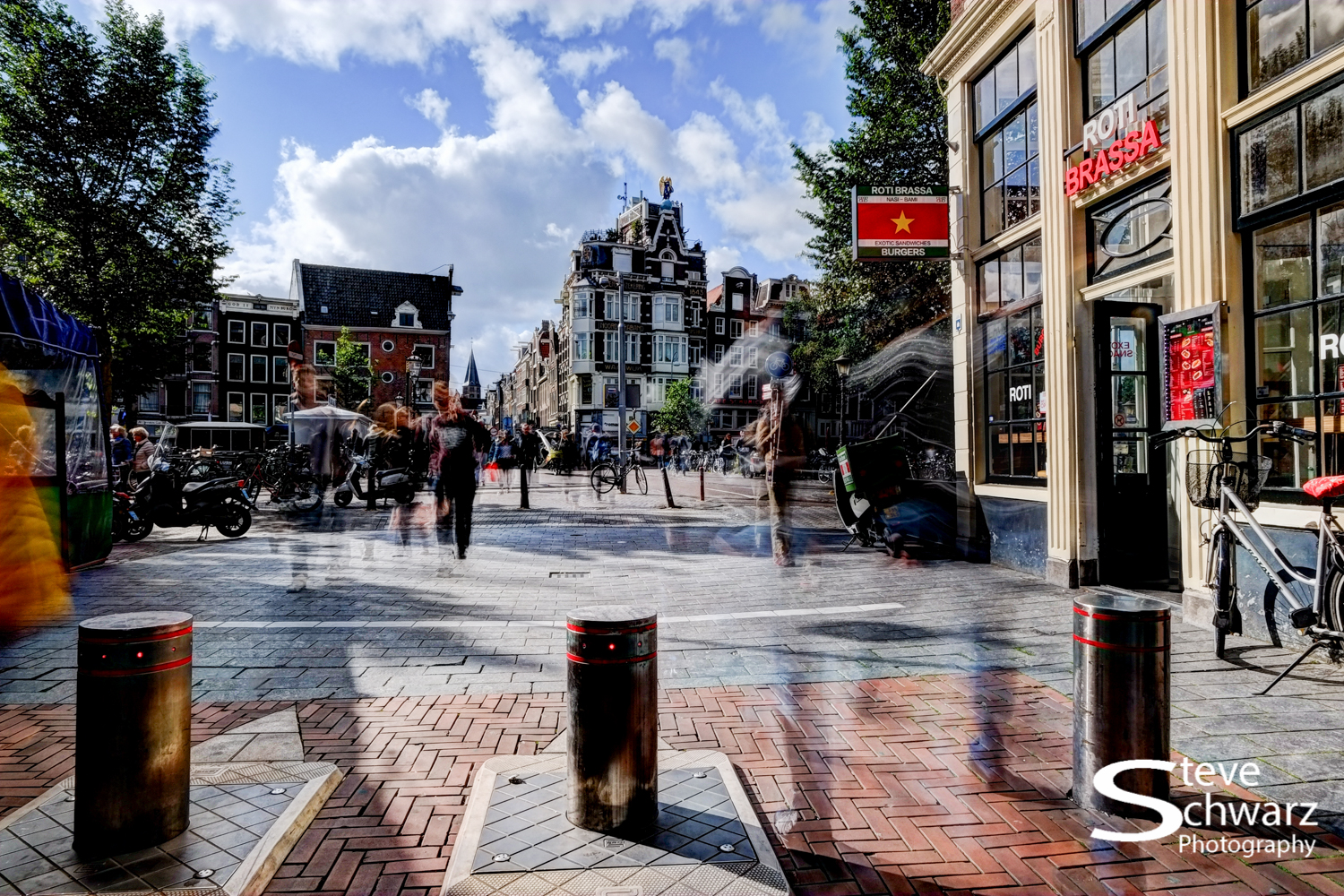
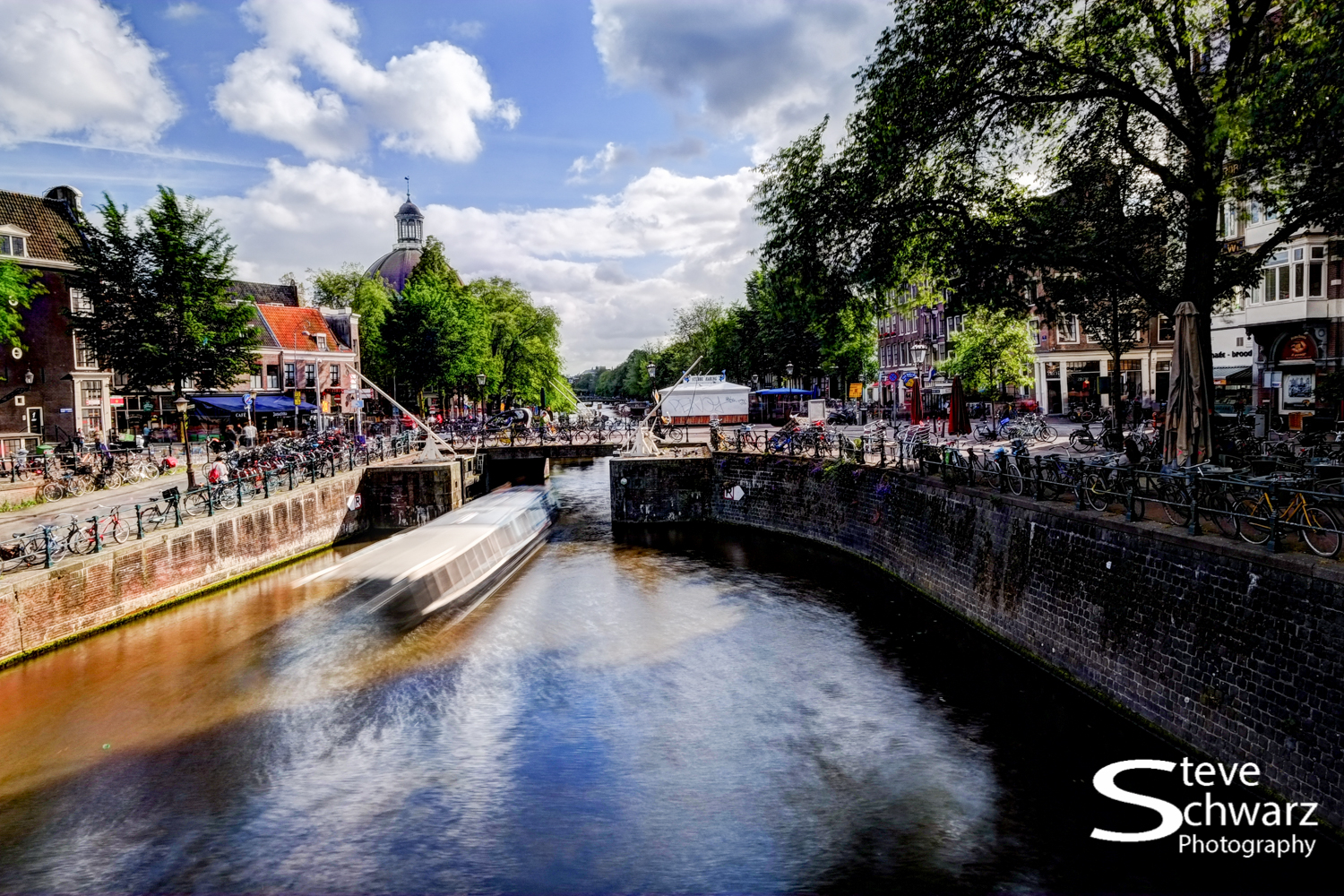
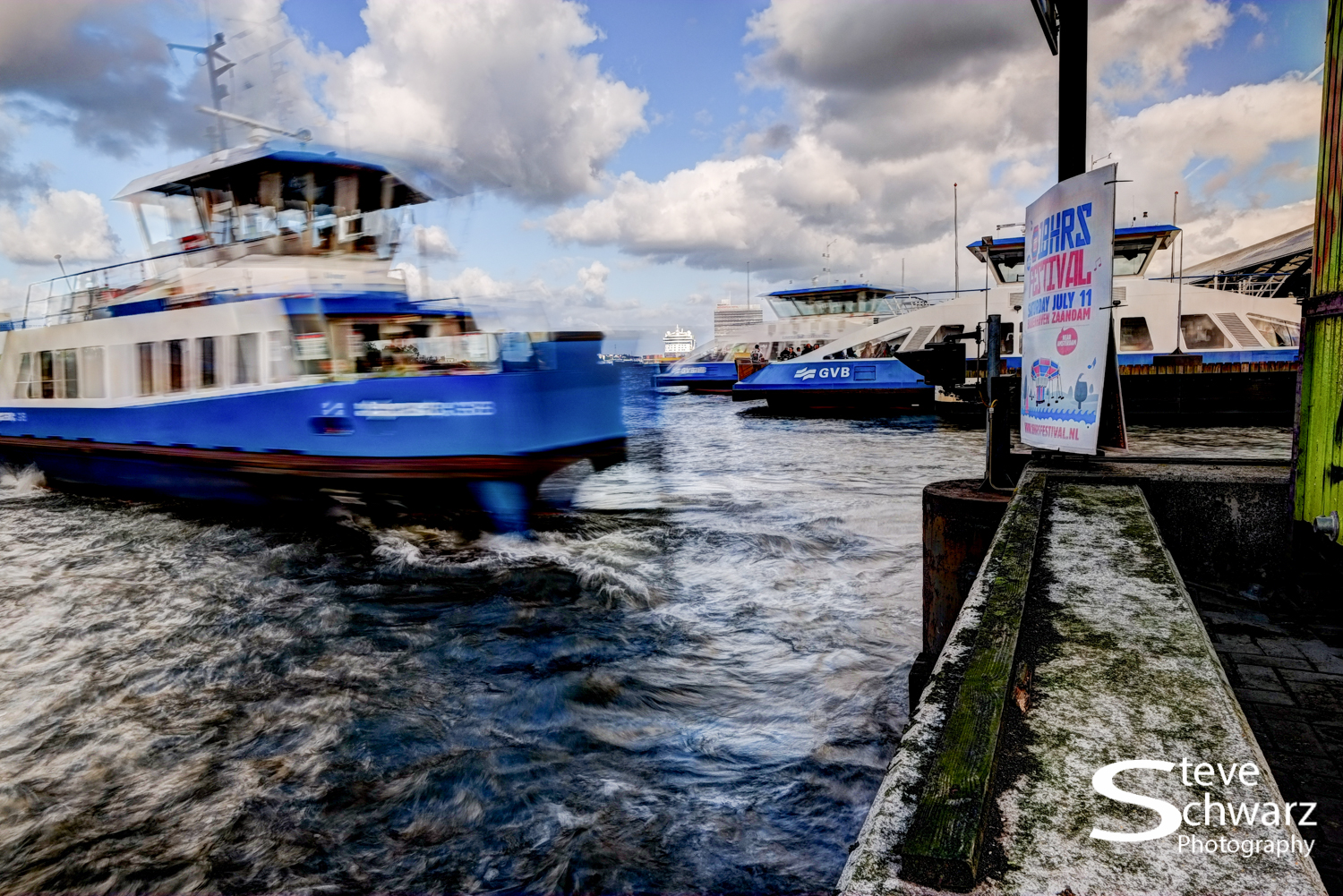
One of the disadvantages of photography is that it is a snapshot in time based on the shutter speed. As photographers, we can choose freeze time by using a very fast shutter speed, or slow down time by using a slow shutter speed.
This is a composite image, of three sets of three photos (slow, medium and fast shutter speed ie: HDR) all combined together into one.


Why ?. The advantage of combining image is to record the static (non-moving objects) and the blur of objects that moved based on the the speed of movement.

 
All photos taken with a Fuji X-E1 and XF14mm, at various shutter speeds with a Hoya 8xND and Hoya Polarizer, and processed in PhotoMatrixPro. Click on any image in the gallery to see it bigger, click on the small black arrows to scroll to the next image.