Around the World with Fuji-X series (X-Pro & X-E1)

A post about camera gear.

I’ve dreaded writing this post for fear of being ‘labelled/classified’ as one of those camera gear – type people.

This post in reply to the emails and Facebook messages lately asking what camera gear I am using while travelling around the world for 10 continuous months. I have both the Fujifilm X-series X-Pro and X-E1 cameras, and the answer to the other question. No – I am not selling my Nikon camera gear. There, two questions answered !.

Those that know me, know that I have a large collection of Nikon camera gear. So – why not bring my usual Nikon gear ?. Travelling for 10 months to foreign places is the ultimate photo opportunity. By experience, I have learned to always carry two camera bodies – each body with a different lens; one body with a wide angle lens, and the other body with a telephoto lens. Having two bodies, also provides the security of a backup if one camera breaks (lesson learned). Although the D700 and with a (14-24mm /17-35mm) wide angle lens, and (85mm / 70-200mm) telephoto lens combination is absolutely fantastic, I did not want to be burdened with the size and weight of all that camera gear. I wanted to travel relatively light, and not be overly noticeable as a photographer with camera gear dangling from my neck, or carried in a specialized camera bag that seems to advertise ‘steal me / rob me’.

Based on the anticipated use during the travels; predominantly street, with some landscape and general travel documentary photography, and after researching other brands, I settled on the Fuji X system since these cameras are an excellent compromise between size, weight, features, and quality. As per usual I bought two cameras – the (at the time flagship model) X-Pro, and the X-E1. Between the X-Pro and X-E1 there are a lot of similarities; both use the same sensor (I cannot see any difference between the images taken using the X-E1 or X-Pro), both use the same battery and flash, the camera controls are almost the same, and both cameras are roughly the same size and weight (although the X-E1 is a little smaller and lighter). The biggest difference is that the X-E1 has a tiny (but effective) pop-up flash, and the X-Pro is slightly larger and has a hybrid optical/electronic viewfinder.

For lenses, I brought the Fuji 14mm f/2.8, 18-55mm f/2.8-4 and 55-200mm f/3.5-4.8. I would have loved to have brought the Fujifilm 35mm f/1.4 as well. Enroute, bought a Samyang 8mm fisheye mostly for panoramas and street photography (this lens is manual focus; whereas Fuji lenses are all fly-by-wire and re-set each time the camera is turned on/off). Compared to the Nikon lenses, the Fuji (and Samyang) lenses are light-weight. The two cameras fit in a non-descript, black Timbuk2 saddle bag with room to spare for one extra lens, extra batteries, extra memory cards, filters, lens cleaning cloth, a water bottle, notepad and pen, water bottle, sunglasses other smaller items …and a 6-pack of beer !.

Complete list of camera gear:

  • Fuji X-Pro (with hand grip)
  • Fuji X-E1 (with DIY hand grip)
  • Fuji 14mm, 18-55mm, 55-200mm lenses
  • Samyang 8mm lens
  • Fuji flash X20
  • 5x batteries, and charger
  • UV filters for all lenses, except 8mm
  • Hoya 8xND and circular polarizer
  • Manfrotto tripod head (494RC2), Cullmann tripod (Nanomax 260) – carrying it almost got me shot !
  • MacBook Pro + 2x external hard drives
  • Lowepro soft lens case
  • Lowepro hip pack (fits inside the Timbuk2 bag)
  • Timbuk2 shoulder bag
  • SD card reader, lens cleaning cloths, Arctic Butterfly sensor cleaning brush

Thus far, at 7 months into the journey my camera gear has travelled through humid jungles of Thailand, high altitude mountain treks in Nepal, in the hot and dry Australian outback, dropped in sand on a beach in Turkey, and my camera bag has been thrown aboard busses, trucks, trains, rickshaw, and on the roof of taxis (not even tied down). I have leaned a lot about how well the X-E1 and X-Pro perform in these diverse environmental conditions – for the most part they performed well, although not without flaws. On a couple of occasions gigantic blobs of dust appeared on the sensor, and could not be removed by the built on sensor-shake-cleaner, requiring a cleaning with an Arctic Butterfly sensor cleaning brush. Autofocus is slow, though this has been greatly improved in X-E2 and X-T1 – so do not plan to use the X-E1 or X-Pro for sports or nature (e.g. flying birds) photography. Both the X-E1 and X-Pro have EV-compensation dials that are easily rotated off ‘0’, resulting in over or under exposed images. Neither cameras weather sealing (X-T1 does), so use a clear plastic bag when photographing a water ballon fight (e.g. Holi – Festival of Color in Nepal). Burst shooing at six frames/second ? – forget it, unless you want your camera to lock up for several minutes while the camera writes the images to the memory card. The weirdest glitch is between the X-E1 and 14mm, they are simply not compatible !. With the 14mm lens, the X-E1 camera locks up, the LCD goes black and flashes. When the camera is turned on/off it repeats. I removed the battery, upgraded the firmware on both lens and body, no effect. I just plan to not use 14mm on X-E1 !.

Using a Fuji X-E1 or X-Pro is unlike using a DSLR; the entire process and feeling is different. Simply- you have to enjoy using the cameras, and know what you are doing, and adjust your photography technique. Read other blogs, and read that some people have a ‘Love Hate Relationship’ with their X-E1/X-Pro. For me, it is the right tool for the job; I love the size, I love the weight (or lack of weight), I love the ergonomics of the X-Pro (whereas my D700 feels like a 5 pound brick), I love the colours of the photos, and I love that the images do not need much post processing. An added advantage of the smaller X-Pro and X-E1 cameras is that they are far more discrete that a full-size DSLR, I never stood out as a photographer, and blended into the role of tourist giving me far more freedom and access than if I had a large DSLR around my neck.

Will I sell the Fuji cameras when I get home and go back to Nikon DSLR, or keep the X-E1/X-Pro and sell the Nikon ?.

Neither – I will keep both the Fuji cameras and the Nikon. My style of photography is quite diverse; ranging from landscape, portrait, sports, wildlife, private and commercial work. Both the large Nikon and small Fuji are capable cameras, though both are completely different in capabilities. Choosing one or the other depends on the requirements of the situation. One blogger even referred to the “thoughtful” shooter – that is, you take the time to compose your image properly, check your settings, etc.

Should you buy a X-E1/X-Pro ?.

No – I’d recommend getting either the X-E2, X-T1 or waiting until the X-Pro2 is released.

Bottom line. I am very happy with my Fuji cameras and lenses, they may not be the ‘best’ travel cameras – though they are significantly smaller, and lighter than large DSLRs, and produce beautiful pictures time after time.

 

Foreign Travel & People Pictures

SHSB7122During the past 8 months we have traveled through Thailand, Cambodia, Australia, Nepal and Turkey.

I have taken 100’s of thousands of photos; landscape, architecture (modern to ancient), street photos, markets, farmers fields, cows, horses, farm machinery, beaches, sunrises, and sunsets.

In amongst all those photos, there are a couple of people pictures – a couple. Early on, back in Thailand (November 2014) I had the balls to smile at people on the street and point to my camera and to them. Usually, they would get the idea and smile while raised my camera and photographed them. By February (2015) in Nepal I had virtually stopped photographing random people – Why ?. People represent the culture of a nation …… Why did I stop ?.

The people in Thailand and Cambodia were friendly and so beautiful. In Australia, the people we so friendly and beautiful too – though very similar to my own culture (I am Canadian). People in Nepal seemed shy – on many occasions they would turn away, or use their hands to wave me away. I suspected, that they were tired of being attacked by camera toting tourists (paparazzi). I could have switched to a longer lens and stood back – though I don’t feel comfortable being a sniper.

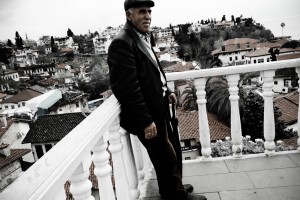
Now, here in Turkey, I am trying to build up my courage to ask – either with words, or hand signals. Why not – Turkish people are beautiful too, and they – their personality and their clothes tell so much about the culture and spirit of the nation. Wish me luck !.

My camera is Black – but not a Black Box

My camera is Black – but not a Black Box

During the past few months, I’ve travelled from Canada to Thailand, Australia, Nepal and Turkey by airplane. As we all know, large commercial airplanes have ‘black boxes’ that record the parameters of flight such as altitude, engine performance and pilot conversations.

In many ways, my camera is also a black box. It records the parameters of the photo – shutter speed, aperture, time and date. However, unlike airplane black boxes, the camera does not record my conversation while composing the photo. Not that I talk out loud while composing a photo – Imagine for a moment that the camera could record my mental conversations, thoughts, and envision for what I am seeing in the scene in front of me. 
Steve to camera – ‘I am taking this picture because…’

Steve to camera – ‘Lets slow down the shutter speed to blur the people walking by…’

Steve to camera – ‘What if I moved a bit to the left…’

Steve to camera – ‘Lets see what happens if we add +1 exposure to reduce the backlight …’

Steve to camera – ‘What if I…’

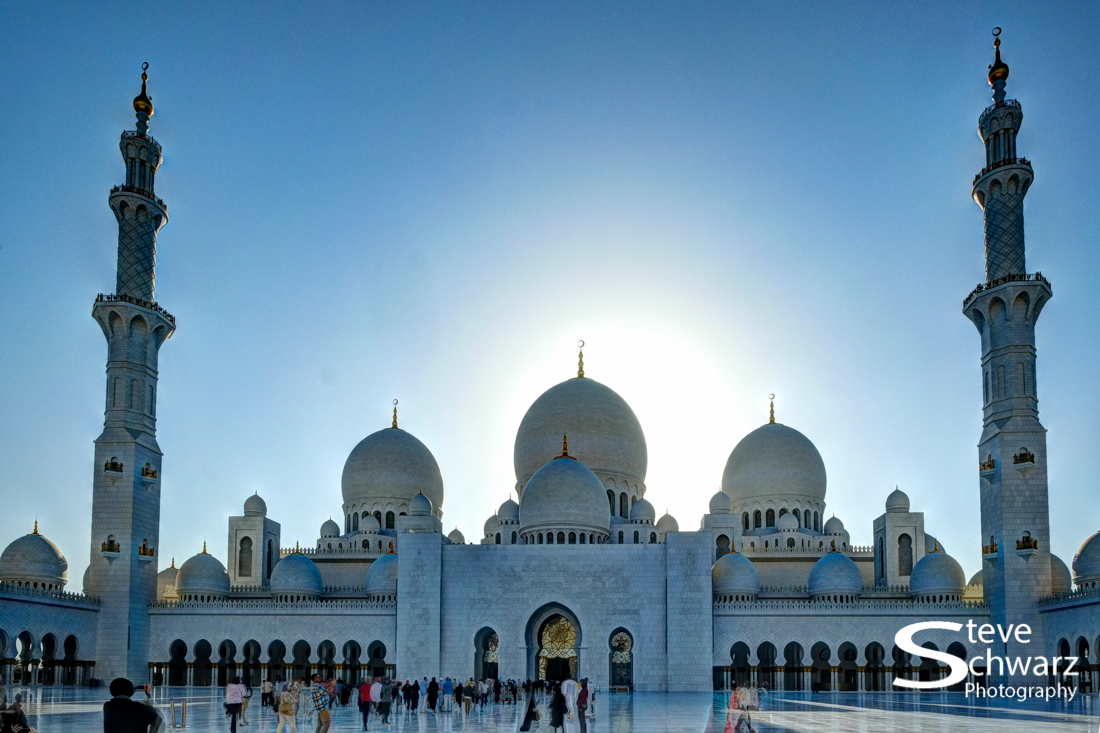
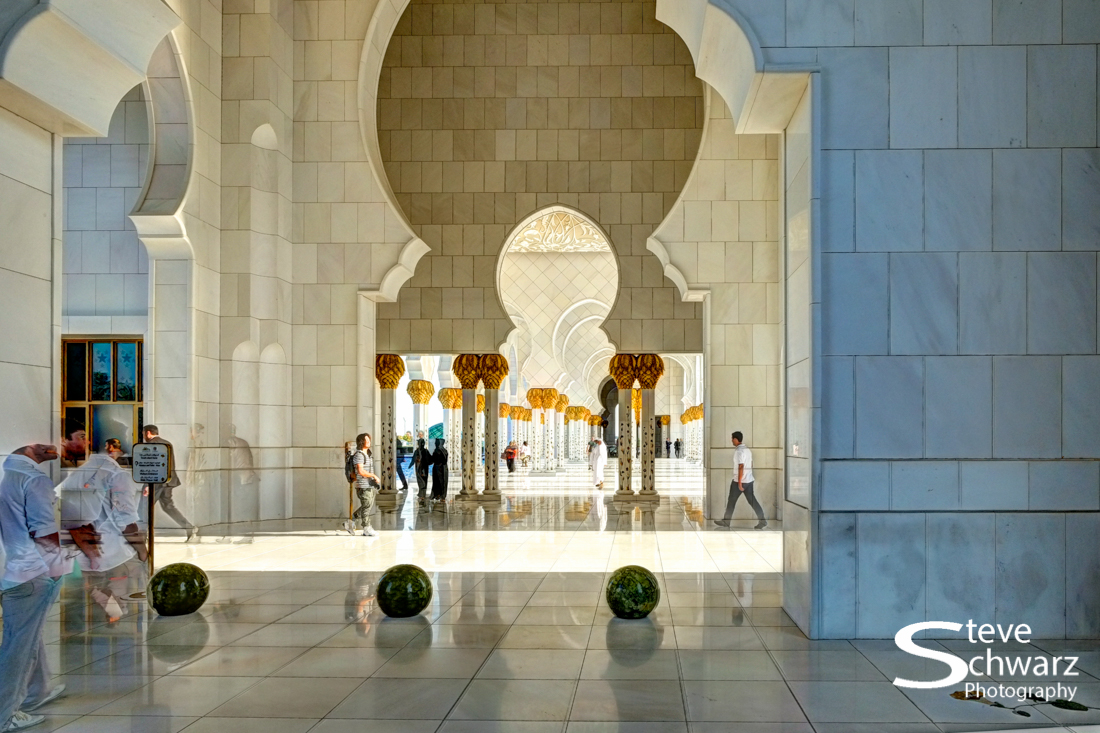
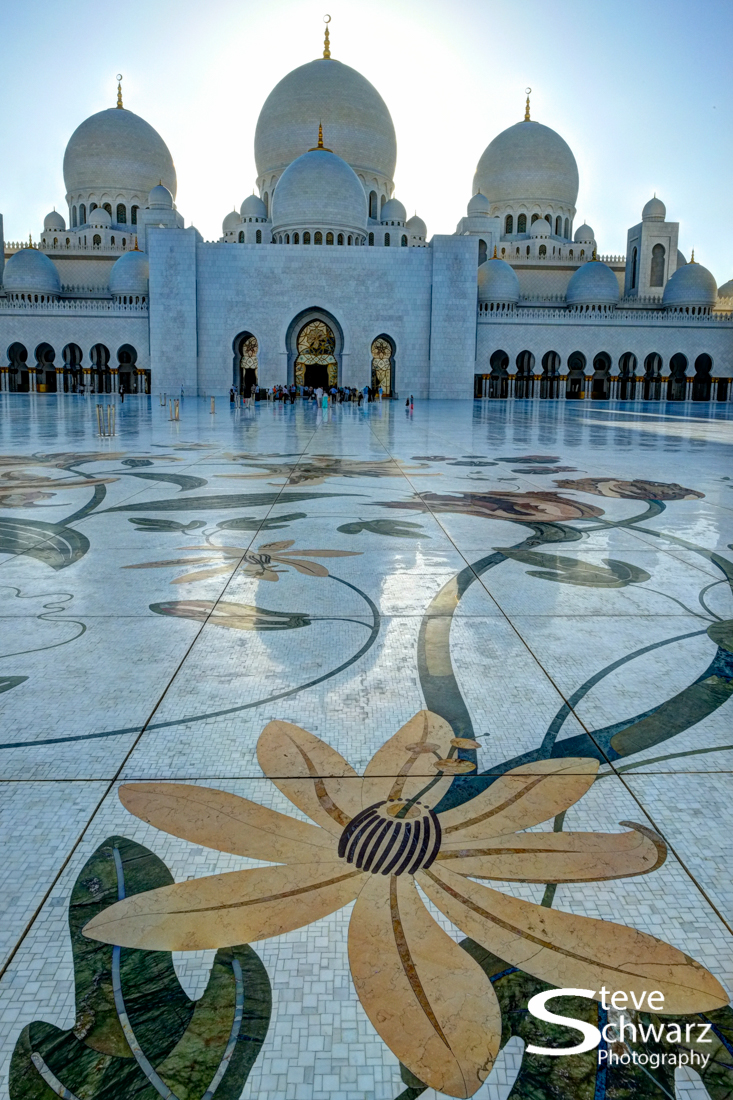
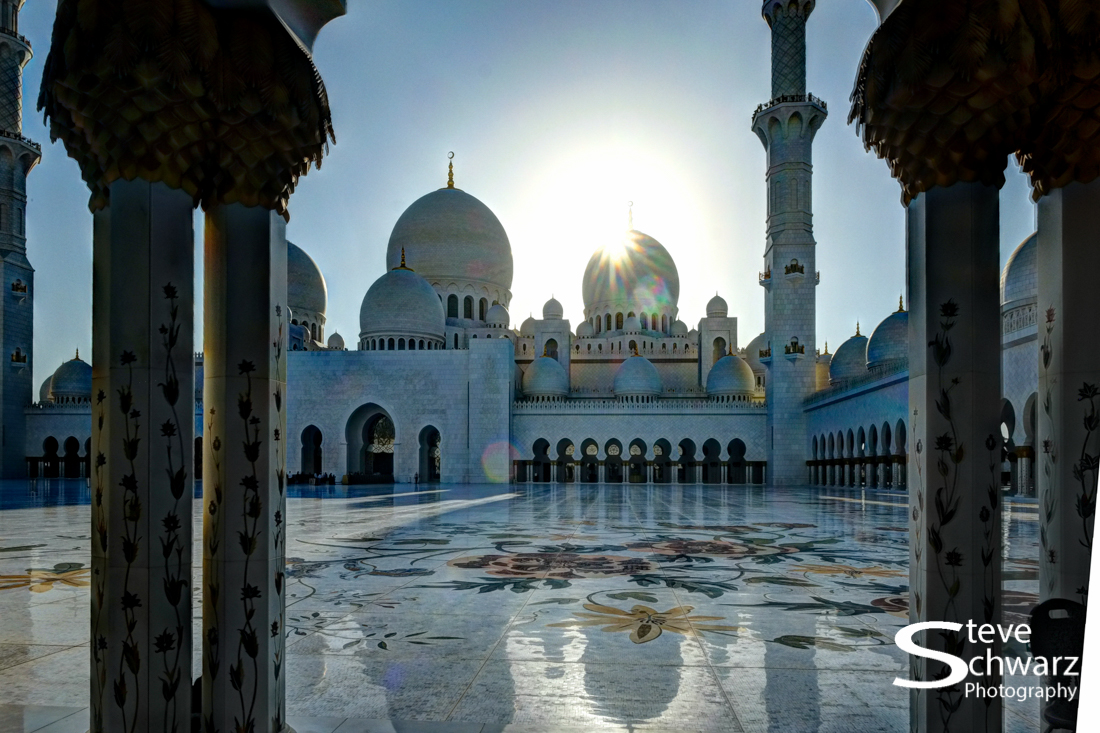
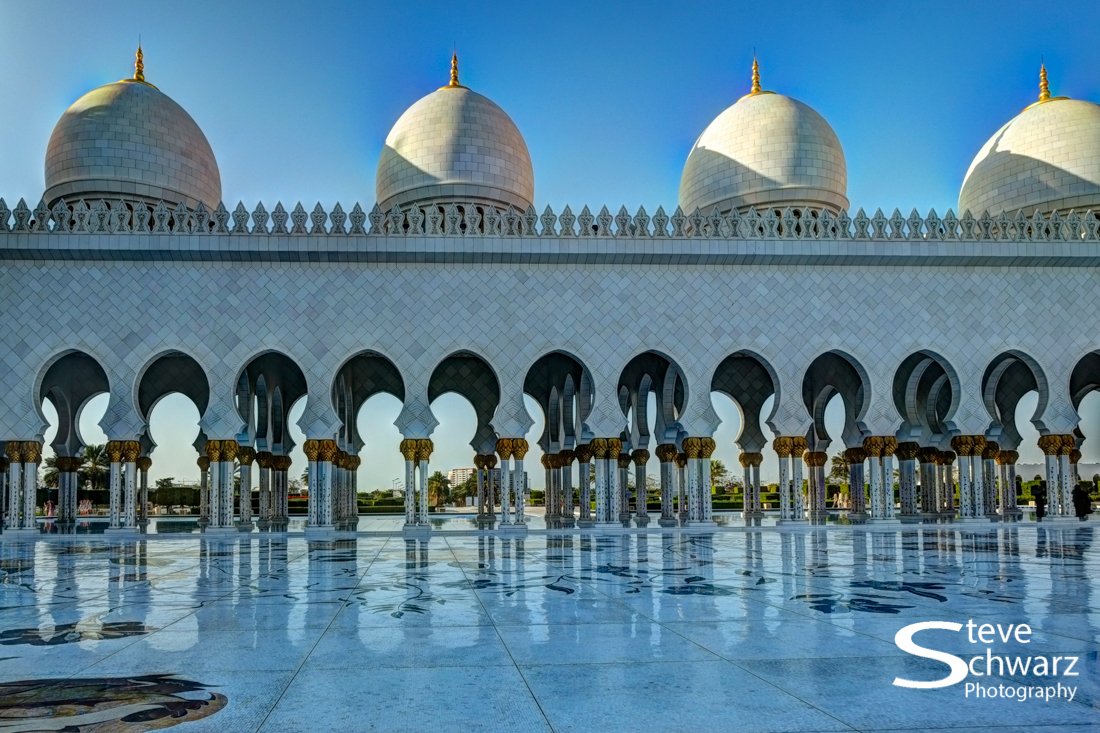
Sheikh Zayed Mosque

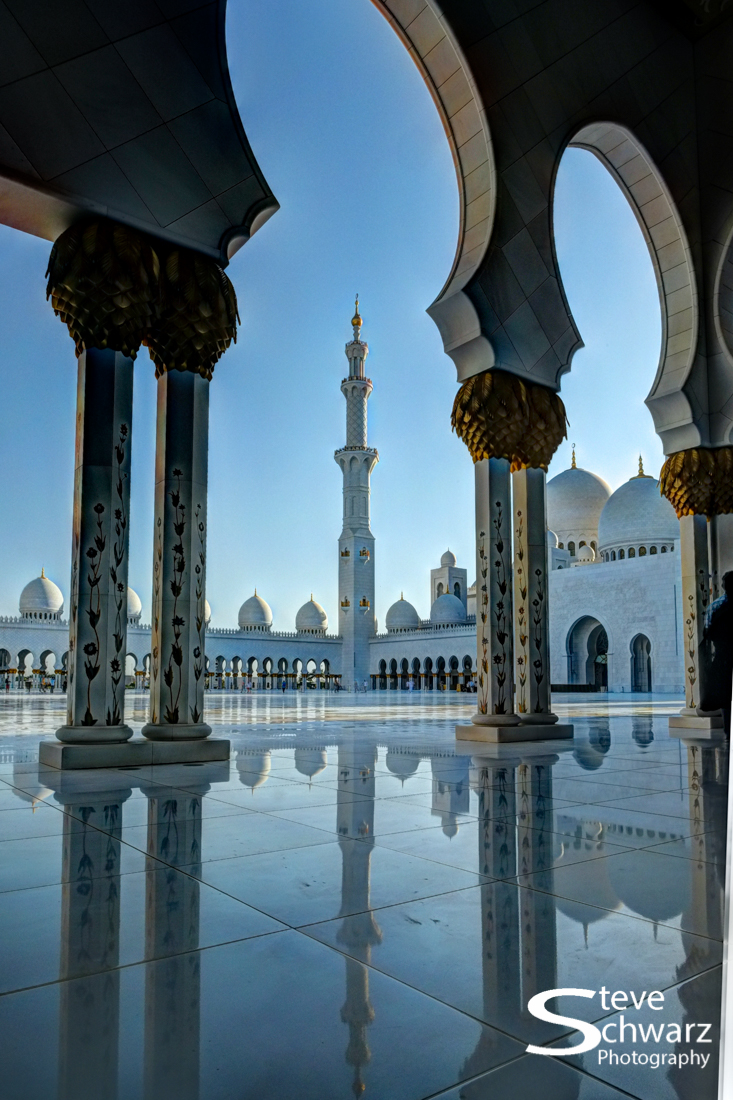
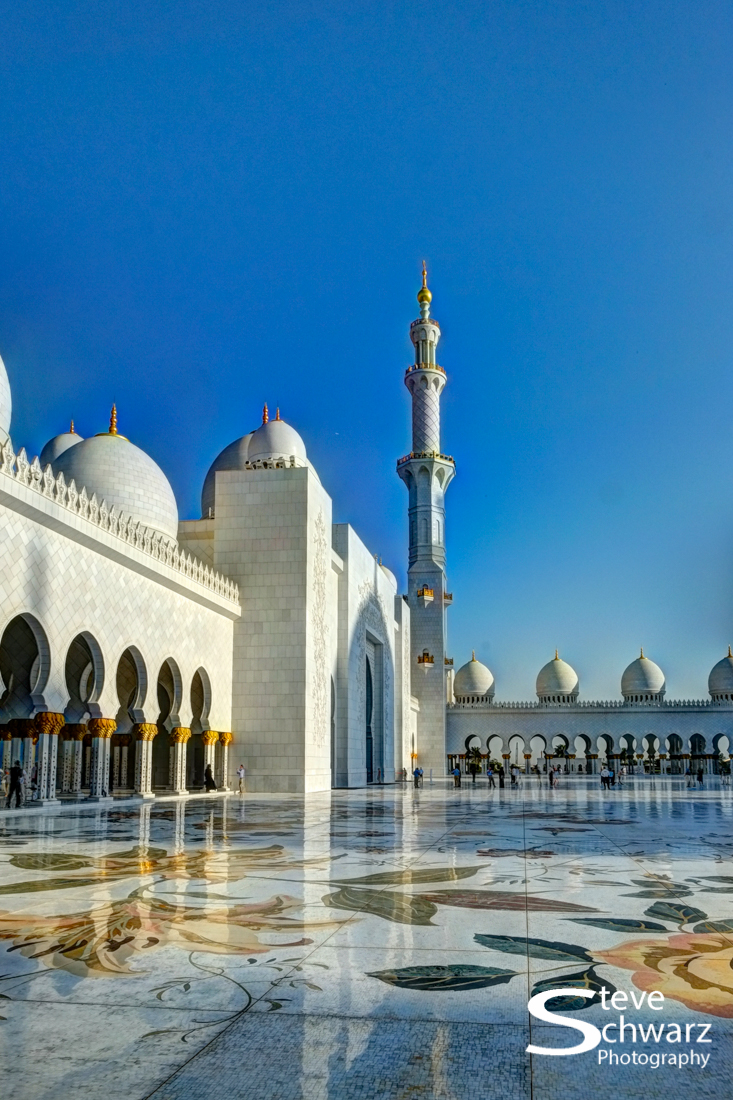
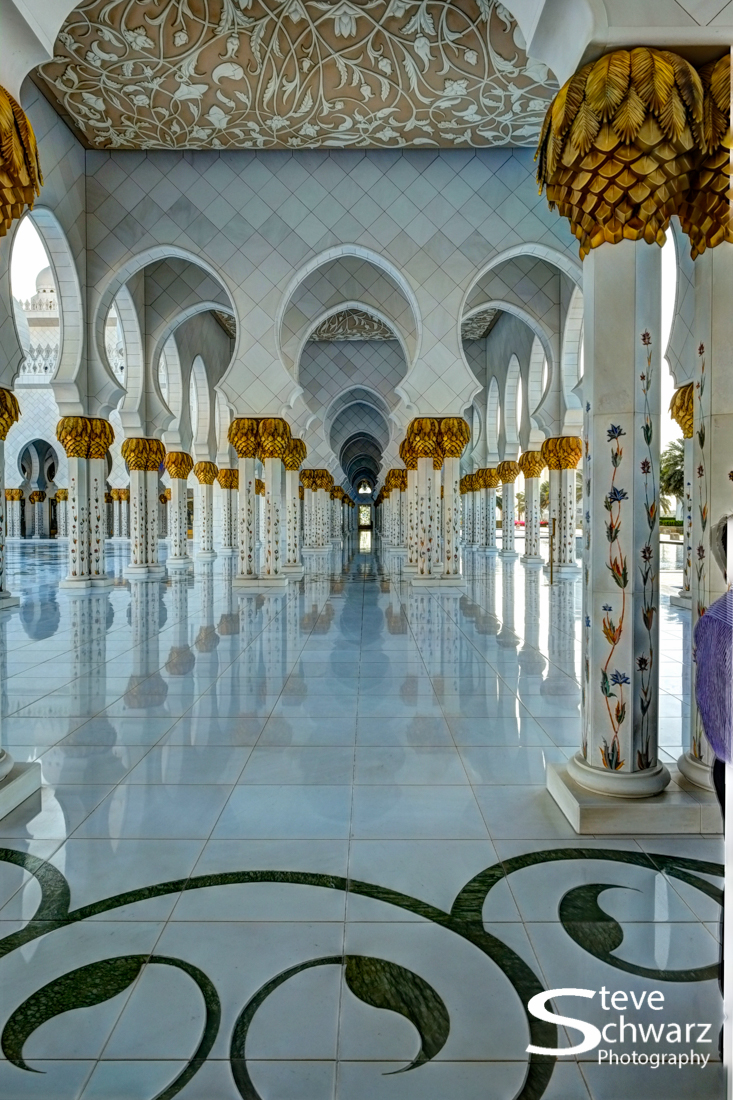
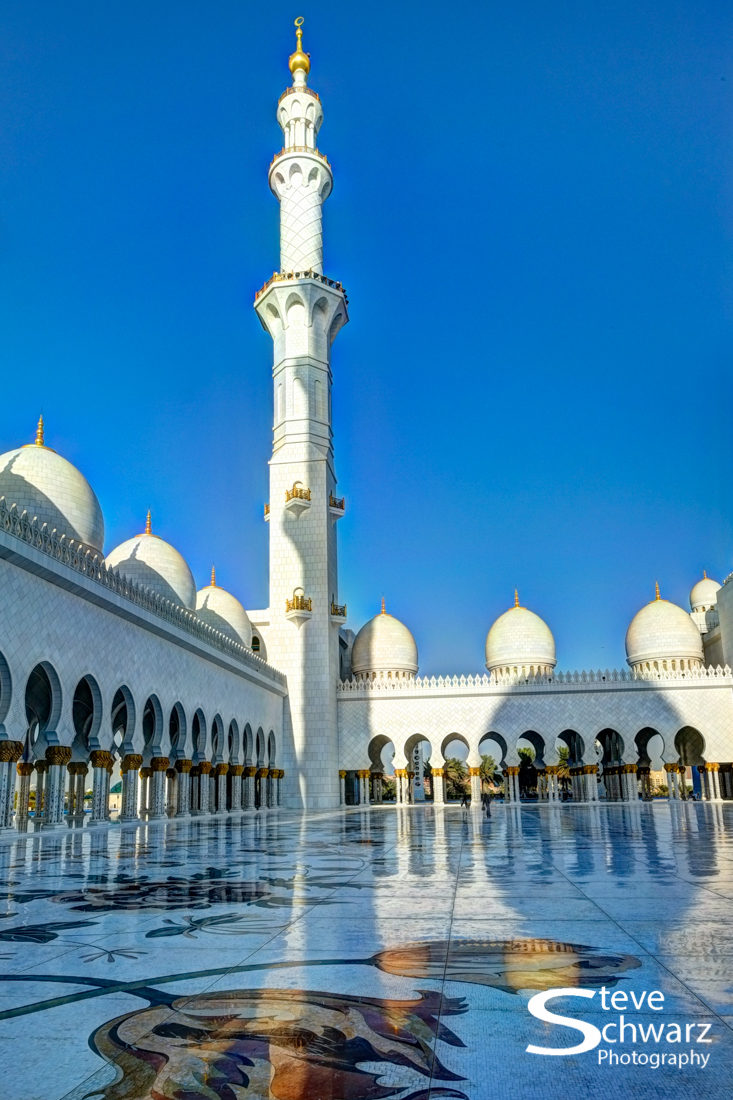
This collection of images were taken at the Sheikh Zayed Grand Mosque in Abu Dhabi (the capital the United Arab Emirates). Architecturally stunning and large enough to accommodate 40,000 worshippers, the mosque was constructed from 1996 to 2007. There are 82 roof-top domes, more than 1,000 columns, 24 carat gold gilded chandeliers, and contains marble stone, gold, semi-precious stones, crystals and ceramics. and the world’s largest hand knotted carpet. Photo technique: All photos were taken handheld (tripods are not allowed), with the camera braced against a wall or column. Three long exposure photos (-1, 0, +1 exposure) were combined to ghost the other visitors. Photos combined in PhotoMatrix Pro. Fuji X-E1 with XF 18-55mm lens.

Click on an photo to make it larger, and use the arrows to move to the next photo.


Trekking in Nepal – Top 10 things to Bring

In February 2015, I completed two multi-day treks in Nepal, including the 5-day Ghorepani Poon Hill Trek, and 8-day Langtang Valley Trek. The list below is based on what I learned along the way, and a recommendation to those trekkers whom do not know what to bring – and end up bringing far too much, and are burdened by very heavy backpacks while trekking in the low-oxygen air !.

In a few words: When trekking – Less is better.

Top 10 things to Bring:

  1. Passport (photocopy of passport and extra passport photos): for permits, and Money (~1500 Rupi/day)
  2. Flashlight (& extra batteries): many power failures
  3. Toilet paper (& toothbrush, toothpaste, soap, small bottle of shampoo, towel, sleeping sheet). ** Sleeping bags not required if you stay at the guesthouses.
  4. Backpack (with waterproof cover) [no more than 65 litre]
  5. Hiking shoes (lightweight shoes are better that heavy leather boots) (ice grippers – seasonal)
  6. Inner wear: 3x pairs of socks, 3x underwear, 3x quick dry shirts
  7. Middle wear: quick dry pants, windproof sweater
  8. Outer wear: rain coat, scarf, toque, sun protection (sunglasses and sunscreen)
  9. Water bottle and water purifier (I used a UV-light; no taste, though needs the occasional re-charge of batteries)
  10. First aid kit and altitude sickness pills (breathing mask for Kathmandu)
  11. *Camera (& extra batteries)

In Nepal carrying a Tripod can be Dangerous to your Health !

Carrying a tripod in Nepal almost got me shot by Nepal Police, and had Army soldiers walk by with ‘safety off’ on their rifles.

It all started in Nagrakot (an hours drive north of Kathmandu), while walking through a Police checkpoint. I’d passed through this check point several times before, even with my camera tripod attached to my backpack, and had no problems. On this fateful day, I was carrying the tripod in my hand as I approached the checkpoint. At about 10 meters away the Police suddenly, and without warning started shouting at me, and pointed his rifle at my chest. I could not understand what he was saying – though the way he was waving his rifle, is seemed to mean …’drop ….drop’. With my eyes locked on the rifle, I slowly moved my arms away from my body, and lowered the tripod and placed it on its legs on the ground. In my right hand, I was holding my camera with a wrist strap. I placed the camera on the tripod, and carefully slid off the wrist strap and backed away. Seconds later, though it seemed like forever, another Policeman came running from behind me. He was angry, really angry and saying ‘camera…click..click’. I thought I was going to piss my pants. The second Policeman ran in front of me toward the first Policeman still with the rifle pointed at me, yelling something. The first Policeman then lowered his rifle (a World War 2 vintage Lee Enfield), then spat on the ground and flicked his thumb toward the path and went inside his guard post !.
A few hours later, walking along the main road and passing a military base I saw a small hill on the other side of the rood. The small hill overlooked the valley below and had a superb view of the mountains in the distance. I headed over, checked out the view, took a few pictures, had a snack. The moment I unstrapped the camera tripod from my backpack – three soldiers came running over. Fortunately, none were carrying weapons. One said – “You are not allowed to be here”, to which I replied “I am sorry, there were no fences or signs”. He smiled, and said, “Yes – you are correct”. As we walked back to the road, we talked about Canada, and his memories of eating ‘beaver tails’ in Ottawa. We shook hands and he went back to his guard post.

Not even 20 minutes later still walking along the same road, a group of approximately 30 Nepali soldiers approached. Again, I was carrying the camera in one hand, and the tripod in the other hand. Each soldier was carrying a rifle – the very same rifles that I had used as a young cadet in the Canadian Armed Forces 17 years ago. These were the FN FAL rifles, and as each soldier walked past, I could see that the safety switch was set to ‘Off’, and their index fingers were resting on the trigger guard. These soldiers were ready for shooting !. Through the corner of my sunglasses, I could see that they were not lokig at my eyes, but at the tripod in my arm. Not wanting to disturb them, the best thing to do was to continue, and not make any sudden movements, or stop to attach the tripod to my backpack.

So – be warned. To the eyes of a Nepali Policeman or Nepali Soldier – a camera tripod is a threat, and if you are not careful, carrying a camera tripod can be hazardous to your Health.


On guard for tripod carrying tourists in Nepal.

On guard for tripod carrying tourists in Nepal. I walked past him a few hours before – without problem; with the tripod strapped to my backpack.


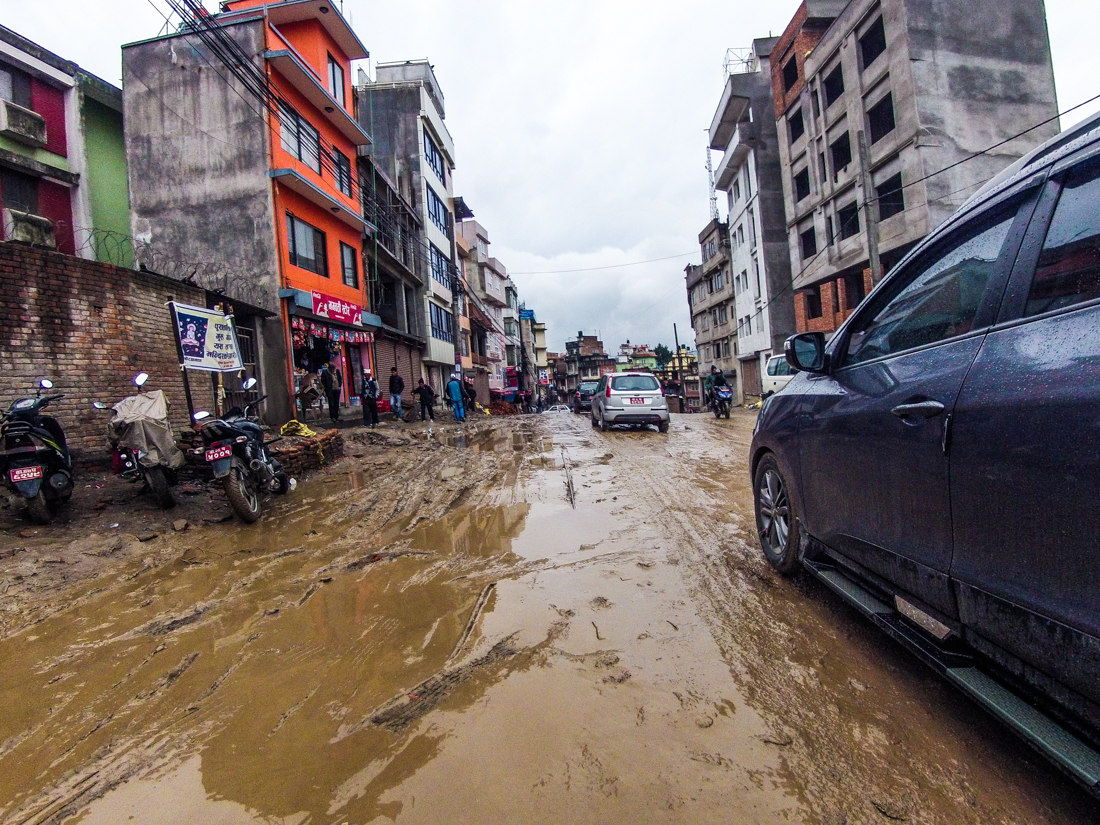
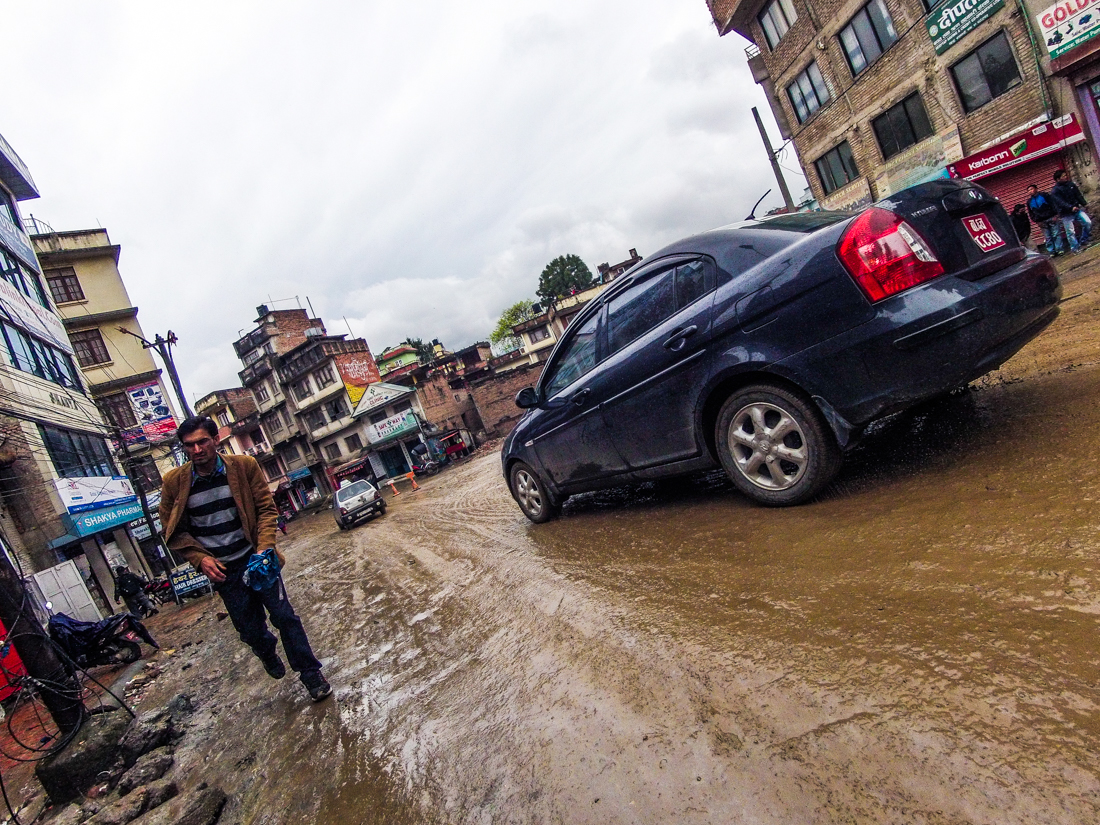
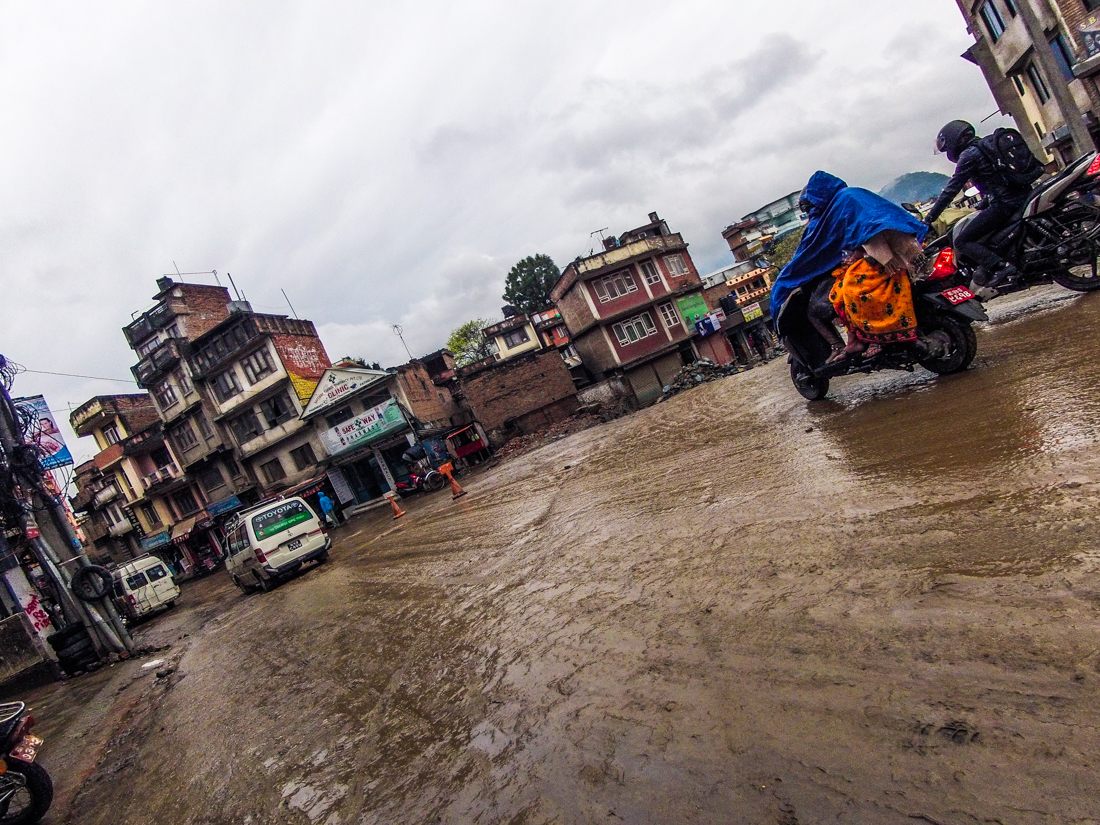
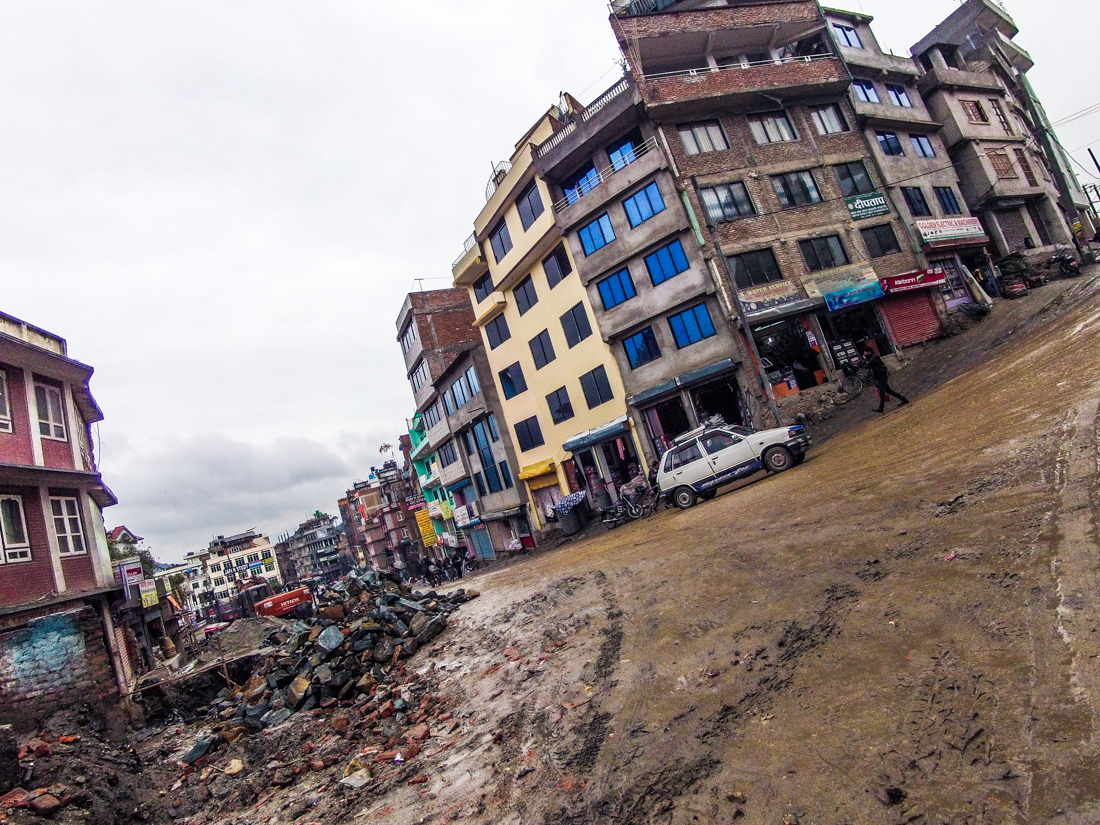
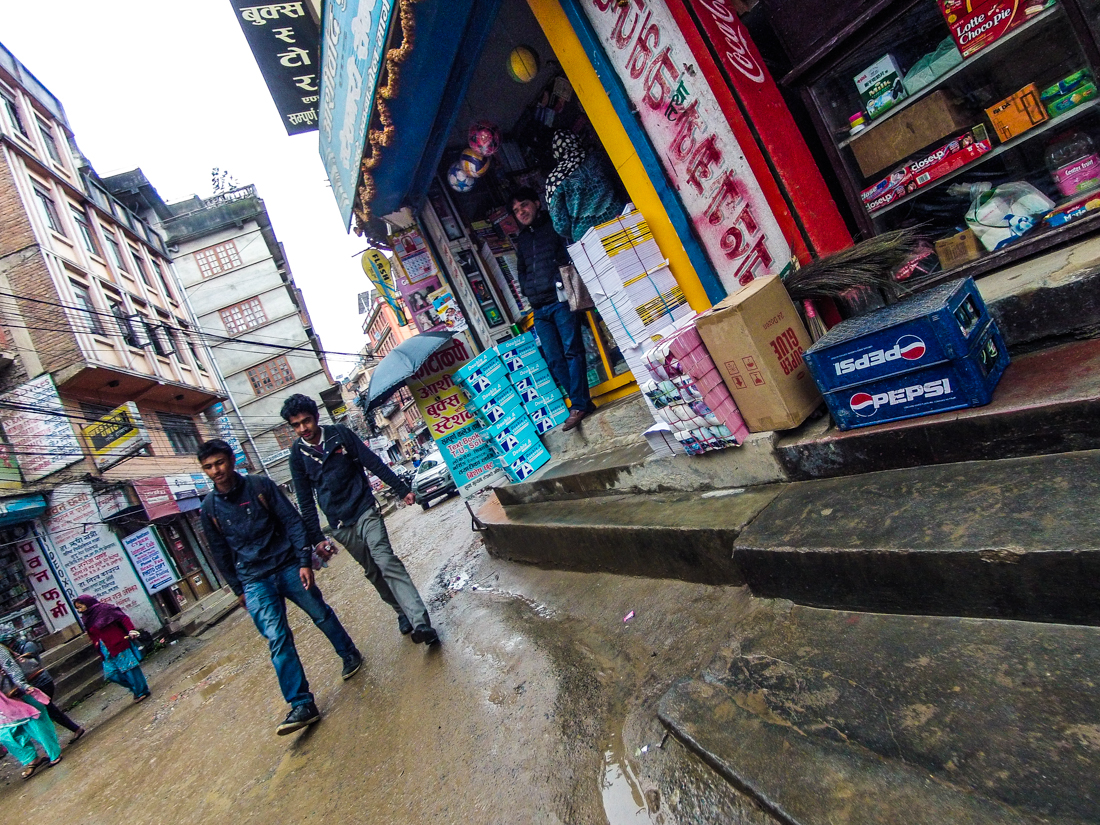
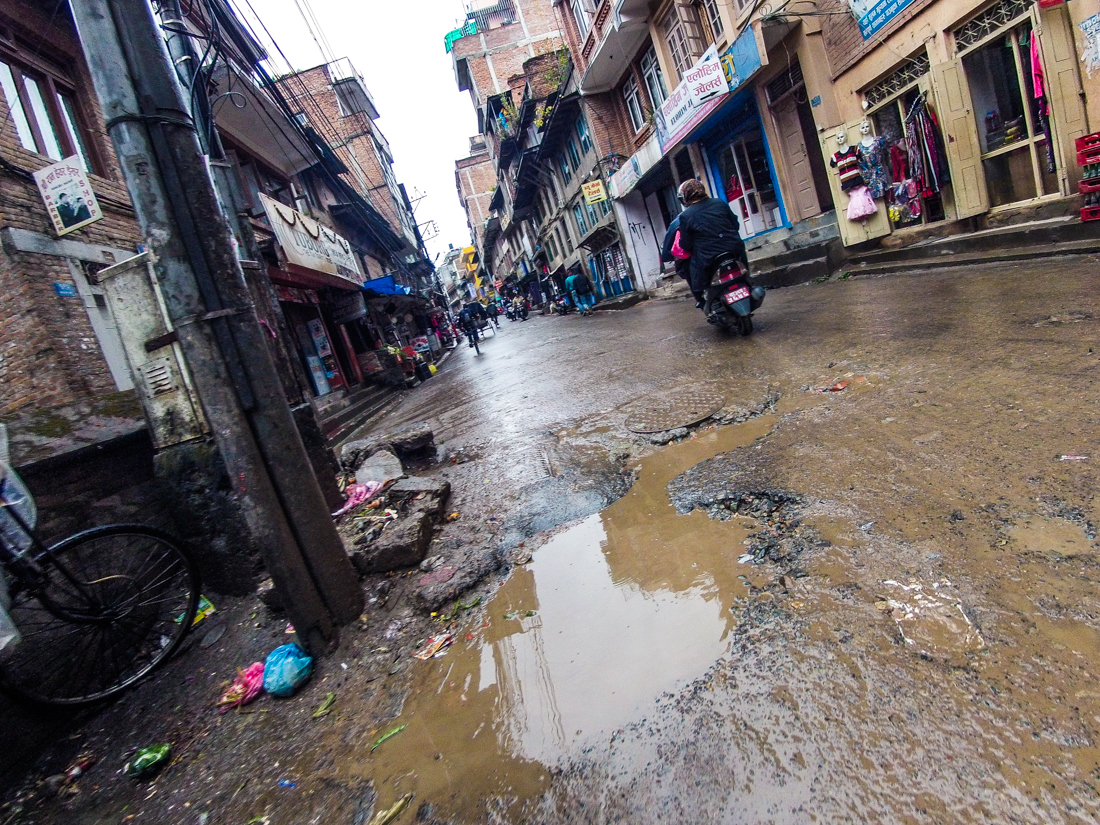
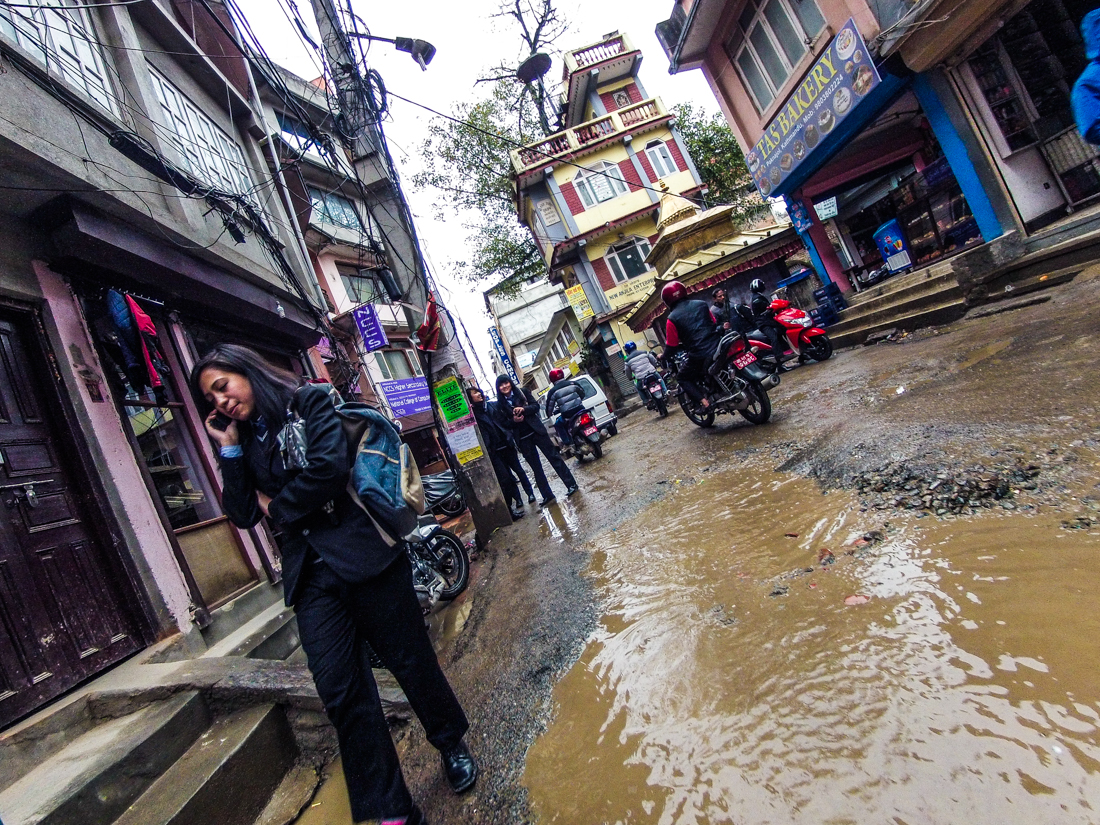
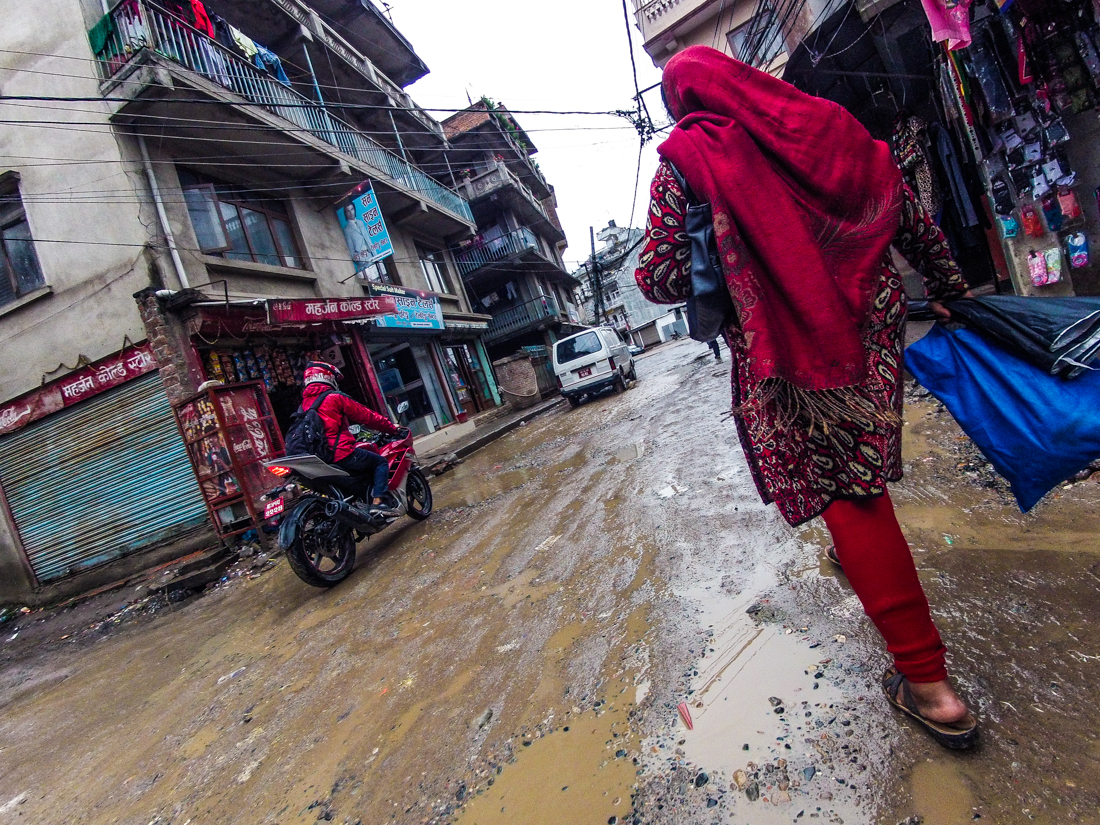
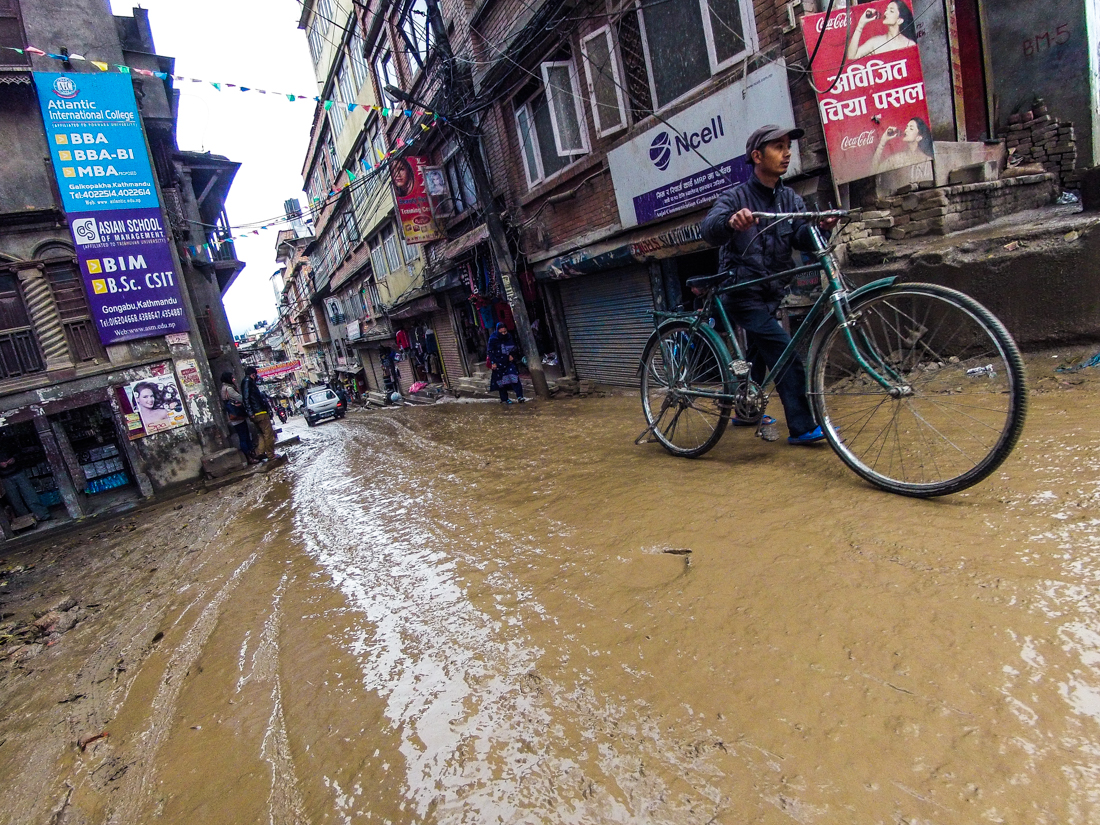
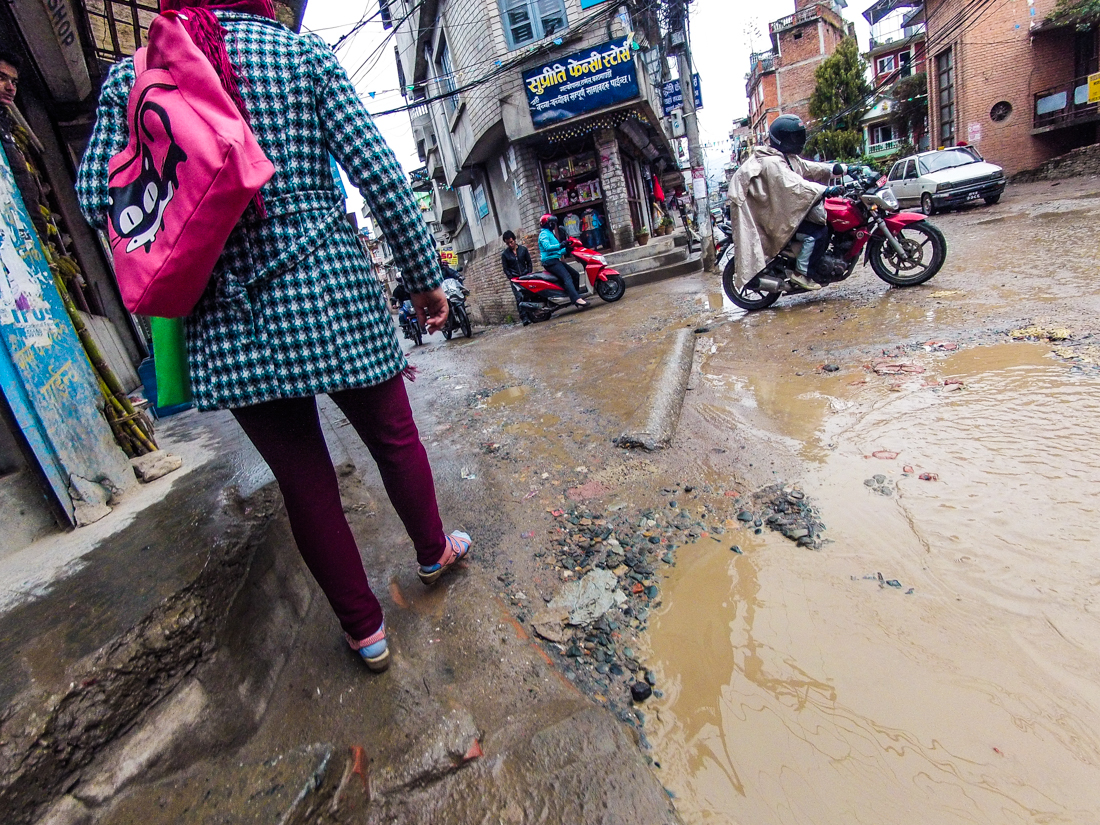
Rainy day Randoms – on the streets of Kathmandu

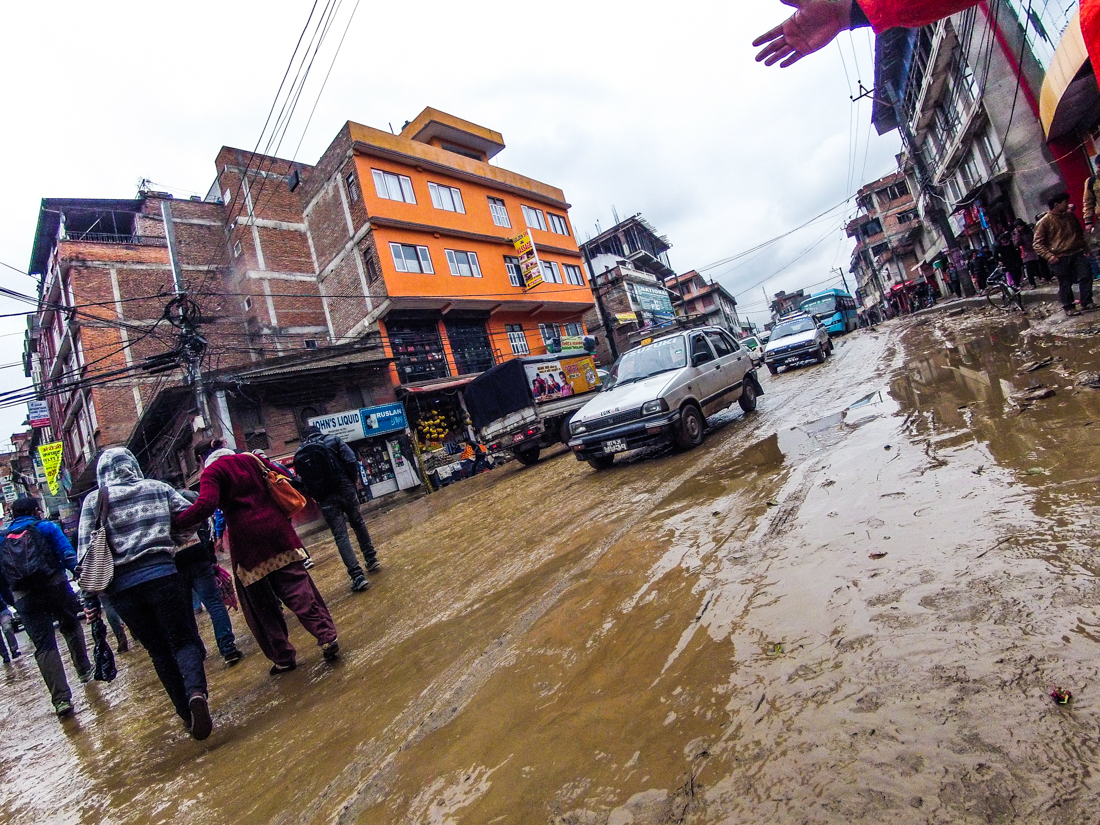
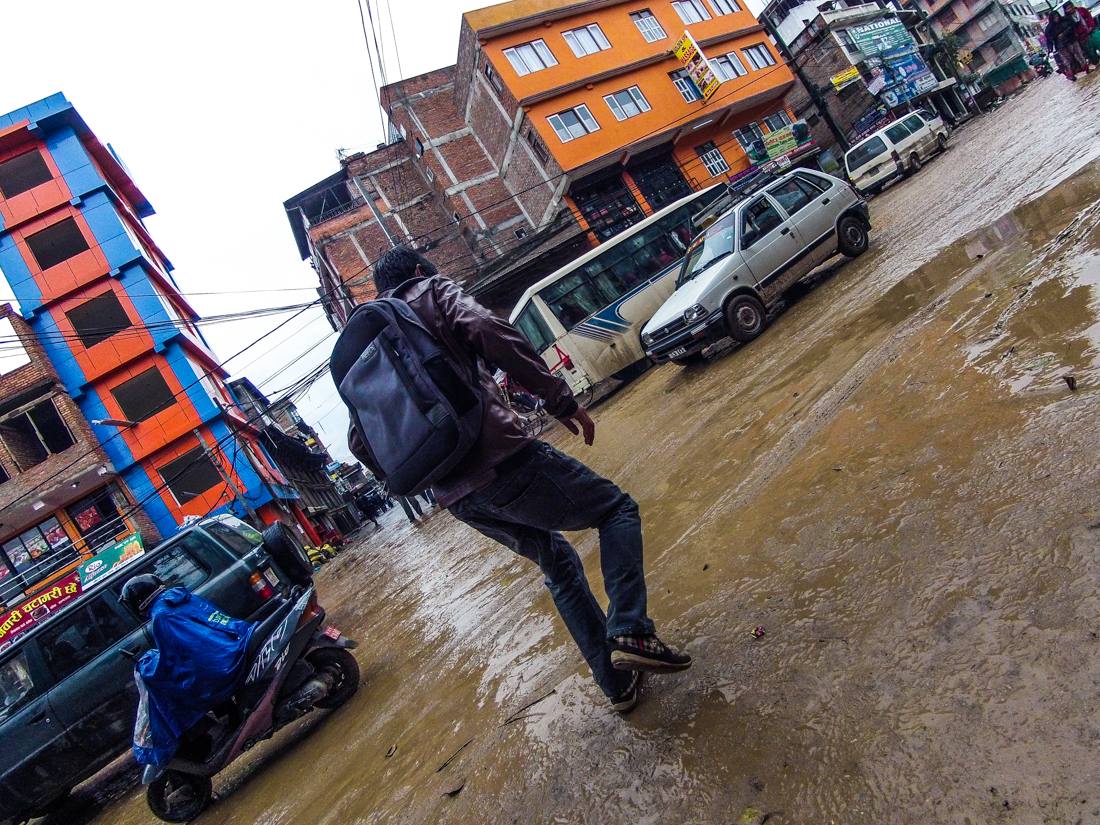
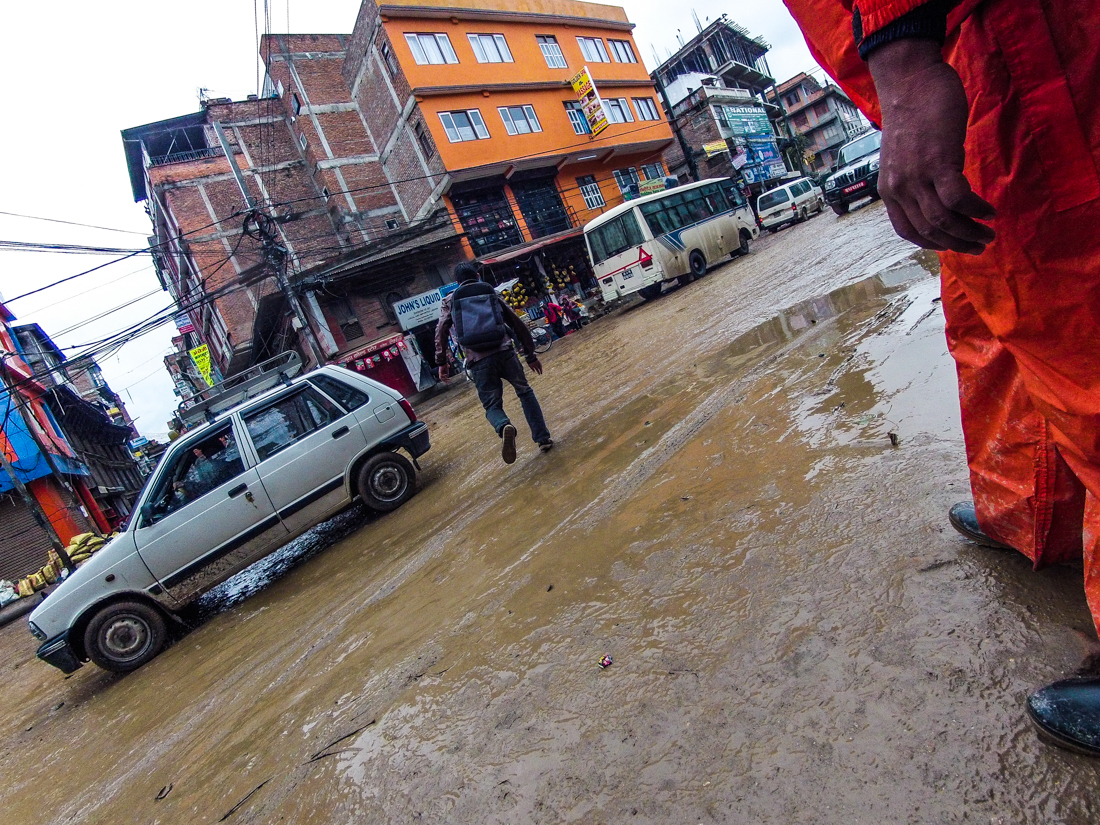
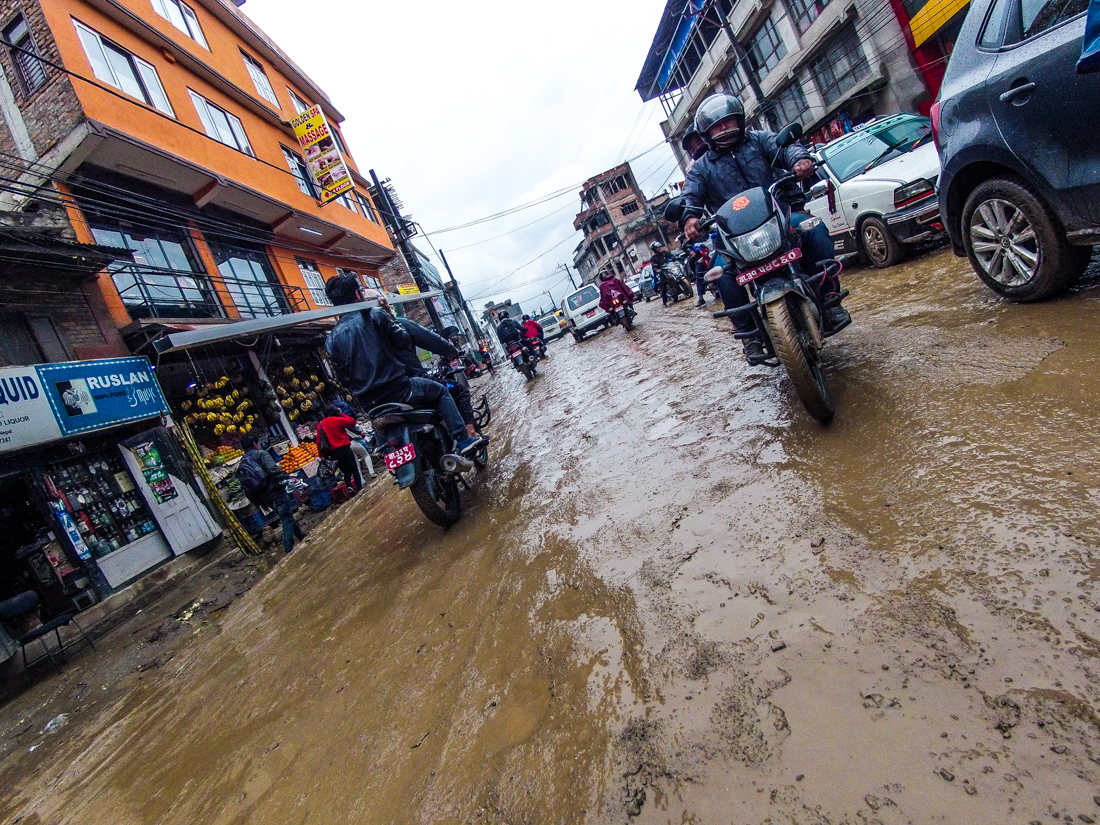
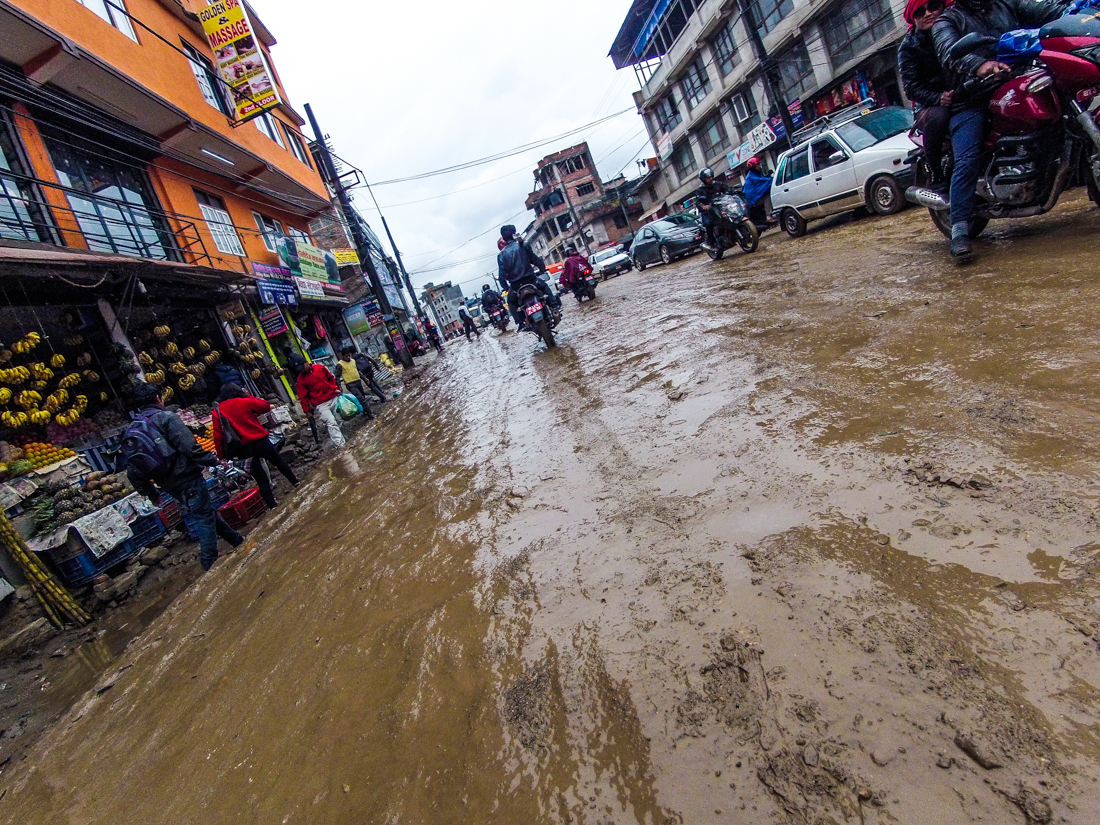
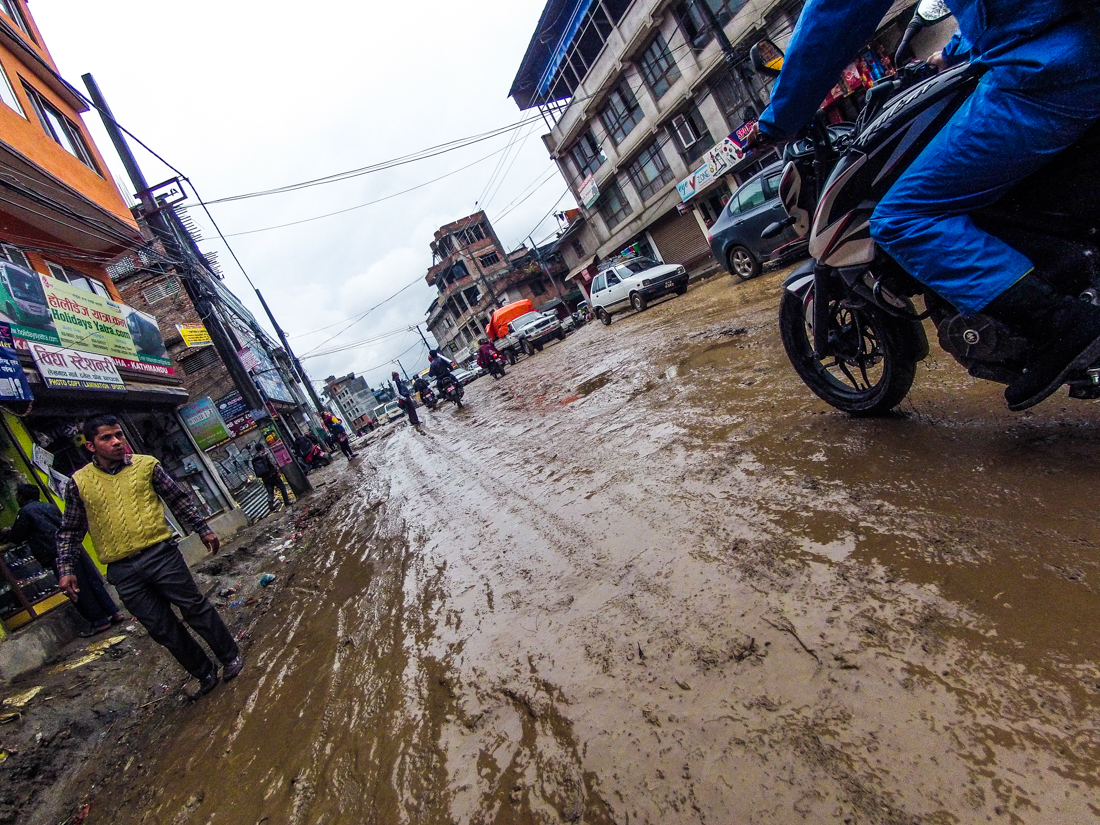
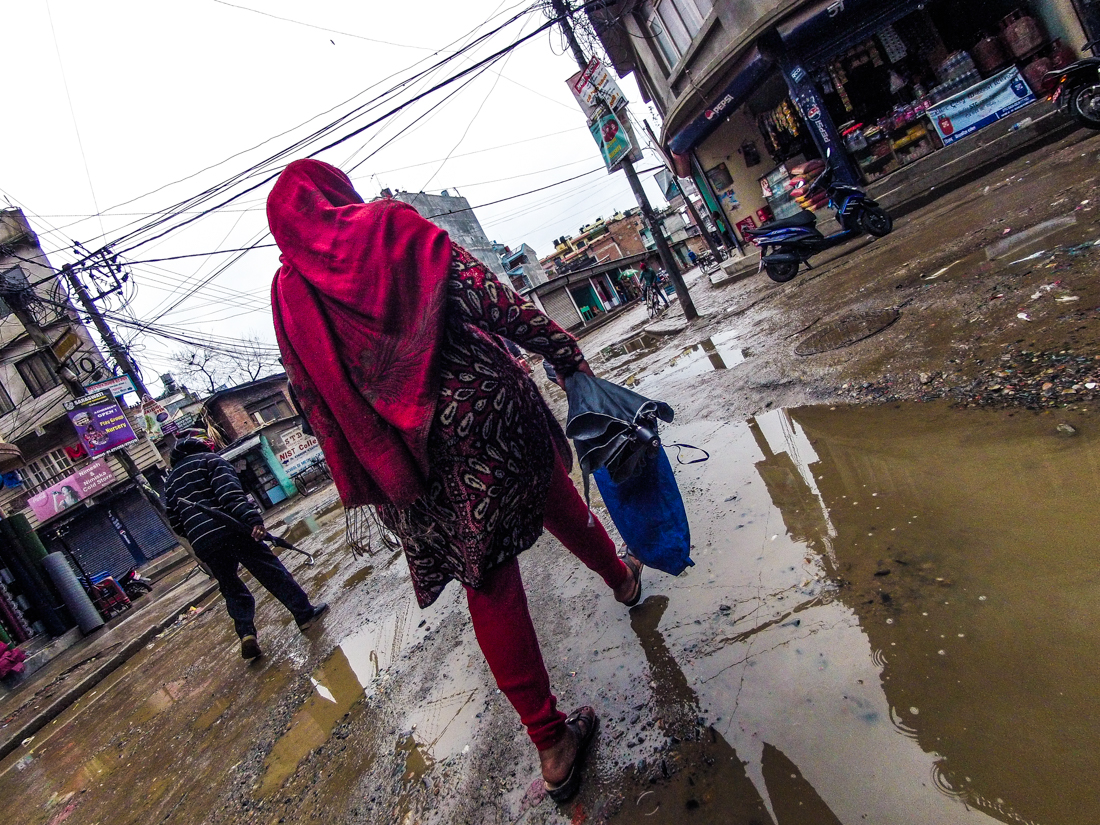
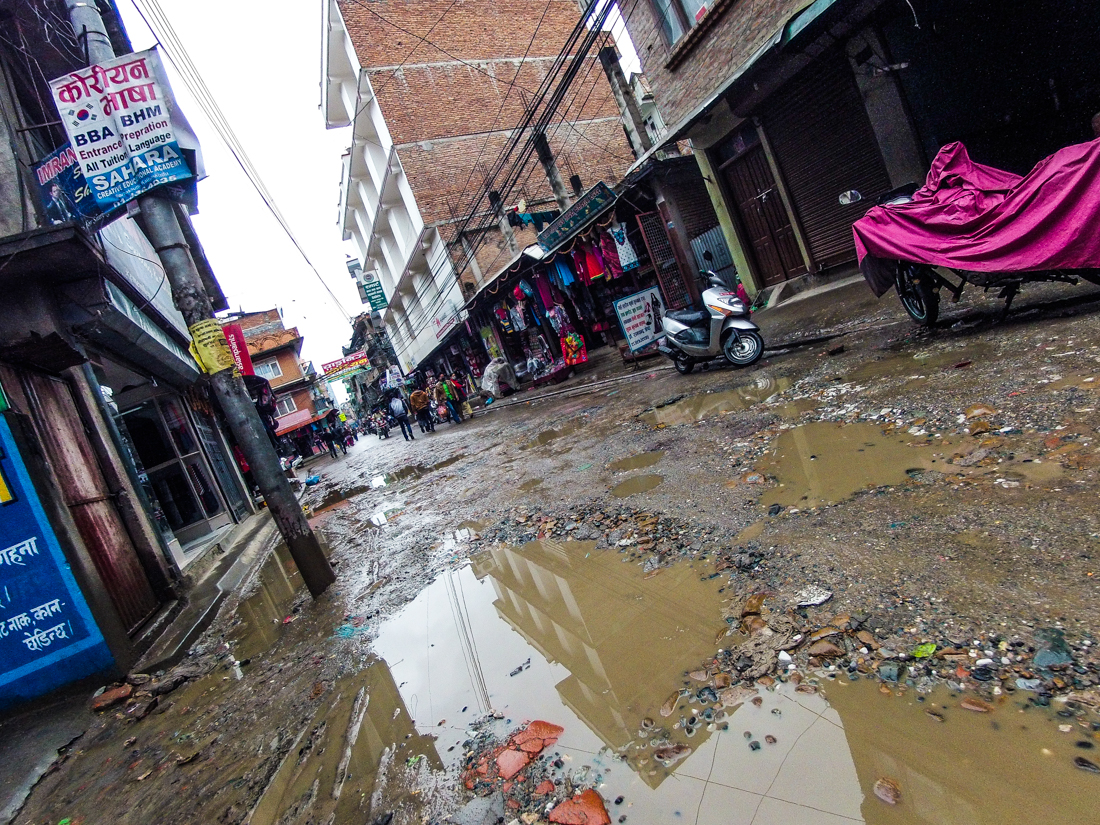
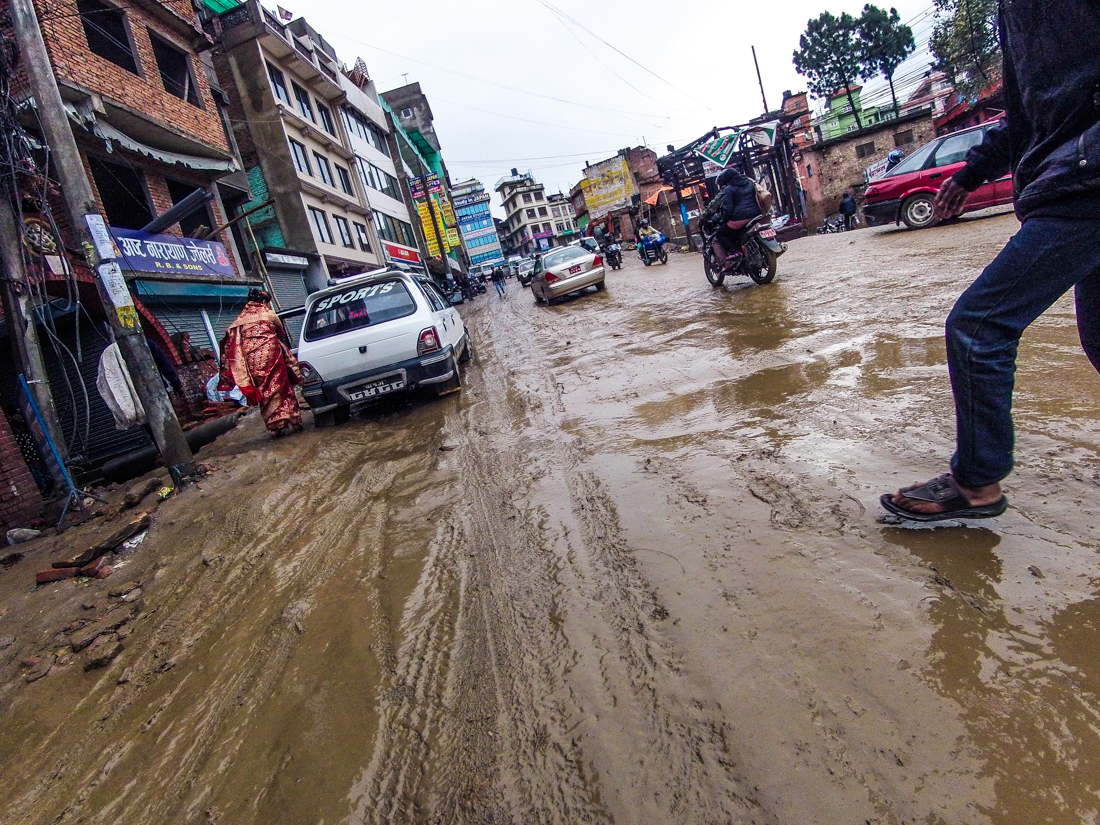
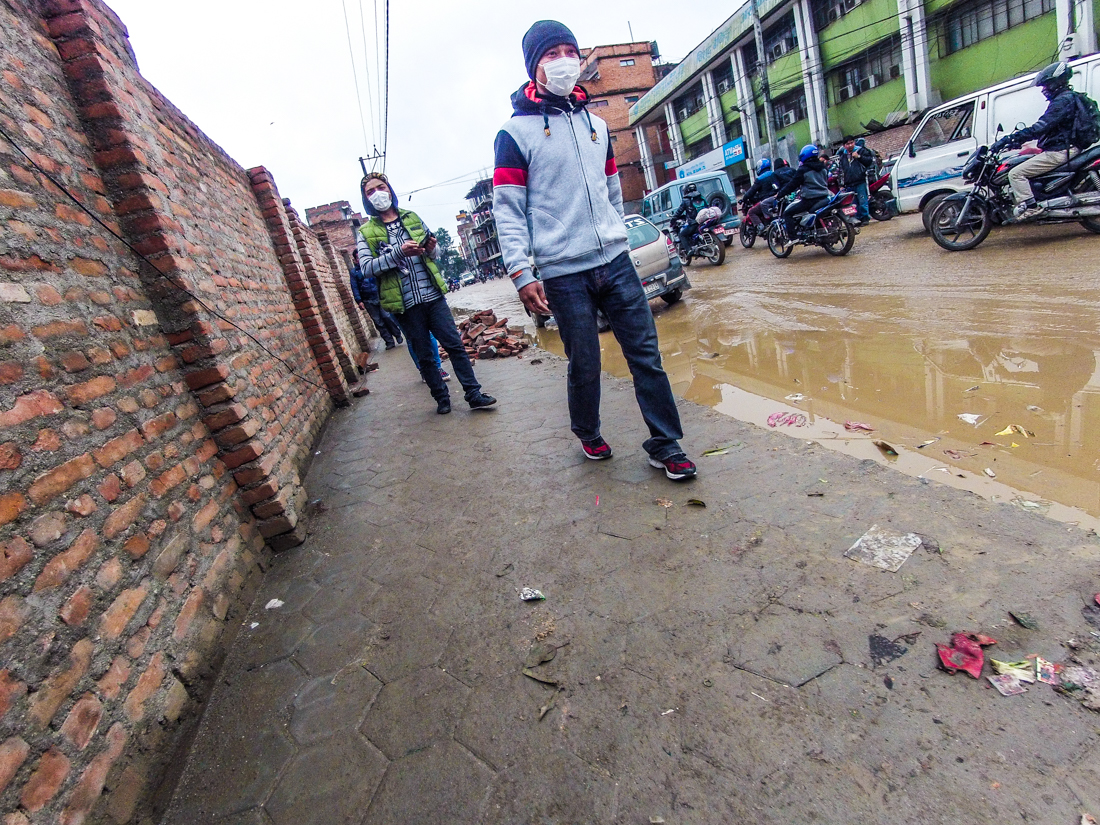
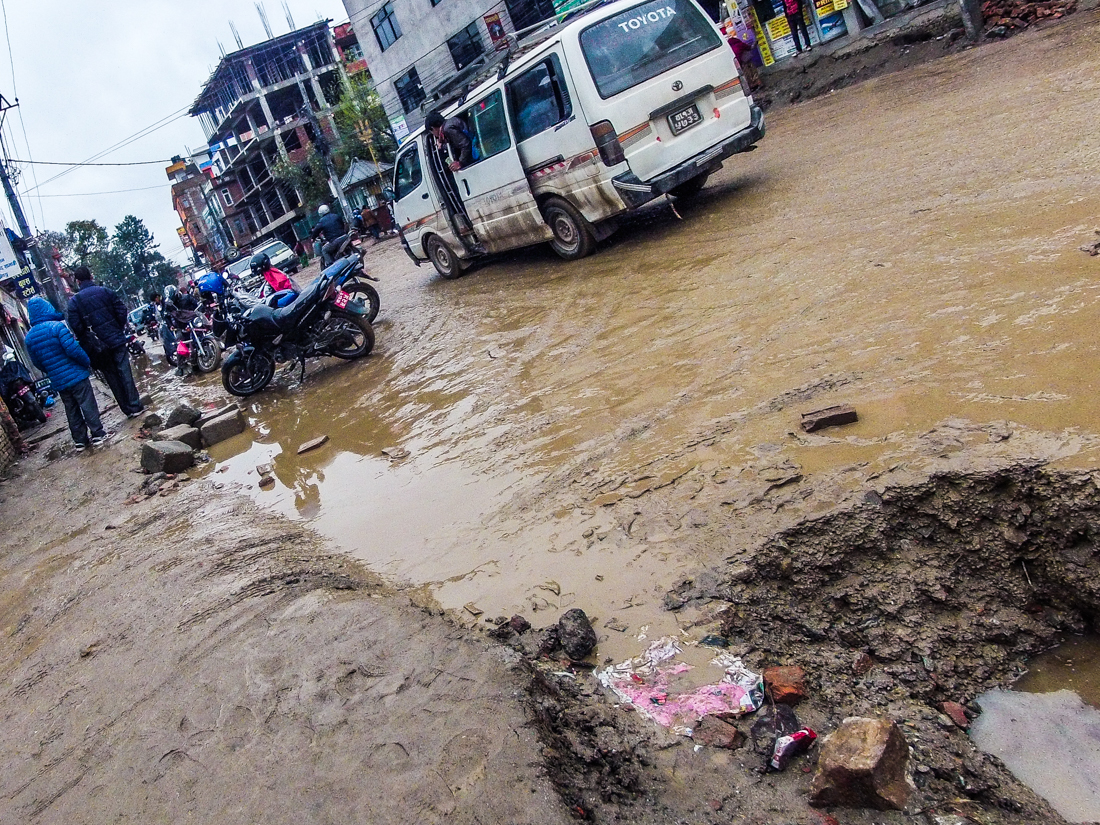
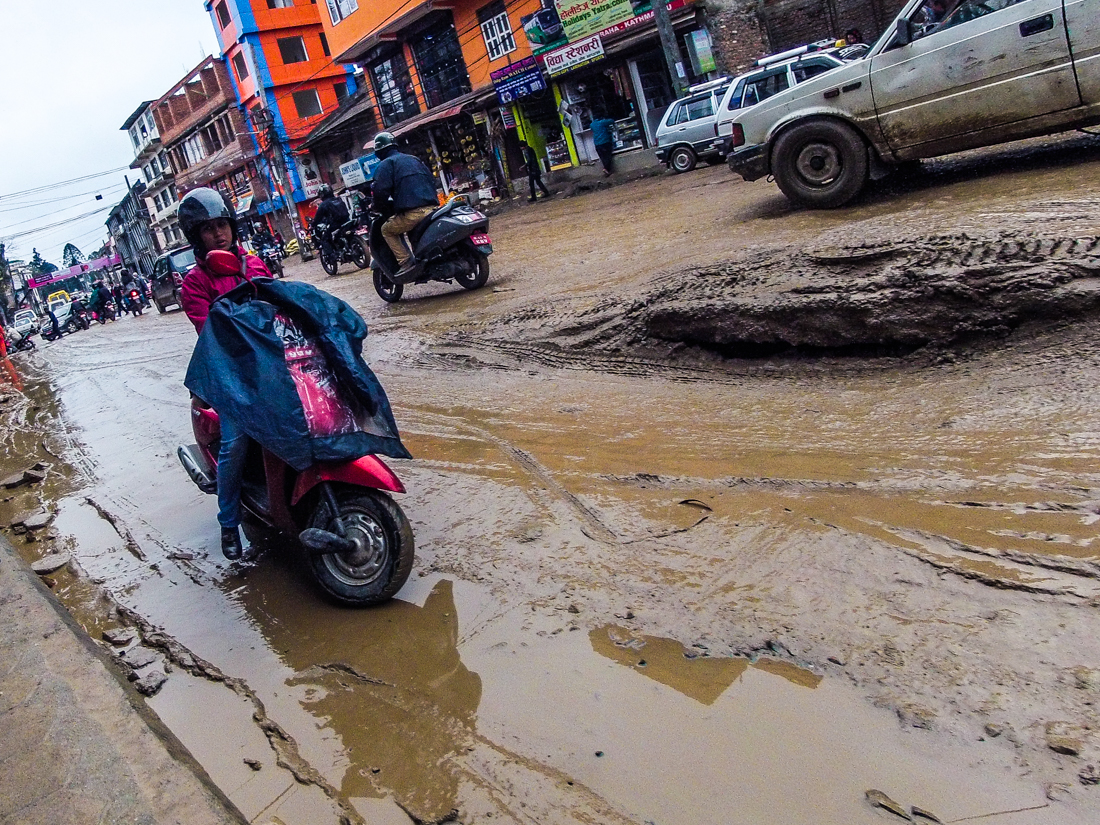
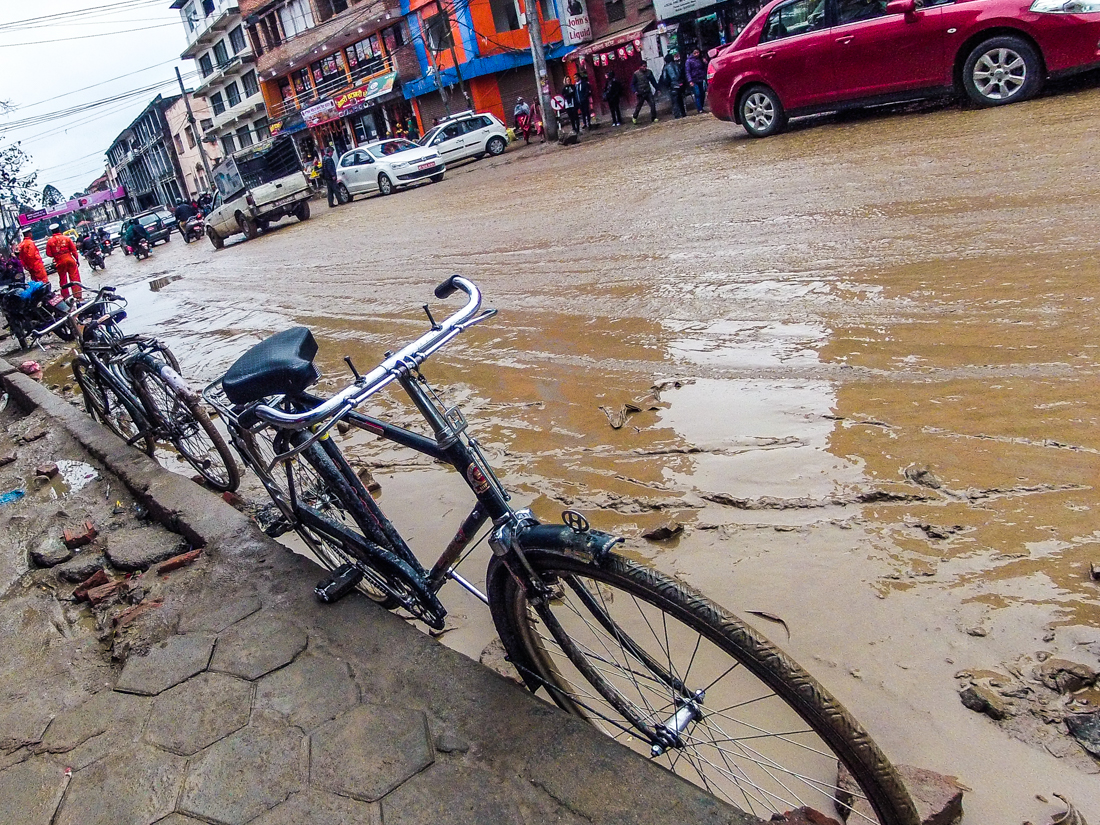
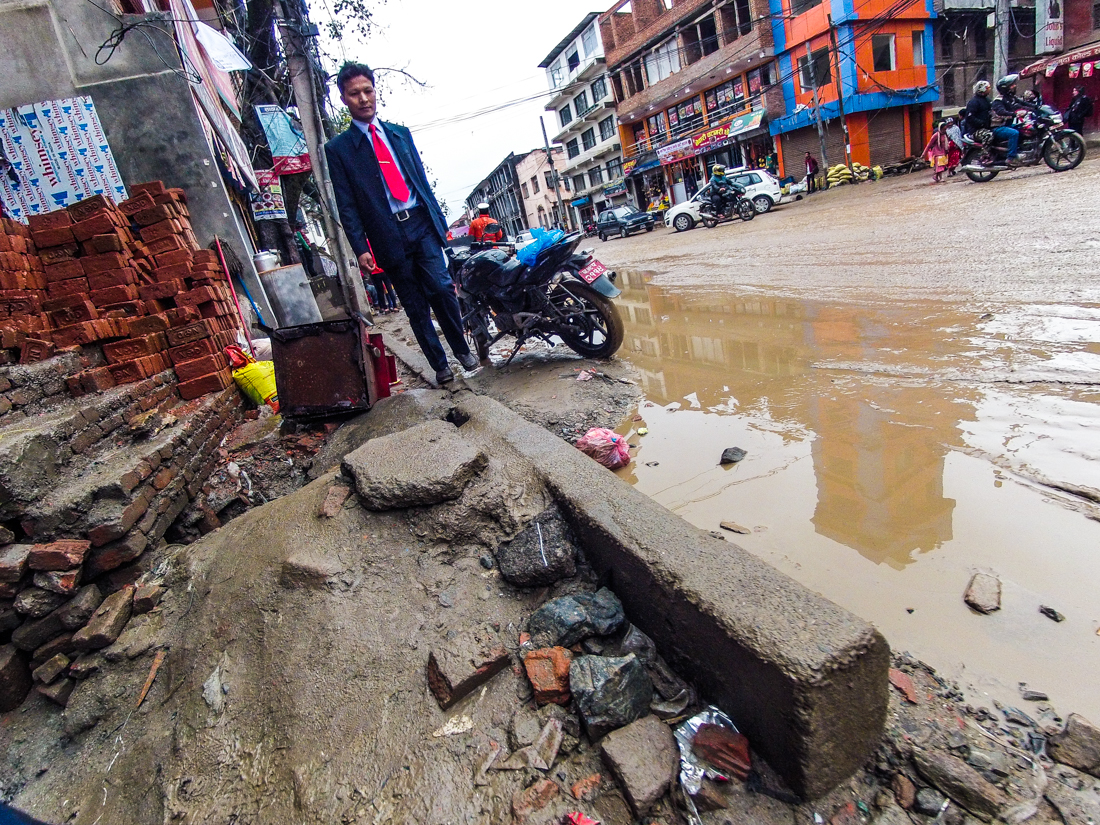
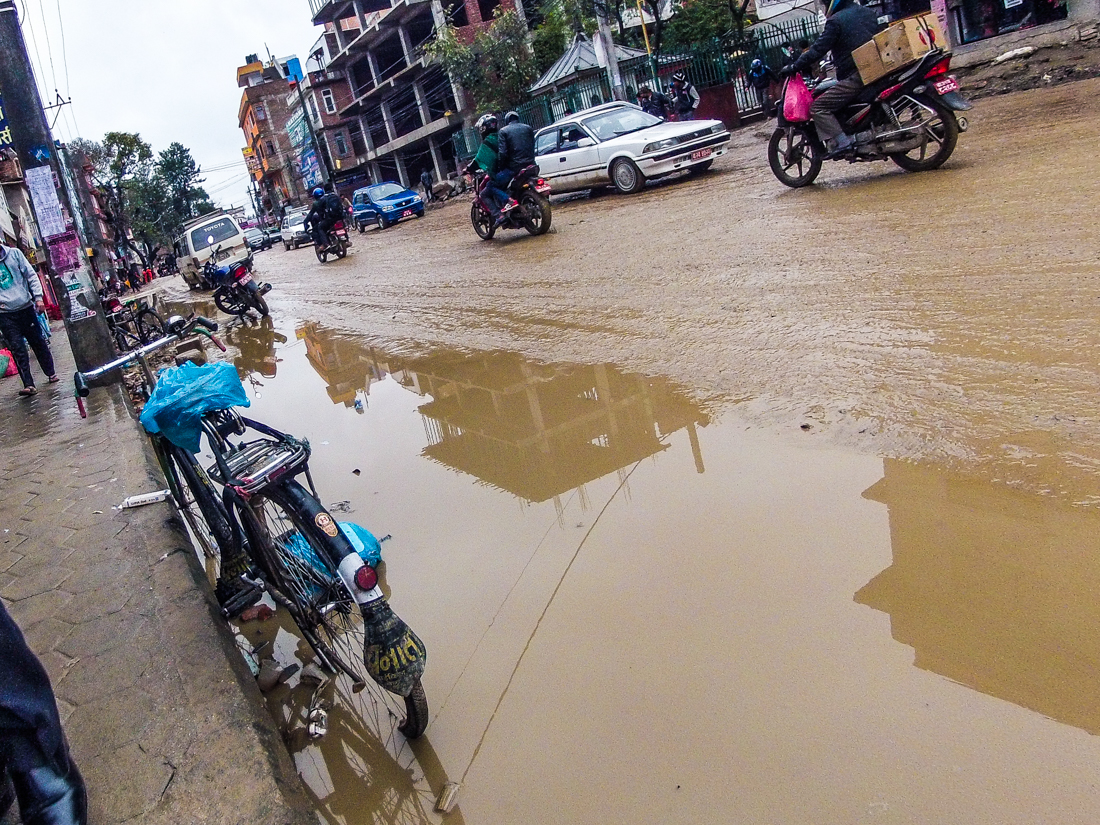
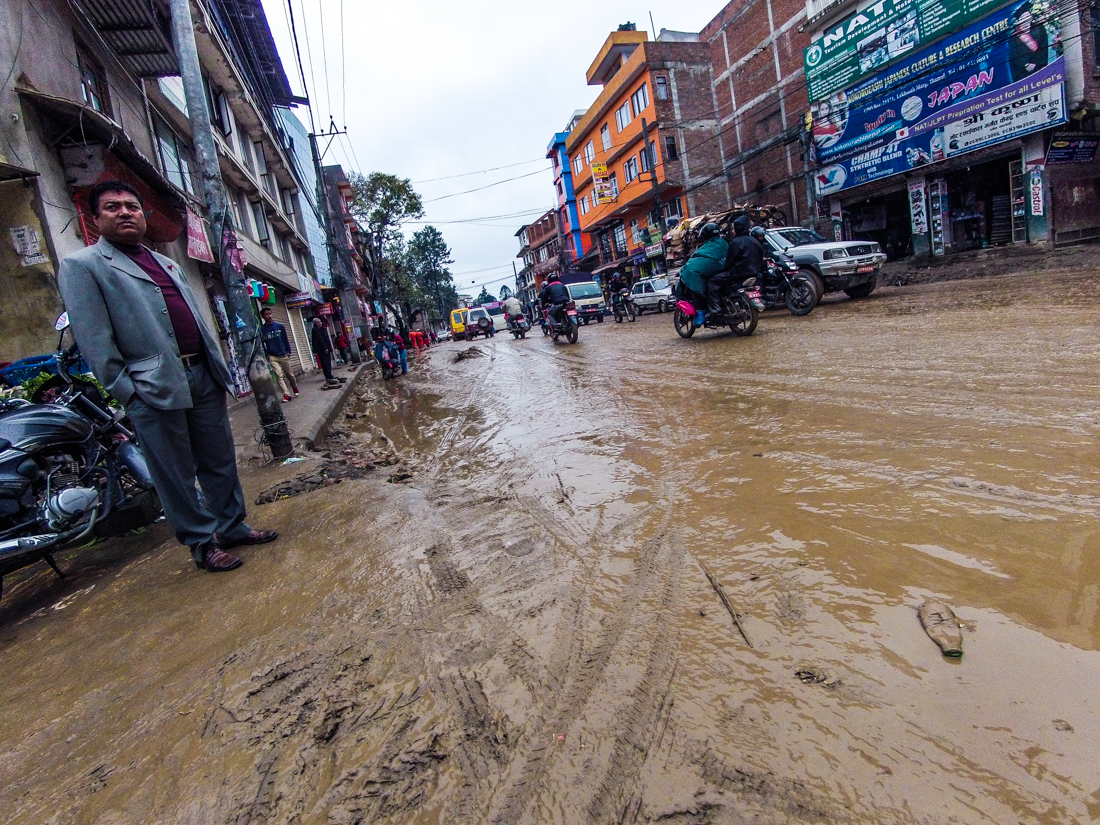
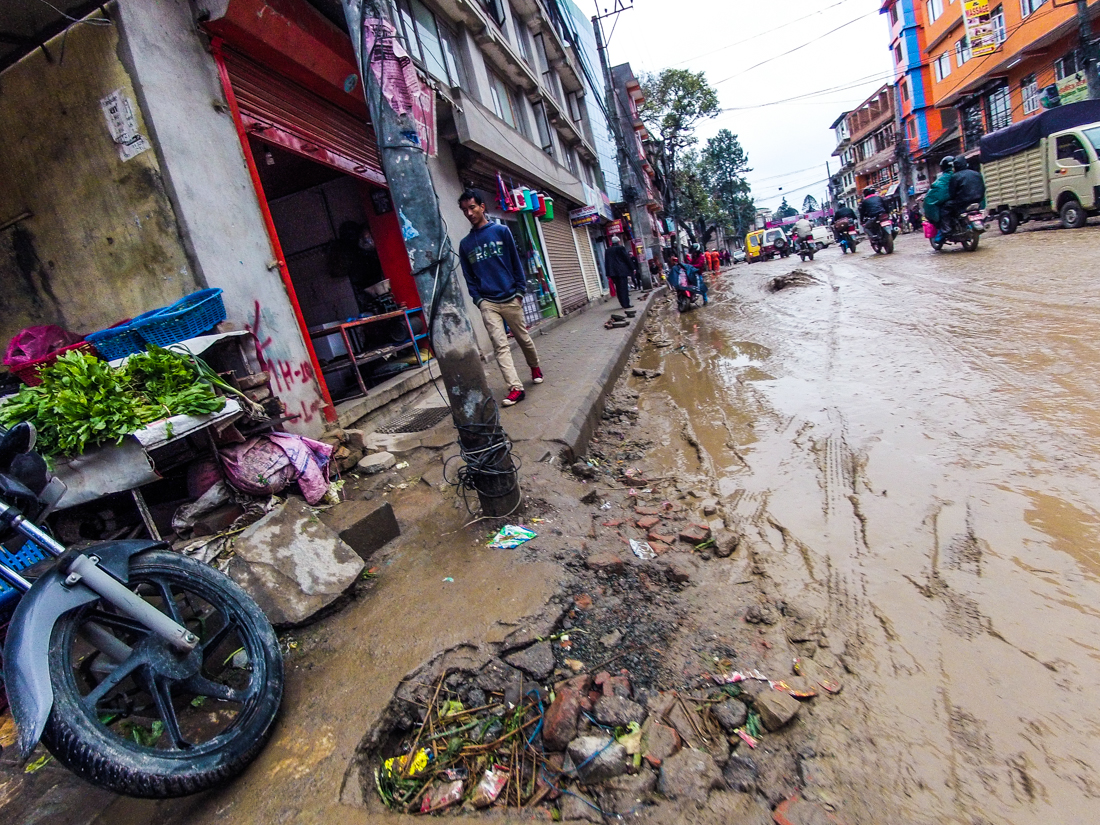
This small collection of images is from a walk in the Thamel district of Kathmandu (Nepal) in the rain (March 2nd, 2015). Most of my walks in Kathmandu have been in hot-dry and dusty conditions, walking in the rain was so refreshing, though slightly treacherous on the muddy streets.  All photos taken using a GoPro Hero 2 and (over) processed in Lightroom. Images were intentionally not rotated to ‘level’- random images at random orientation.

Click on the first thumbnail and it will enlarge. Form there you can scroll through the larger images to see the whole collection.


After the strong (7.8) earthquake that struck the Kathmandu Valley on April 25, 2015 and the many aftershocks, many of the modern and historic buildings and roads shown in these photos have been extensively damaged or destroyed, and thousands of deaths and injuries.


Rush Hour in Kathmandu

In Kathmandu (Nepal) it is always ‘rush hour’; bicycles, bicycle-rickshaws, motorcycles, three-wheeled tuktuks, cars, vans, buses and trucks or all shapes and sizes are constantly honking as they weave between each other, passing on the inside lane, passing on the outside lane, and occasionally sharing the lane with on-coming traffic. Add pedestrians, farm tractors, two-wheeled tractors and wandering cows – and it all gets real interesting.  There seem to be no traffic rules, or they are simply ignored. The vans photographed below, had were packed with up to 30 people – far beyond their recommended occupancy limit, and were excessively overloaded

This is a small selection of traffic related photos taken at sunset in Kathmandu, February 20, 2015. Click on the first thumbnail and it will enlarge. Form there you can scroll through the larger images to see the whole collection.

All photos taken with a Fuji X-E1 with XF 14mm, or Fuji X-PRO1 with XF 55-200mm.


After the strong (7.8) earthquake that struck the Kathmandu Valley on April 25, 2015 and the many aftershocks, many of the modern and historic buildings and roads shown in these photos have been extensively damaged or destroyed, and thousands of deaths and injuries.


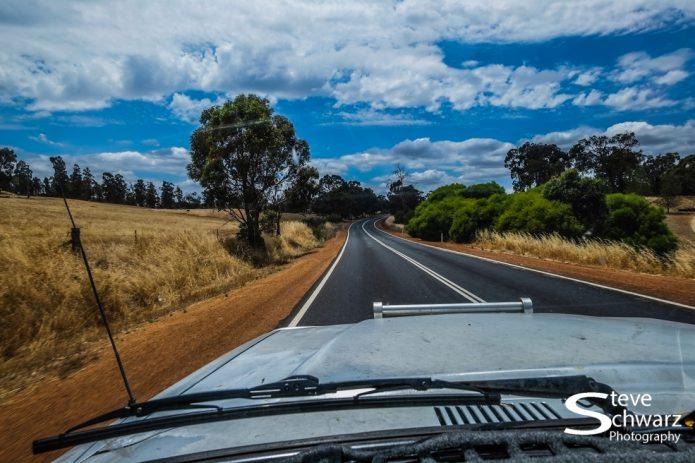
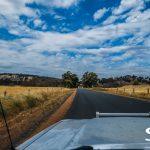
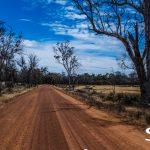
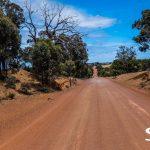
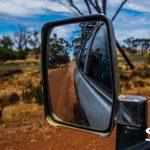
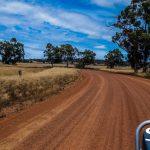
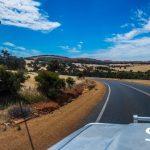
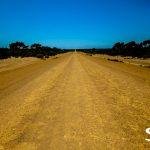
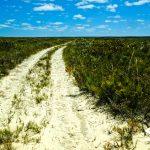
Roads (and tracks) in Western Australia

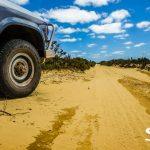
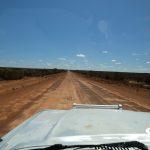
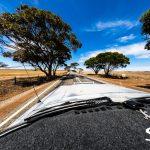
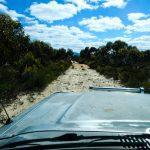
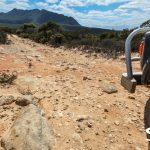
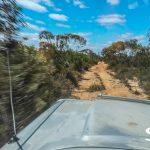
In December 2014, I was fortunate to have the opportunity to tour Western Australia, in a 60 series Land Cruiser. The old truck isn’t a beauty, though is tough, and unstoppable. We traveled on paved roads, hard packed dirt roads (called tracks), over boulders, and through deep sand. These are a small collection of images from road journeys from Perth to Denmark, and Esperance in South Western Australia.

The Importance of having FUN !

FUN. It is a simple word, one of the shortest words in the English alphabet.

FUN. Say it again

FUN.

Isn’t is bizarre, such an easy word to spell, such an easy word to say.

How many times a day to you say ‘FUN’, and how many times a day to you say ‘FUN’ ?

Most importantly, how many times a day to you actually have FUN ????.


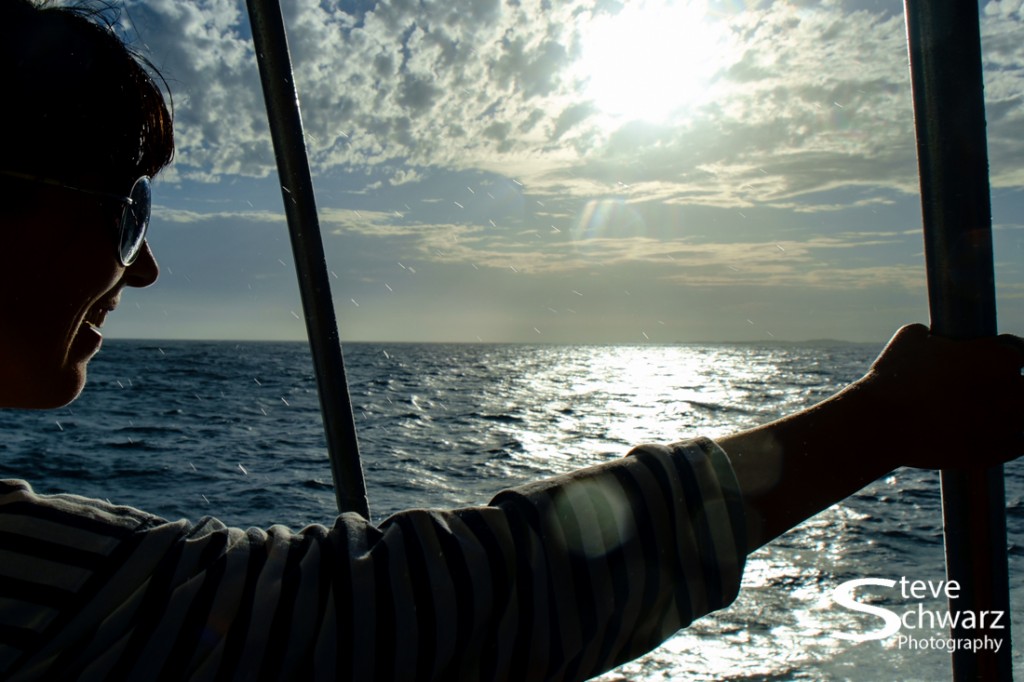
These photos are from a couple of weeks ago. We were traveling by boat from Rottnest Island back to Freemantle (Western Australia). I usually get seasick in big waves – and, sure enough, on the return trip there were plenty of big waves. Even before the boat was untied from the dock, my stomach was starting to churn. My wife also gets seasick, and immediately headed for the lower deck, and sat beside the window to stare at the horizon.

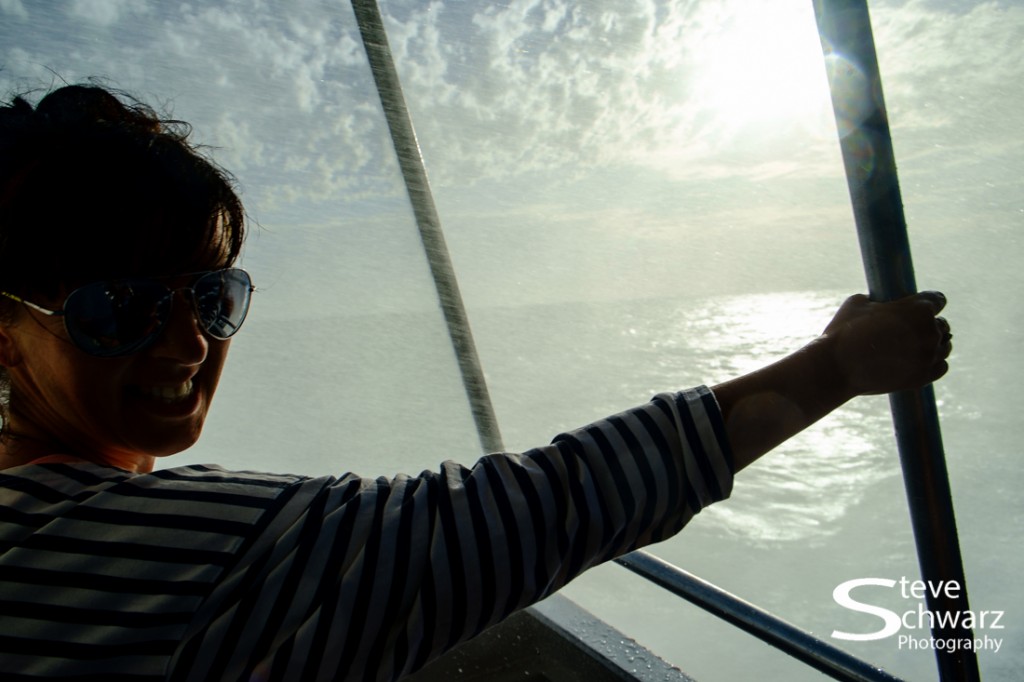
I went to the uppermost deck at the very back of the boat – thinking if I have to puke, better to do it over the side of the boat…on the downwind side. Standing beside me was a young woman. She was enthusiastic. For her, the bigger the waves, the better. As the boat left the shelter of the harbor,  into the big waves, her simile get bigger and bigger. A few moments later, she was hanging on with both hands, and a huge smile from ear to ear.

So sensed my lack of enthusiasm and said ‘ If you are having fun – then you wont get seasick‘. Easy for you to say.

My stomach was starting to churn. I could taste that pre-puke in my mouth.

The spray from the big waves hitting the side of the boat was whipped to the back of the boat, curling back into an eddy to soak those of standing along the back rail. If I puked now, it would surely blow back in the eddy and cover everyone standing near me.

Beside me, she was hooting and hollering, having so much fun. She was getting soaked from the warm ocean spray. There was no doubt she was  having fun. I needed to get out of this sick frame of mind. In desperation, I pulled out my waterproof camera from my pocket and asked her if I could take a few photos. ‘Sure’ – she said, ‘as long as you are having Fun’. Click, click, click. The camera helped. Then she asked to switch places so that I could get the full force of the spray – that would certainly distract me. Sure enough, by the time the boat entered Freemantle harbor, I was thoroughly soaked – and had completely avoided getting seasick.

Who ever she is – Thank you. You managed to take me from a potentially miserable situation, to now, actually wanting to get on a boat on a day with big waves.


SHSA6648-3 SHSA6643-3